Category: Human Resources

We know HR. Read our Human Resources blog archives for stories and best practices from our work with real clients and personal experiences in the world of HR.

  • How to Be Perfect (Or Not) 

    How to Be Perfect (Or Not) 

    Last week, Lorrie talked about braving trust, and a willingness to be vulnerable. She mentioned the theme from Brené Brown of taking off our armor and daring to lead. 

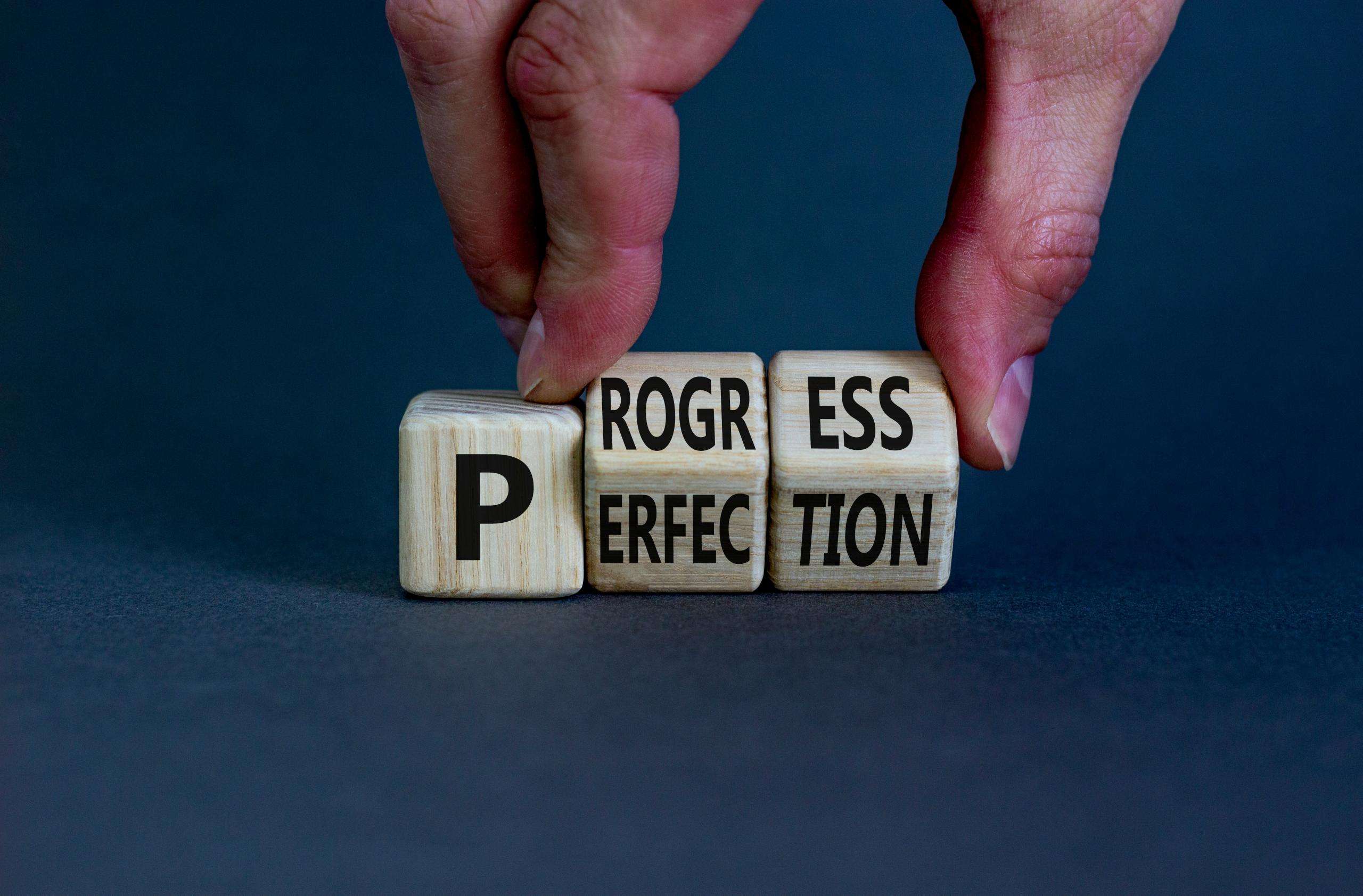
    Recently, Horizon Point has seen more and more client leaders struggling to take off their armor. We think it’s tied to the desire to be perfect, or at least to be seen as not a failure. Mary Ila’s research in grad school was actually on leader emergence versus leader effectiveness, and she found that emerging as a leader within a group is distinct and separate from being effective once you’re there. Let’s consider a female leader who makes it to the C-suite because of her natural traits (leader emergence) and is now finding herself ineffective. Or consider the student who was elected as SGA president, but once they got the job, they floundered. When people find themselves in leadership roles where they feel ineffective, it’s almost like…because they aren’t perfect, they just freeze up. But what does it even mean to be perfect?

    If you’ve seen the show The Good Place, Brooklyn Nine-Nine, or The Office, you may be familiar with Michael Schur. Schur created The Good Place, a show about how to be good (in order to get to heaven) and when he was doing research he dove deep into ethics and morality. The result was a book called How to Be Perfect. It is poignant and hysterical. The short summary: Perfect is made up. Everyone decides for themselves what is good versus bad or ideal versus not ideal – think back to Mary Ila’s blog two weeks ago about values. We all adopt and refine our personal values overtime which shape what we believe about being good or being perfect, and when we feel like we’re not achieving that, we start to become an unhealthy version of ourselves. 

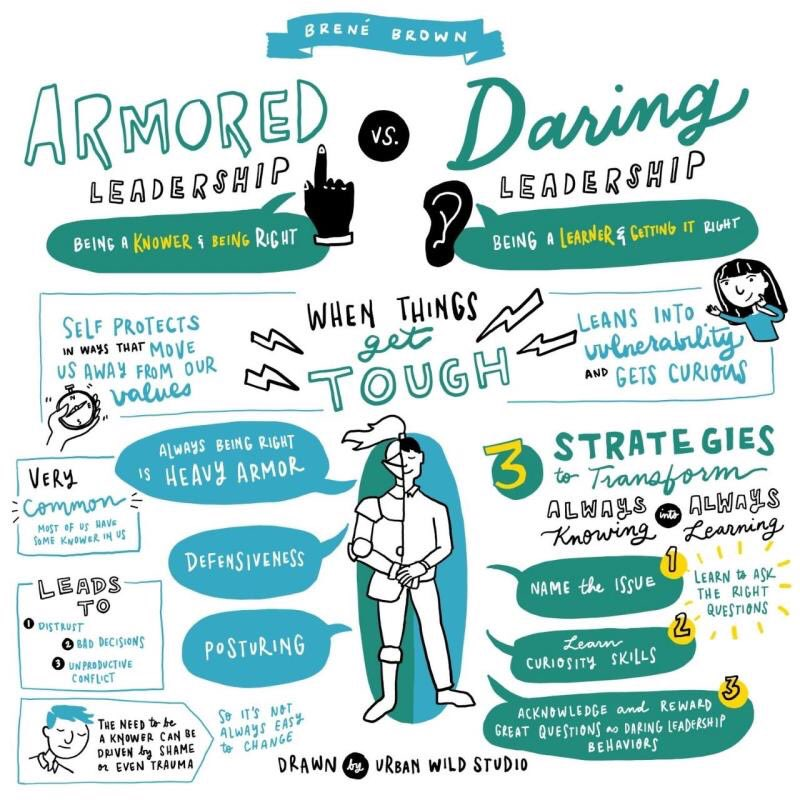
    It’s as if in order to fit in, to climb the ladder, to “have a seat at the table“, we learn these behaviors of protecting ourselves, always on the defensive, expecting to be attacked around every corner. A few months ago, I had the pleasure of speaking to the Women in Business students at Mississippi State University, and I focused on this topic. We had a great discussion about the balance of vulnerability and self protection. Specifically, we walked through Brené Brown’s model of Armored versus Daring leadership.

    Armored leadership looks like…being a knower and being right. 

    Daring leadership looks like…being a learner and getting it right. 

    Source: Urban Wild Studios 

    We are helping clients recognize when they are demonstrating Armored leadership, and we are helping them develop the skill (because it is truly a skill that takes practice) of taking off their armor, and stepping into Daring leadership.

    I’ve also been the emergent leader who then found herself ineffective, but I’ve had incredible mentors who have helped me practice taking off the armor and living in my values. As Mike Schur says, “If we really work at finding the means of our virtues – learning their ins and outs, their vicissitudes and pitfalls, their pros and cons – we become flexible, inquisitive, adaptable, and better people.” In layman’s terms, know your values and practice them. 

    What armor are you wearing that you could take off? What if you start with one piece? It doesn’t have to be all or nothing. If you need help getting started, we have a couple of worksheets that are modified from Brené Brown’s Dare to Lead. In the end, we just need to make a choice to live in our values, rumble with vulnerability, and step into Daring Leadership. 

  • 4 Ways to Convert Values into Behaviors

    4 Ways to Convert Values into Behaviors

    Last week to kick off the new year, we discussed starting with a focus on creating or revisiting individual and/or organizational values.   Values are a great place to set an ideal, but how do you make that a reality?  

    As Brene Brown says about values: 

    One reason we roll our eyes when people start talking about values is that everyone talks a big values game but very few people actually practice one. It can be infuriating, and it’s not just individuals who fall short of the talk. In our experience, only about 10 percent of organizations have operationalized their values into teachable and observable behaviors that are used to train their employees and hold people accountable.

    Ten percent.

    If you’re not going to take the time to translate values from ideals to behaviors—if you’re not going to teach people the skills they need to show up in a way that’s aligned with those values and then create a culture in which you hold one another accountable for staying aligned with the values—it’s better not to profess any values at all. They become a joke. A cat poster. Total BS.

    So how do we convert “professing” into behaving? Here are four ways: 

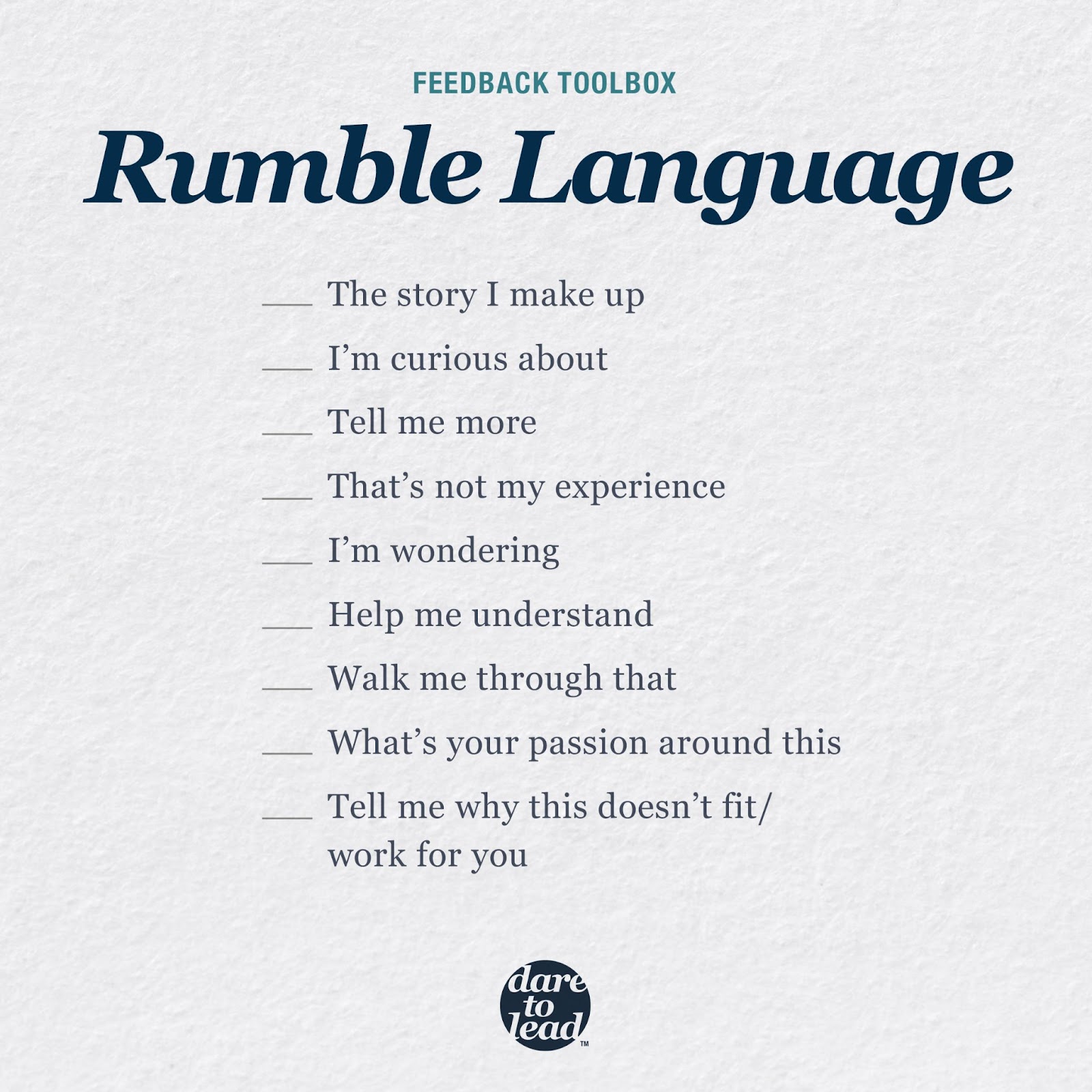
    1. Set Expectations Based on Values: Design your employee development and evaluation tools around your values and specify observable behaviors that are needed in order to meet and/or exceed expectations. If you are having trouble getting behaviors down or understanding how to put a behavior into language,  Brown’s reference list of behaviors may help you.  

    For example, one of our clients values is “Service” and one sub-component of that value where they have to rate a person’s performance in the evaluation is:  “The employee acts with empathy, kindness, patience, and honesty in all interactions and shows respect for those that he or she works with, including, but not limited to, co-workers, clients, vendors, and community representatives.” 

    Then, the person performing the evaluation has to input behavioral based information to support that rating such as, “Jane Doe exhibits our service value when she answers the phone at the front desk.  She answers the phone with a positive greeting and tone of ‘Good morning, this is Jane Doe.  Thank you for calling today! How may I direct your call or assist you this morning.’ She does this consistently regardless of mood or type of call or time of day.   She is also friendly and welcoming at the front desk when all employees come in as well, greeting each person when they enter and exit with personalized exchanges.”

    1. Give Feedback in Values Based Language: Whether you are giving feedback in formal evaluation or in an ongoing developmental way, good and bad behavior should always be framed by putting your values into language. 

    To continue with our example above, you’re Jane Doe’s supervisor and you hear one of these positive phone interactions. You could immediately respond with, “Jane, I appreciate you being empathetic, kind and patient with the person you just spoke to on the phone.  I could tell it was a difficult call, but you never lost patience or made the caller feel inferior.  Thank you.  You are demonstrating our value of Service and I appreciate it.” 

    1. Decide Based on Values: Values really begin to become operationalized when you use them as the basis of all decision making, big or small.  

    Continuing with our example, let’s say you are deciding if you should even have a person answer the phone or automate it either because of budget constraints or because it just doesn’t seem like the modern thing to do because no one else is doing it anymore.  

    Based on your value of service, you may ask yourself and others: Does making this cut diminish our ability to show service?  Does having a live person answering the phone differentiate us in the marketplace? Does and/or could it bring us a competitive advantage? If we get rid of it, what positive or negative outcomes could come of it based on all our values? 

    1. Ask Based on Values: As a leader, using values to help people make decisions and guide their development is a great way to do all three of these things. When someone comes to you with a problem or a decision to make, ask them, “How do you see this decision in light of our organizational values? What do our values lead you to think is the next right thing?” Help them learn to think in terms of values which will help them act on them. 

    How do you live your values? 

  • The Best Place to Begin a New Year

    The Best Place to Begin a New Year

    Resolutions, Goals, Plans, and Turning Over A New Leaf.  This is the stuff that New Years are made of.  For individuals and organizations, the new year is always a natural place to think big and aim high.  And there is nothing wrong with this. 

    As 2023 came to a close, a theme we saw over and over again was the challenge many people were having in leading well. They were aiming high, but totally missing the mark. They had lost the people they were leading as well as themselves in the process, chasing some ideal they couldn’t even name. 

    So many of the conversations and client engagements we found ourselves in were due to this struggle. As we examined it closer, we realized that the key and consistent challenge was that people had lost touch with who they were, what their organizations stood for and how to get back to these things. 

    They had lost sight of their values, if they had ever even named any, and it had taken them to a place of shooting at a bullseye that was meaningless and also miserable. 

    So, as 2024 opens and you’re aiming high, I’d encourage you to name or rename your values.  What I mean by the word “value” are not moral values in a universal right or wrong sense, but values in what leads to your competitive advantage as an organization or a human being.  What makes you unique, and therefore something of worth? 

    As you think about this, two resources I’d encourage you to explore are:

    1. Brene Brown’s work in Dare to Lead.  Read or listen to Part 2: “Living Into Our Values” and use her pdf list of values found on her website to help think through your core values.  I would highly encourage you to listen to her words in an audio book format before using the pdf to begin action. 
    1. Based on Dr. Henry Cloud’s work, found in Boundaries for Leaders on team trust and defining operating values, create and examine two past case studies of your organization or personal practices: one that went exceptionally well and one that went horribly wrong.  What consistencies do you see in the good and the bad?  You can use this tool we’ve created based on this work to help you develop your case studies.

    What we typically see is that the bad reflects the opposite of what creates uniqueness.  It is what you are most ashamed to be or do because it is so opposed to your values.  The exceptional is what makes you feel most alive and yourself when you are living into them- the value creates value. For organizations, it is what makes people want to “purchase” from you instead of a competitor. 

    As we begin a new year aiming high, let us first reflect on if it is where we want to aim to begin with. Once we’ve done so, we can steer our behaviors towards the right bullseye. 

    What are your values and how will you aim for them in 2024?

  • Flu Space

    Flu Space

    Ahhh, the Holidays. It’s the most wonderful time of the year, or is it? It can also be a pretty stressful time of the year with work, end of the year class celebrations, Church Christmas plays, basketball practice, moving the elf, wrapping gifts, extra cooking, Christmas parties, new family dynamics ad infinitum. With all the hustle and bustle, it never seems like there is quite enough time or space to pack it all in. Our 2023 Theme: An Abundance of Space feels out of reach some days depending on my perspective.  

    Enter the flu… God knows exactly what you need when you need it, although I am not always ready and willing to accept the circumstance. My bouncy little boy was down for the count last week, and it gave me some “space” to slow down and really settle into my body. All the Holiday stress that I had been shoving down was able to rise to the surface and instead of distracting myself with busyness, I had to actually feel what I had been numbing with all the activities.  

    It turns out that when I slow down, there is more room for creative energy and thoughts to flow. I got married in October, and we want to start new traditions for our family. Being trapped (did I say trapped?) in the house for a week gave me the abundance of space that I needed to think about what some of those traditions might become. We have decided that this year we are going to have a Birthday party for Jesus on Christmas Eve instead of opening any gifts and really lean into our reason for the season.

    I am also learning to take up space and say no to things that don’t support my values. When I say yes to something, I am saying no to something else. Being the people pleaser that I am, this is easier said than done, but nonetheless I am practicing and there is growth occurring. Since joining the Horizon Point Team, the ladies have helped me to learn that it is essential for your well-being to create room for the people and things that matter the most.

    How will you create space to enjoy the Holidays?

    Read more at The Point Blog:

    Does Scarcity or Abundance Rule You?

    Top 10 List on Space & Abundance

    Space to Focus

    Make Space to be Mindful

Subscribe to The Point Blog!

Our consultants write about new research, our work, our lives, and everything in between. Subscribe to The Point Blog for our weekly stories.