Category: Workforce Development

Beyond Work is our line of resources for people and community leaders looking for something new and innovative outside of the day-to-day job. Read this category specifically for Workforce Development.

  • 15 Years of Workplace Innovation. What Will the Next 15 Bring?

    15 Years of Workplace Innovation. What Will the Next 15 Bring?

    It’s the summer of anniversaries. On July 4th our country will celebrate its 250th anniversary.  Relatively young for a country, but a milestone nonetheless.

    In August, my husband and I will celebrate 20 years of marriage. Still possibly a young marriage, but a milestone anniversary as we enter our midlife years.

    And this summer, Horizon Point celebrates our 15th anniversary. Established as a business- but still an adolescent- we’ve always been predicting and navigating what will happen next when it comes to the workplace.

    Fifteen years ago, writing my first blog post seemed to be the official way to announce the business. I looked for the post and that first platform of those infant writings, but couldn’t find it.  It was written on a platform that is long forgotten and no longer in existence.

    The post played off the theme of Sarah Bareille’s song “Uncharted”. And boy, we’ve navigated some uncharted territory-some anticipated and some totally unexpected- shaping the workplace.

    How the Workplace Changed Over the Past 15 Years

    In 2011, smartphones were taking over, millennials were taking over, and cloud computing was changing how we worked and collaborated.  We were coming out of the “Great Recession” yet many employers were still complaining about the quality and quantity of labor.

    Throughout the first several years of business, “employee experience” became a buzz phrase, people wanted to constantly talk about the five generations in the workplace and what it meant and DEI initiatives began to take off.  “Wellness” became a workplace strategy.

    As we approached 2020, remote and hybrid work largely driven by technology and the desire to retain and expand talent pools began to creep up on all of us.  Around 2018 we began to get an explosion of calls about help with compensation. We were still largely operating at recession wages ten years after the recession. Then the pandemic hit and accelerated these paths exponentially.

    The Great Resignation hit and we were up to our eyeballs at work helping a diverse set of employers recruit and retain talent in this new paradigm.

    And although I wouldn’t have dreamed of all that AI can do and how it could help me write a blog post fifteen years ago- yes, I did dump the topic for this blog post in ChatGPT to help me begin- there are some things that still remain the same and will continue to shape the workplace for the next 15 years.

    Looking Ahead: What the Next 15 Years May Bring

    Here are my predictions:

    How and Where Work Gets Done:  We will still be “arguing” over the mix of work- remote, hybrid, in office, etc. etc.- and what is best universally and by company and industry. We will still be arguing what makes people most “productive”.

    I found Adam Grant’s most recent research interesting around why and what type of boss wants people to return to the office full-time.  Spoiler alert: it isn’t really about productivity.

    I myself have re-examined this in the last year or so, to a varying degree of extreme.  We’ve always had the core values of people first coupled with productivity driving us to not care “when and where work gets done as long as it meets the client’s needs.”  We all work from home and work based on client demand and our own personal time clocks and rhythms to maximize our motivation, productivity, and outcomes. This looks different for each of us.

    But as we transition into year sixteen of the business, I will be relocating with my family six hours away from where I’ve done life and business for the last fifteen years. I still have total confidence work will get done to meet client needs. Will it look different, yes, but it will still be work getting done. If you want to read more about our decision to move, you can find it here. Home and work, at least in my industry, can be almost anywhere in 2026 and beyond.

    As technology continues to advance, even 24/7 industries like healthcare, public service/safety, and manufacturing will have to examine if it will be realistic to operate 24/7/365 without some drastic changes.  Because what will drive all this is the next one…

    Our quality and quantity labor crisis will only grow:  We aren’t making enough babies in the United States or across the world.  Immigration policy is a hot button and I believe will remain so for the near future.  People are exiting the workplace left and right, some for valid reasons, like a much deserved retirement, and for some not so good, for example, the decline of working-age men in the workplace and what this idleness is causing.

    We’ve written about all of this extensively.  You can find more about this labor crisis that will only grow here:

    The Evaporation of Male Labor Force Participation

    What’s Affecting the Labor Force Participation Rate?

    We will still need (and there will still be a gap in) good leadership:  If you asked me at the beginning of 2026 what we would receive the most requests for this year, I honestly would not have said leadership training. Boy was I wrong.  We are getting a minimum of 1-2 requests a week for leadership training proposals, and I’m not talking about a one-and-done stab at leadership development.  I’m talking months and months of a willingness to invest in identifying and growing leaders.

    Driven by the first two above, the quality (and quantity) of good leaders will be needed.  And it will be about embracing authenticity, vulnerability, bravery, and courage. It will demand self-differentiated leaders. For more on this visit work done by Brene Brown and the late Edwin Friedman.

    And like we’ve often said, what got you here won’t get you there. Good leaders can be grown, but it takes training in a different type of skillset than being a good doer.

    With this in mind, we have launched the Doer2Leader Program to meet this demand that isn’t going anywhere.

    AI will continue to shape the workplace and the classroom: I used AI sparingly just a year ago. I use it pretty much every day now. My kids use it on the regular for school and non-school related things. How will it look in 15 years? I’ll leave that to the experts in the field to discern, but I know it will make an impact.  We will need people who know how to leverage constantly evolving technology wisely. I don’t think it is going to largely replace humans at work, or at least not to the extent that number two above won’t continue to be a problem.

    Education will continue to need to focus on in-demand skills, not degrees, but it will continue to need to help students know how to think, not just do:  It’s hard for me not to look at this from the lens of a mother instead of someone trained in organizational psychology.  Although I’m not sure of the means to get to it (and how the trends in school choice do or don’t impact it), I do know we’ve got to do education better.  We’ve made strides in the last fifteen years in resurrecting the focus on career and technical education. But, in my opinion, we still aren’t doing enough to integrate cross disciplinary instruction and thinking as well as character development into our educational pedagogy across the country.

    We are largely still asking kids to memorize things they can look up online, structuring classrooms like we did during the industrial revolution and failing to show students how to connect the dots across multiple disciplines, ideas, and basic life skills. Haves and have nots continue to be further divided based on who gets this type of learning in the home and who doesn’t.

    The “traditional” worker will shrink: Those who think and not just do will not stay in the “traditional” workplace. They will go out on their own and do their own thing or work for someone who will let them do so. They won’t be governed by corporate policy or the corporate grind and by work hours and mindsets that aren’t conducive to their lifestyle desires or pay systems that don’t reward them for their value and performance. Some will couch this along the lines of generational issues, but I think there is more to it than that.

    The best and brightest will leverage technology, interpersonal skills, and vision, and tell the workplace to peace out if it doesn’t get a grip with things mentioned above and the value they create. I am seeing this in droves now and it will continue.

    This will continue to separate the haves from the have nots (for which I am concerned) and place more of a demand on traditional employers and educators to figure out how to train and lead marginalized groups. This drives a set of challenges we’ve got to figure out as a collective how to address.

    The One Prediction I’m Confident Making

    I’ll be wrong and I’ll be right about some of these things.  But what I know for sure is we will have to keep innovating the workplace if we will continue to be relevant as a business and if any other organization will be for that matter.

    What are you expecting the future of work and the workplace to look like and how do you stay on top of the constant evolution?


  • The Leaders You Need Are Already Here

    The Leaders You Need Are Already Here

    Why Developing Emerging Leaders Matters Now

    The leaders you need may already be in your organization. They may not have a formal leadership title yet. They may be individual contributors, project leads, experienced team members, or newer employees who consistently show initiative, influence, curiosity, and trust. The challenge is not always finding leadership potential. Often, the challenge is recognizing it early and developing it with intention.

    Too often, organizations wait until there is a leadership gap before they start thinking about leadership development. Someone leaves. The business grows. A team needs a new supervisor. A high-performing employee gets promoted because they are great at the work. Then, almost overnight, the job changes. Success is no longer just about technical skill, individual productivity, or personal drive. Now, success depends on the ability to influence people, communicate clearly, coach performance, handle conflict, and make decisions that shape culture.

    That transition can be tough, especially when employees are expected to lead before they have been prepared to do so. Harvard Professional & Executive Development notes that emerging leaders need core management skills to drive organizational goals, foster innovation, build trust, and adapt to change. That is not just professional development. It is a business need.

    At Horizon Point, we believe leadership development starts by looking within. When organizations learn how to identify leadership potential and develop emerging leaders from within, they create continuity, strengthen culture, increase engagement, and prepare for future growth. They also send an important message to employees: we see your potential, and we are willing to invest in it.

    Leadership Development Should Be Customized

    In our work with organizations across industries, we see this over and over again: generic leadership programs rarely create lasting change. Organizations need leadership development that connects to their real business challenges, values, people, and future goals.

    For one organization, leadership development became a key part of succession planning. Horizon Point partnered with senior leaders to identify the competencies needed at different levels, clarify the talent pipeline, and equip current leaders to become more intentional career developers for others. The goal was not simply to “train managers.” The goal was to help leaders become active developers of talent throughout the organization.

    This aligns with guidance from the U.S. Office of Personnel Management, which describes succession planning as a systematic approach to building leadership pipelines, developing potential successors, and focusing resources on talent development. Leadership development is not separate from workforce planning. It is one of the ways organizations protect continuity, capability, and future performance.

    From Insight to Action

    We have also seen the impact of customized assessment and coaching work. In one engagement, Horizon Point helped design a customized 360 assessment aligned with organizational values and leadership competencies. The assessment data became the foundation for individual development action plans and succession planning decisions. Participants received coaching to understand their results, identify strengths and gaps, and create clear improvement plans.

    That is the power of a well-designed leadership development process. It provides both insight and action. Data without development can feel like a report card. Development without data can feel unclear. Together, they give organizations a practical way to grow people with purpose.

    The Center for Creative Leadership emphasizes that effective leadership development should connect to business strategy, include real-world application, and be reinforced over time. We see this in practice every day. The best programs give leaders space to practice, reflect, receive feedback, and apply what they are learning in real situations.

    What Environment Do You Create?

    One of the most thought-provoking questions we ask emerging leaders is simple: What environment do you create?

    Leaders may not be able to motivate people directly, but they can create the conditions where motivation, ownership, and growth are more likely to happen. They can clarify expectations. Build trust. Connect work to purpose. Give feedback in a way that develops instead of discourages. Manage different personalities, communication styles, and conflict responses. Make people feel seen, challenged, and supported.

    That is why leadership development must begin from within. It starts with self-awareness. Emerging leaders need to understand how their own habits, values, communication patterns, and assumptions affect others. From there, they can build awareness of the people they lead.

    Building Leaders from the Inside Out

    Every organization will face transitions: retirements, growth, restructuring, new markets, changing workforce expectations, and evolving customer needs. The question is not whether leadership gaps will appear. The question is whether the organization is preparing people now to step into them.

    At Horizon Point, we create and customize leadership development programs that help organizations grow leaders from the inside out. Sometimes that means designing a full leadership development or succession planning process. Sometimes it means facilitating existing curriculum locally with excellence and care. Sometimes it means assessment, coaching, train-the-trainer support, or workshops focused on the skills new leaders need most.

    Because when organizations develop emerging leaders with intention, they do more than fill future roles. They build stronger cultures, more capable teams, and workplaces where people and performance can grow together.

    To learn more about developing emerging leaders and building a strong leadership pipeline, explore these related blog posts:

    From Manager to Coach: Coaching Leadership That Builds Teams

    6 Steps for Choosing Leadership Training Content and 7 Recommended Frameworks

    Interested in developing emerging leaders within your organization? Explore our newly revised Leadership Development webpage to learn how Horizon Point helps organizations build leadership capacity, strengthen succession planning, and prepare leaders for future success.

  • Building Career Paths That Keep Your Best People

    Building Career Paths That Keep Your Best People

    During an employment interview, the question, “Where do you see yourself in 5 years?” is almost always asked. It’s a great question—and an important starting point for building career paths for employee retention—but too often, it’s treated as a one-time conversation instead of an ongoing commitment.

    What would change if organizations didn’t just ask that question—but continued to revisit it after the employee is onboarded? That shift alone can make a significant impact on employee retention. Because the reality is this: employees want to know they have a future—and they want to know someone is invested in helping them get there.

    At Horizon Point, one of our favorite tools to use for this is our Leaders As Career Agents Form.

    Don’t Let the Conversation Stop After Day One

    The hiring process is full of meaningful dialogue about goals, growth, and potential. But once an employee starts, those conversations often fade.

    When that happens, employees are left to figure out their career path on their own.

    Instead, organizations should:

    • Revisit career goals early and often
    • Connect initial aspirations to real opportunities
    • Keep development conversations active—not annual

    When employees see that their long-term goals still matter after they’re hired, engagement increases—and so does retention.

    Make Career Paths Visible and Flexible

    Career paths shouldn’t be rigid ladders—they should be dynamic and adaptable.

    Employees need to see:

    • Multiple ways to grow (not just promotions)
    • Clear skill-building opportunities
    • Real examples of internal movement

    Revisit the “Where do you see yourself in 5 years?” question regularly. Goals change, and career paths should adjust accordingly. And, check out 4 Ways to Get Unstuck with Professional Development for more ideas from HPC.

    Here’s an example:

    Maria joined a manufacturing company as a process engineer and shared her goal of leading improvement initiatives. Her leader revisited that goal after onboarding, mapped a clear path, and provided mentorship, project ownership, and regular check-ins. Within two years, Maria was leading key initiatives—and stayed—because she could see her future and felt supported in getting there.

    The Bottom Line

    Building career paths isn’t just about development—it’s about employee retention.

    When organizations:

    • Continue the career conversation beyond the interview
    • Equip leaders to act as career agents
    • Align employee growth with business goals

    They don’t just develop their people—they keep their best people.

  • Driving Workforce Excellence in a Changing World

    Driving Workforce Excellence in a Changing World

    Highlights from Mary Ila Ward’s keynote at the 2025 Southern Automotive Conference

    At the 2025 Southern Automotive Conference, our very own Mary Ila Ward took the stage to explore a question that’s top of mind for every business leader today: How do we drive workforce excellence in a world that’s changing faster than ever?

    Drawing from more than 20 years of experience in workforce strategy, Mary Ila shared an engaging, thought-provoking keynote that connected history, data, and humanity to the future of work, especially in the automotive and manufacturing sectors that keep the South moving.

    Where We’ve Been

    Mary Ila began by taking the audience back to 1926, when Henry Ford introduced the 40-hour, five-day workweek—a radical change that reshaped the modern workplace. Nearly a century later, she challenged the crowd to consider whether that model still works in today’s “always-on” digital world.

    “We’re living with a 24/7/365 mindset,” she noted, “and it’s taking a toll on our health, relationships, and overall performance.”

    From there, she painted a picture of the societal shifts shaping our current reality (all of which she’s talked about before on The Point Blog): the decline of play-based childhood and the rise of phone-based childhood, falling birth rates, fewer working-age males, and shifting immigration patterns. “We simply aren’t replacing ourselves,” she said, in a wake-up call for industries already struggling to find and keep skilled workers.

    Where We Are

    The current landscape, as Mary Ila described it, demands both individual and organizational adaptability. Excellence starts with small, intentional habits, like these “three small habits” for personal excellence as described on The Mel Robbins Podcast:

    1. Move. Physical activity boosts focus, health, and resilience.

    2. Put the phone down. Disconnection fosters creativity, presence, and balance.

    3. Build relationships. Genuine human connection drives collaboration and engagement.

    Each of these habits was paired with a simple challenge, like doing daily push-ups, spending a set time “phoneless,” or writing gratitude notes, to illustrate how small shifts create lasting change.

    Modeling Excellence for Others

    Beyond personal habits, Mary Ila emphasized the responsibility leaders have to model excellence for their teams. That starts with living in alignment with one’s values and setting clear boundaries between work and personal life.

    “Don’t make people work outside of work hours, and don’t do it yourself,” she urged.

    She also encouraged leaders to have regular one-on-one meetings with their direct reports and to focus less on solving problems and more on developing people. Recommending our friends at Mind Your Culture and the Integrity Coaching® framework, she outlined a leadership approach built on recognition, trust, and accountability. “We develop excellence by helping others find their own,” she said.

    Where We’re Going

    Looking ahead, Mary Ila challenged organizations to expand the labor pool and rethink traditional work models. Solutions she highlighted included:

    • Considering the “Success Sequence” as one path to help more men enter and stay in the workforce.

    • Improving childcare availability, affordability, and access.

    • Supporting immigration reform that bolsters the labor force.

    • Investing in second chance programs (like Onin Flex) to reengage people returning to work.

    • Rethinking shift structures and flexible work arrangements to meet modern expectations.

    “Our workplaces need a paradigm shift,” she said. “Just like Henry Ford changed the model 100 years ago, it’s time for us to do the same.”

    Moving Forward

    Mary Ila closed her keynote with an invitation to lead differently, by starting small, focusing on people, and building communities of excellence across departments, organizations, and industries.

    The message resonated with attendees who left inspired to take practical steps toward stronger, healthier, more human-centered workplaces.

    Because as Mary Ila reminded the audience, “Driving workforce excellence starts with driving personal excellence—together.”

  • When Your Side Gig Deserves Center Stage

    When Your Side Gig Deserves Center Stage

    We’ve been talking about side gigs lately. One of the toughest parts is deciding if or when to make the side gig the main gig. It’s often not as simple as we’d like it to be.

    A few weeks ago, I spent some time in Virginia with my parents and brought along a small project, an old desk I’d found at a thrift store for $20. It had good bones but had definitely seen better days.

    My dad and I spent the week together in his woodworking shop, sanding, repairing, and refinishing it until it was restored to its former glory. Somewhere between the smell of sawdust and the hum of the sander, I learned that the desk was more than a hundred years old and made of solid walnut, a piece that had clearly stood the test of time.

    Watching my dad work reminded me how he’s done the same thing with his own career. What started years ago as a hobby, tinkering in his workshop on weekends, has now become part of his full-time work. After decades in construction, he’s blended his craftsmanship with his trade, flipping houses that feature his custom woodworking, accent walls, built-in bookcases, and hand-crafted cabinets that give each home its own story.

    That desk became more than a project. It was a reminder that sometimes what we start on the side, simply because we love it, can evolve into something much bigger. According to a recent study by Side Hustle Nation, 39% of working Americans have a side hustle, and about one in five hope to eventually turn it into a full-time job. It’s not always easy to know when it’s time to take that leap, but there are signs it might be time to let your side gig take center stage.

    Just like restoring that old desk revealed the strength of the wood beneath the surface, your side gig can show signs of its own potential if you take the time to notice them.

    When…your side gig is financially sustainable.

    Your side gig is showing steady, reliable growth. You have repeat customers, new ones finding you regularly, and your income has moved from covering basic costs to turning a profit. You’re not just staying afloat, you’re seeing enough green to pay essential expenses and keep the business running. Better yet, it’s bringing in enough money to replace or nearly replace your current salary.

    When…you’re running out of time and energy.

    With steady growth comes the need for more time, and there are only so many hours in the day. You find yourself waking up early or staying up late to keep up with demand, juggling both your full-time job and your side gig. Eventually, something has to give. When you can’t devote the time your side gig needs, growth stalls and sales may even start to dip. That’s often a sign your business has outgrown the “part-time” label.

    When…your passion has shifted.

    What started as a creative outlet or a way to earn a little extra each month has become the work that brings you the most joy. You find yourself energized by your side gig and counting down the hours until you can get back to it. Meanwhile, your full-time job starts to feel more like an obligation than an opportunity. When your passion shifts that strongly, it’s worth paying attention. It may be pointing you toward what you’re truly meant to do.

    Like that old walnut desk, sometimes the things we start just for the love of it reveal a strength and potential we didn’t see at first. When your side gig shows financial promise, demands more of your time and energy, and becomes the work that truly lights you up, it might be more than just a hobby. It might be your next chapter waiting to unfold.

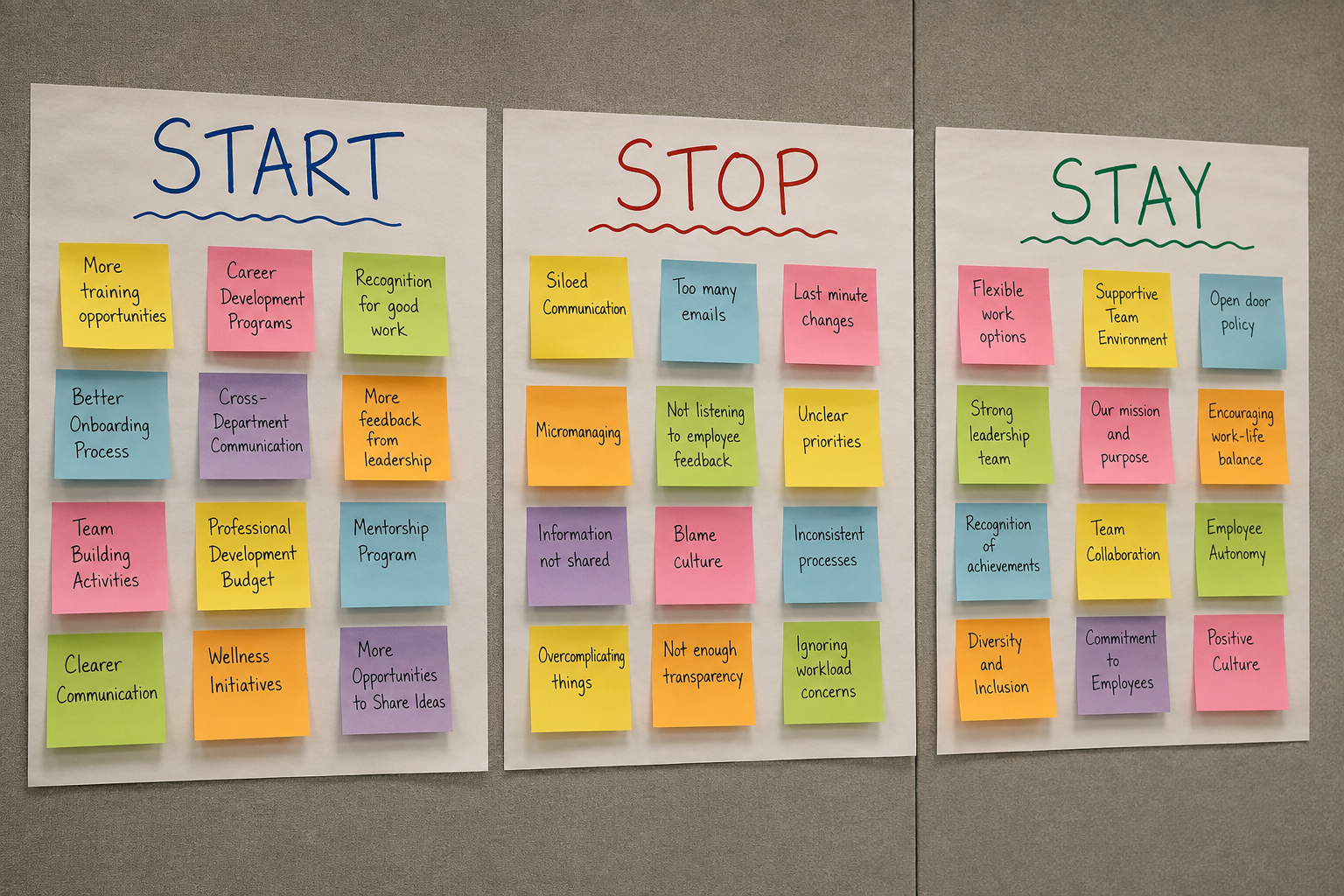
    Taking the leap isn’t about abandoning stability. It’s about building on something that’s already proven its worth. As you consider what you need to start, stop, and stay, both personally and professionally, ask yourself what your side gig could become if you gave it your full attention.