Category: Personal Development

We all need a little personal development mixed in with our professional and career development. Read blogs in this category for stories and best practices for personal wellness and wellbeing, skills improvement, and  more.

  • Employee Communication: Building Trust in Teams

    Employee Communication: Building Trust in Teams

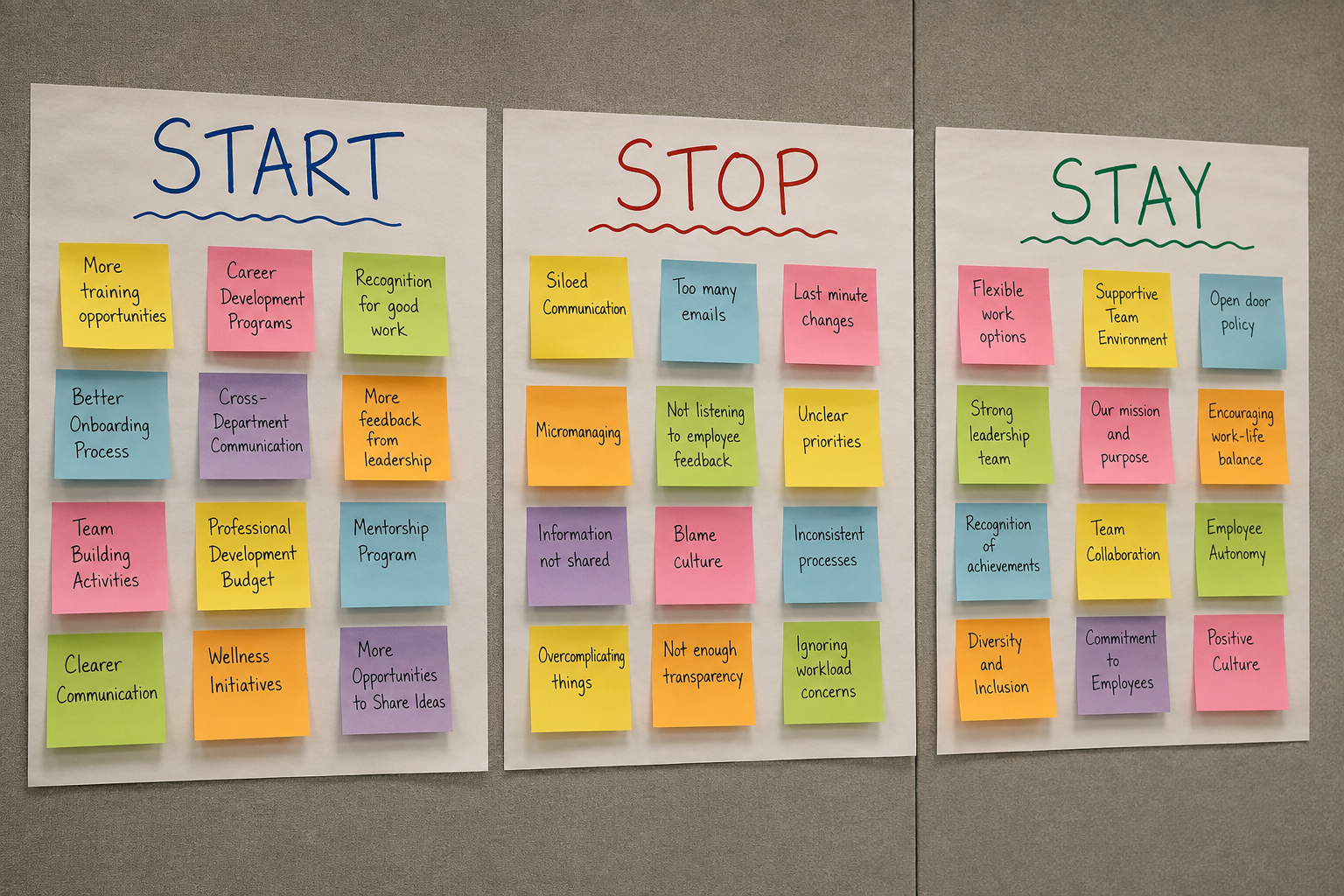
    Recently, Jillian and I facilitated a series of employee focus groups for one of our clients. Leadership intentionally stepped out of the room to create space for open and honest conversation. Employees were invited to share their thoughts on the organization’s culture, leadership, training, communication, and anything else they felt was important.

    Although the focus groups were facilitated by Horizon Point and leadership was not present, many employees were still hesitant to participate. Their concerns weren’t about the questions being asked—they were about what would happen after they answered them. Would their feedback somehow make its way back to their manager? Would speaking honestly affect how they were viewed? Would anything actually change as a result of what they shared?

    Those concerns highlight an important reality: communication isn’t just about creating opportunities for employees to speak. It’s about creating an environment where they believe it’s safe to do so—and where they trust their voices will be heard.

    When employees don’t believe it’s safe—or worthwhile—to speak honestly, valuable insights remain hidden, small issues become larger ones, and organizations lose opportunities to improve.

    Communication Starts with Relationships

    Providing feedback isn’t just about the conversation—it’s about the relationship. Trust determines whether feedback is received as an opportunity for growth or as personal criticism. In Radical Candor, Kim Scott describes effective leadership as caring personally while challenging directly. Without trust, even the best-intentioned feedback can be met with skepticism or defensiveness.

    At Horizon Point, we often talk about Relationshipping—the intentional practice of building and nurturing relationships to better understand, support, and serve others. Relationshipping doesn’t begin when a difficult conversation is needed. It’s built over time through consistent actions: listening with curiosity, following through on commitments, treating people with respect, and demonstrating genuine care.

    Employees don’t communicate openly because they’ve been told their opinions matter. They communicate openly because their experiences have shown them they do. Trust isn’t built during annual surveys or focus groups—it is built in the hundreds of everyday interactions between leaders and employees.

    Psychological Safety Requires Humble Leaders

    Psychological safety isn’t about making everyone comfortable. It’s about creating an environment where employees feel safe asking questions, sharing ideas, admitting mistakes, respectfully disagreeing, and providing honest feedback without fear of embarrassment or retaliation.

    Google’s Project Aristotle identified psychological safety as the single most important characteristic of high-performing teams. The common thread wasn’t that these teams avoided difficult conversations—it was that people felt safe enough to have them.

    Creating that kind of environment requires humility from leaders.

    We often work with leaders who say they want honest feedback, and most genuinely do. The real test comes when that feedback challenges a decision, questions a process, or exposes a blind spot. Our natural instinct is often to explain our reasoning or defend our intentions instead of seeking to understand the employee’s experience.

    One of the things I often tell leaders when conducting job analyses is that no one understands a job better than the person doing it every day. The same is true when identifying problems or opportunities for improvement. The employees closest to the work often know where processes break down, what creates frustration, and where changes could have the greatest impact.

    Leadership isn’t about having all the answers. It’s about asking the right questions and creating an environment where employees feel comfortable sharing what they know.

    One of the most important lessons leaders can learn is that intent and impact are not always the same. A leader may have every intention of improving communication, efficiency, or morale, while employees experience the decision very differently. Rather than defending intentions, effective leaders become curious about the impact. They ask questions, listen without interrupting, and remain open to adjusting course when necessary.

    Listening Isn’t Enough

    Creating opportunities for employees to provide feedback is only the first step. Organizations invest significant time and resources into employee surveys, focus groups, suggestion boxes, stay interviews, and exit interviews. Simply asking for feedback creates an expectation that employees’ voices will be acknowledged.

    That doesn’t mean leaders need to implement every suggestion. Employees understand there are budget constraints, competing priorities, and operational realities. What they do expect is transparency.

    Close the communication loop.

    Tell employees what you heard. Share what actions will be taken, what won’t be implemented, and why. Provide realistic timelines when possible, and thank employees for their honesty and willingness to contribute.

    When feedback disappears into a “black hole,” employees begin to wonder why they were asked in the first place. Eventually, they stop offering ideas, raising concerns, or participating in future feedback opportunities—not because they don’t care, but because they’ve concluded it won’t make a difference.

    Employees don’t expect every idea to become reality, but they do expect their voices to matter.

    Final Thoughts

    As we wrapped up each focus group, one thing stood out. Employees cared deeply about their organization. They wanted to share ideas, solve problems, and help make their workplace better. Their hesitation wasn’t about having something to say—it was about wondering whether it was safe to say it and whether anyone would truly listen.

    Healthy workplace communication isn’t built through annual surveys or occasional focus groups. It’s built every day through relationships, psychological safety, humility, and consistent follow-through. Leaders who listen with curiosity, invite honest dialogue, and communicate transparently create cultures where employees feel heard, respected, and empowered to contribute.

    Because when employees stop talking, organizations stop learning.

  • The Leaders You Need Are Already Here

    The Leaders You Need Are Already Here

    Why Developing Emerging Leaders Matters Now

    The leaders you need may already be in your organization. They may not have a formal leadership title yet. They may be individual contributors, project leads, experienced team members, or newer employees who consistently show initiative, influence, curiosity, and trust. The challenge is not always finding leadership potential. Often, the challenge is recognizing it early and developing it with intention.

    Too often, organizations wait until there is a leadership gap before they start thinking about leadership development. Someone leaves. The business grows. A team needs a new supervisor. A high-performing employee gets promoted because they are great at the work. Then, almost overnight, the job changes. Success is no longer just about technical skill, individual productivity, or personal drive. Now, success depends on the ability to influence people, communicate clearly, coach performance, handle conflict, and make decisions that shape culture.

    That transition can be tough, especially when employees are expected to lead before they have been prepared to do so. Harvard Professional & Executive Development notes that emerging leaders need core management skills to drive organizational goals, foster innovation, build trust, and adapt to change. That is not just professional development. It is a business need.

    At Horizon Point, we believe leadership development starts by looking within. When organizations learn how to identify leadership potential and develop emerging leaders from within, they create continuity, strengthen culture, increase engagement, and prepare for future growth. They also send an important message to employees: we see your potential, and we are willing to invest in it.

    Leadership Development Should Be Customized

    In our work with organizations across industries, we see this over and over again: generic leadership programs rarely create lasting change. Organizations need leadership development that connects to their real business challenges, values, people, and future goals.

    For one organization, leadership development became a key part of succession planning. Horizon Point partnered with senior leaders to identify the competencies needed at different levels, clarify the talent pipeline, and equip current leaders to become more intentional career developers for others. The goal was not simply to “train managers.” The goal was to help leaders become active developers of talent throughout the organization.

    This aligns with guidance from the U.S. Office of Personnel Management, which describes succession planning as a systematic approach to building leadership pipelines, developing potential successors, and focusing resources on talent development. Leadership development is not separate from workforce planning. It is one of the ways organizations protect continuity, capability, and future performance.

    From Insight to Action

    We have also seen the impact of customized assessment and coaching work. In one engagement, Horizon Point helped design a customized 360 assessment aligned with organizational values and leadership competencies. The assessment data became the foundation for individual development action plans and succession planning decisions. Participants received coaching to understand their results, identify strengths and gaps, and create clear improvement plans.

    That is the power of a well-designed leadership development process. It provides both insight and action. Data without development can feel like a report card. Development without data can feel unclear. Together, they give organizations a practical way to grow people with purpose.

    The Center for Creative Leadership emphasizes that effective leadership development should connect to business strategy, include real-world application, and be reinforced over time. We see this in practice every day. The best programs give leaders space to practice, reflect, receive feedback, and apply what they are learning in real situations.

    What Environment Do You Create?

    One of the most thought-provoking questions we ask emerging leaders is simple: What environment do you create?

    Leaders may not be able to motivate people directly, but they can create the conditions where motivation, ownership, and growth are more likely to happen. They can clarify expectations. Build trust. Connect work to purpose. Give feedback in a way that develops instead of discourages. Manage different personalities, communication styles, and conflict responses. Make people feel seen, challenged, and supported.

    That is why leadership development must begin from within. It starts with self-awareness. Emerging leaders need to understand how their own habits, values, communication patterns, and assumptions affect others. From there, they can build awareness of the people they lead.

    Building Leaders from the Inside Out

    Every organization will face transitions: retirements, growth, restructuring, new markets, changing workforce expectations, and evolving customer needs. The question is not whether leadership gaps will appear. The question is whether the organization is preparing people now to step into them.

    At Horizon Point, we create and customize leadership development programs that help organizations grow leaders from the inside out. Sometimes that means designing a full leadership development or succession planning process. Sometimes it means facilitating existing curriculum locally with excellence and care. Sometimes it means assessment, coaching, train-the-trainer support, or workshops focused on the skills new leaders need most.

    Because when organizations develop emerging leaders with intention, they do more than fill future roles. They build stronger cultures, more capable teams, and workplaces where people and performance can grow together.

    To learn more about developing emerging leaders and building a strong leadership pipeline, explore these related blog posts:

    From Manager to Coach: Coaching Leadership That Builds Teams

    6 Steps for Choosing Leadership Training Content and 7 Recommended Frameworks

    Interested in developing emerging leaders within your organization? Explore our newly revised Leadership Development webpage to learn how Horizon Point helps organizations build leadership capacity, strengthen succession planning, and prepare leaders for future success.

  • From Manager to Coach: Coaching Leadership That Builds Teams

    From Manager to Coach: Coaching Leadership That Builds Teams

    Many people have stepped into management because they were great at doing the work.

    They were strong individual contributors. They solved problems quickly. They delivered results.

    So when they become managers, they often continue doing what worked before. They direct tasks, answer questions, and step in to solve problems.

    But this approach can create an unintended challenge.

    When managers remain the primary problem solver, team growth can stall. Over time, employees begin to rely on the manager for answers instead of developing their own solutions. The leader becomes a bottleneck rather than a multiplier.

    This is where the shift from manager to coach becomes powerful.

    Instead of focusing primarily on directing work, coaching leadership focuses on developing people.

    When leaders develop people, teams become stronger, more capable, and more engaged.


    The difference between managing and coaching

    Research from the Society for Human Resource Management (SHRM) highlights that coaching leadership strengthens employees’ problem-solving ability and builds long-term capability rather than reliance on direction from their manager.

    In other words, coaching leaders do not just solve today’s problem. They help employees learn how to solve the next one. Over time, this shift creates stronger and more capable teams.


    Why coaching leadership matters

    Research summarized by the National Institutes of Health indicates that supportive leadership and developmental feedback are linked to higher employee engagement and improved performance.

    Similarly, research shared through the American Psychological Association connects regular feedback and developmental leadership practices with improved workplace well-being and productivity.


    Four ways to start coaching your team

    1. Ask more questions than you answer. When employees bring a challenge, ask questions that help them think through the issue and build ownership of their work.

    2. Focus on development, not just performance. Make space for conversations about strengths, growth opportunities and future goals.

    For more ideas, see Horizon Point’s 4 Ways to Get Unstuck with Professional Development

    3. Provide feedback regularly. When feedback is clear and timely, employees learn faster and gain confidence in their progress.

    4. Create opportunities for reflection. Ask employees what worked, what could improve and what they learned from the experience.


    Building developmental teams

    The goal of coaching leadership is not just stronger performance today. It is building developmental teams where people continually grow their skills, confidence, and leadership capacity.

    Managers get work done through people. Coaches develop people who can get the work done.At Horizon Point, we help organizations strengthen leadership capability through leadership development programs, coaching engagements, and organizational consulting.


  • What Cultivates Gratitude? Or Better Yet, What Does Gratitude Cultivate?

    What Cultivates Gratitude? Or Better Yet, What Does Gratitude Cultivate?

    This week we are featuring a reblog from Mary Ila, originally published November 23, 2021.

    I was tasked with writing a blog post on gratitude for this week- Thanksgiving week. I love it when my team gets together without me while I’m on sabbatical and sends me an email telling me what to write 🙂  It’s a given- a post with a theme of thankfulness- even though as a culture we’ve seemed to skip right to Christmas once Halloween ends. 

    I’ve written about counting your blessings and even counting your first-world problems and being thankful when tasked with the same thing before. 

    But what keeps jumping back into my mind this year as I think about how to articulate some inspiration for gratitude is to cite Bryan Stephenson. I had the opportunity to hear Stephenson at a conference I attended this fall.  Bryan Stephenson is the author of Just Mercy and founder of the Equal Justice Initiative.  

    He is obviously an in-demand speaker.  He apparently charged the group nothing for an almost hour-long talk.  He started the session by thanking the people in the audience for the work they do.  Mostly public servants in the audience who spend their days helping people on the margins, he made reference to how some of the services the group was involved in impacted him as a child. 

    He thanked and he thanked and he thanked before he moved into any form of argument or points. 

    But his points were powerful, and also speak to a heart of gratitude I believe that then leads to a heart of grace and mercy, and then one of action. 

    In speaking about the marginalized, or “least of these” Stephenson made four points: 

    1. Commit to getting proximate.  We can’t help if we aren’t close because then we don’t know what we don’t know.  We need to affirm people’s humanity to help them get to higher ground and realize that all our journeys are tied to one another.  
    2. We have to change our narratives.  This means we have to talk about things we haven’t talked about before.  He says we have to, “acknowledge, confess, and repent.”  My favorite quote of the night was, “Beautiful things happen when we tell the truth.  We close ourselves off to beauty when we don’t tell the truth.” 
    3. We have to believe in hope.  This means believing in things we haven’t yet seen and being confident that in getting proximate and changing narratives, they will become seen. 
    4. We have to do things that are uncomfortable and inconvenient.  Really, the first three things echo this point.  Getting proximate is uncomfortable and inconvenient.  Changing our narratives and telling the truth is uncomfortable. Staying hopeful is not only uncomfortable, it is also inconvenient to train our brains to be so.  But in the end, and in the journey itself, that is where the beauty lies. 

    I hope you’ll take this week to be thankful and it will lead you to grace and mercy, which will then inspire you to action.  

    During this holiday season, where do you need to get proximate, change a narrative, have hope, and/or be uncomfortable or inconvenienced? 

  • Nourishing Growth Through Gratitude, Common Ground, and Kindness

    Nourishing Growth Through Gratitude, Common Ground, and Kindness

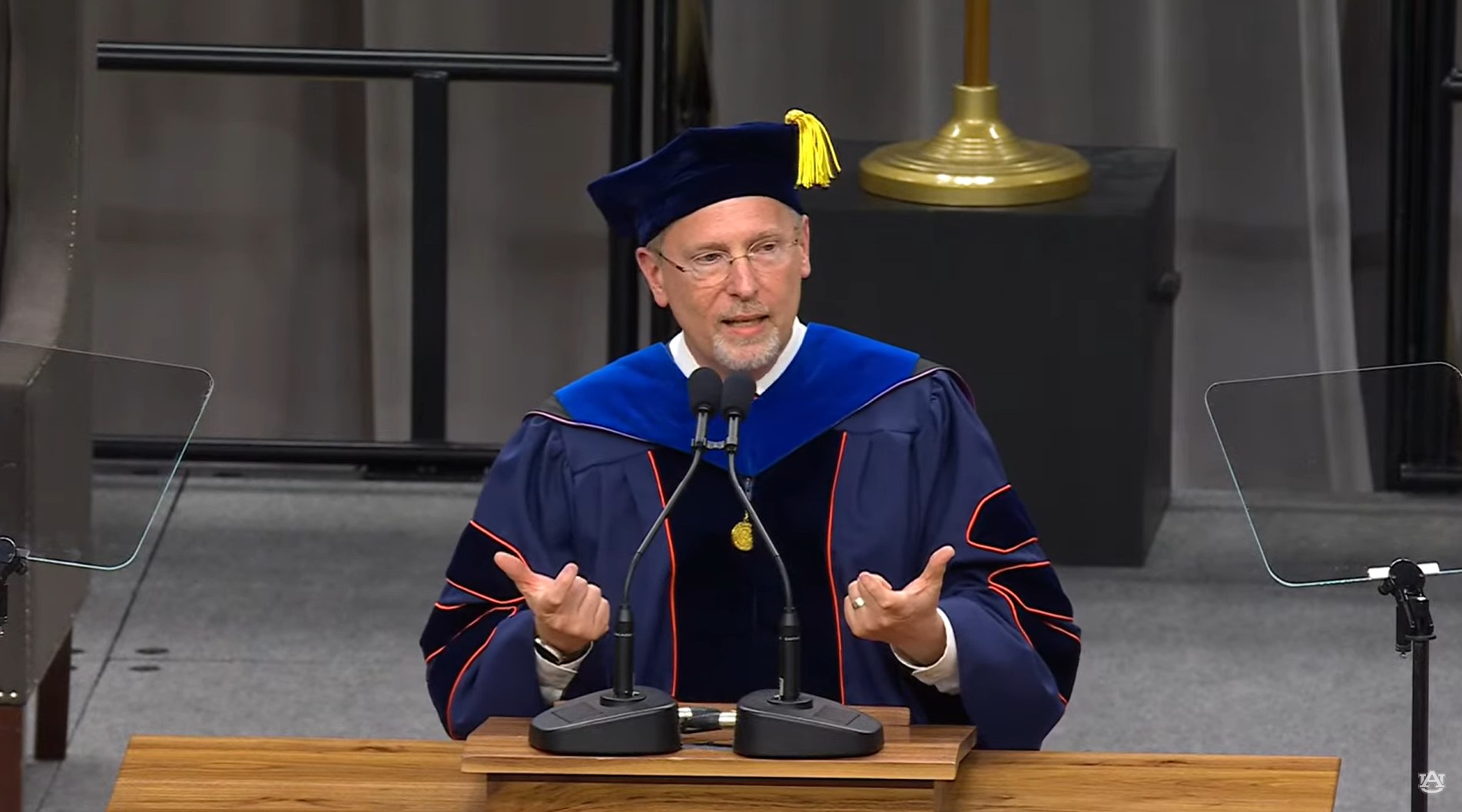
    A Note from HPC: We’ve had the privilege of working with Cummings Research Park to provide leadership training for high-potential professionals who are shaping innovation in Huntsville, Alabama. The class sessions were hosted at HudsonAlpha, where Dr. Neil Lamb serves as president. During one session, Dr. Lamb joined us as a “leadership in action” guest speaker, sharing his story and insights on purpose-driven leadership. When Mary Ila began planning this special feature for our Nourish theme, she immediately thought of Dr. Lamb as the perfect guest contributor. He agreed that his recent commencement speech at Auburn University captured the message beautifully. And as a two-time Auburn graduate myself, I couldn’t agree more. You can watch the full speech at the end of this blog post. 

    When Dr. Neil Lamb stood before Auburn University’s Class of 2025, he began with honesty and humor. He admitted he could not remember a single word from his own graduation speaker 33 years ago. What he did remember was sitting a few rows away from the woman who would become his wife, a love story that began at Auburn and continues today.

    That story set the tone for a message about what truly sustains us. Dr. Lamb, now president of the HudsonAlpha Institute for Biotechnology, has built a career on advancing science and education. Yet his advice to graduates was not about innovation or research. It was about how to live and lead in a way that nourishes ourselves and others.

    He called on the audience to practice three habits that have the power to shape lives, teams, and communities: gratitude, common ground, and kindness.

    Gratitude: Nourishing Connection

    “Take a moment,” Dr. Lamb urged, “and think of three people who have supported you, believed in you, or pushed you to get to where you are today.”

    Gratitude, he said, is not just for special occasions. It is a daily practice that keeps us connected to what matters most. At Horizon Point, we often talk about nourishing relationships. Gratitude is how that nourishment begins. It reminds us that none of us reach success alone.

    Expressing appreciation builds stronger teams and healthier workplaces. It creates space for joy and perspective, even in times of challenge. When we take the time to say “thank you,” we invest in the human side of work.

    Common Ground: Nourishing Understanding

    In a world filled with division, Dr. Lamb encouraged graduates to seek common ground.

    “You can hold deep convictions while still recognizing the dignity of others,” he said. “Finding common ground isn’t compromising your values. It’s choosing connection over contempt.”

    That kind of leadership starts with curiosity. It is the willingness to listen longer, to stay in the conversation when it gets uncomfortable, and to look for shared purpose instead of differences.

    When we nourish understanding within teams and organizations, collaboration thrives. Trust grows. Solutions emerge. As Dr. Lamb reminded the audience, finding common ground does not mean giving something up. It means building something stronger.

    Kindness: Nourishing Culture

    Dr. Lamb called kindness a “stealth superpower.” It diffuses tension, invites generosity, and changes lives in small and large ways.

    Kindness does not mean ignoring conflict or injustice. It means seeing the humanity in others, especially those who challenge us. It means offering grace when judgment would be easier and patience when frustration feels justified.

    In the workplace, kindness nourishes culture. It sets the tone for how people feel, how they show up, and how they grow. When kindness leads, people are more open, resilient, and ready to contribute their best.

    Belonging and Self-Doubt

    Dr. Lamb also spoke candidly about his own struggle with impostor syndrome. As a student, he felt like he had “slipped through the cracks” and did not truly belong at Auburn. It took years, mentors, and self-reflection to realize that he was right where he needed to be.

    To anyone carrying similar doubts, his message was powerful:

    “You are not here by luck or by mistake. You are here because you deserve to be.
    You will belong in the rooms where ideas get born, where decisions get made, and where the future takes shape.”

    At Horizon Point, we believe belonging is part of being nourished. When people feel seen, valued, and included, they can bring their full selves to their work and their communities.

    A Nourishing Way Forward

    Dr. Lamb closed with a challenge that aligns beautifully with our theme this year:

    Carry gratitude.
    Seek common ground.
    Be kind.

    These are not “soft” skills. They are essential skills that sustain leadership and nourish the people around us.

    Whether you are crossing a stage, leading a team, or facing a personal transition, these three habits can ground and guide you. Gratitude connects. Common ground unites. Kindness uplifts. Together, they nourish growth that lasts.

    “Auburn has prepared you well,” Dr. Lamb said. “You are more than ready. And we can’t wait to see what you do next.”

    War Eagle to that.