Author: Taylor Simmons

  • How do you Navigate the Advancement Process?

    How do you Navigate the Advancement Process?

    I recently facilitated a workshop with a group of educators, some of whom are considering advancement in their field. We talked through several tips to help with navigating the process. Although I shared some information that was specific to their field, many of the tips are actually universal.

    Here are a few of my favorites:

    1.Give your resume a glow up! Check out more ideas here:

    How do you make your resume stand out among thousands received by employers?

    2. Consider these steps as you seek advancement:

      • Seek out leadership roles prior to advancement
      • Volunteer for presentations
      • Attend any professional development that’s offered 
      • Network/Make Connections 

    Up your networking game with more ideas from this blog post: Networking Authentically

    3. Be prepared for your interview: Read Interview Prep for Today’s Job Market, which talks about the benefits of using the S.T.A.R prep tool.

    Are you ready for the next step in your career? I recommend checking out Ken Coleman’s book, The Proximity Principle to lead you in the right direction. You can also check out my book review here: The Proximity Principle – A Book Review.

  • Book Review of When: The Scientific Secrets of Perfect Timing

    Book Review of When: The Scientific Secrets of Perfect Timing


    A book about perfect timing – Where have you been all my life? During my month-long sabbatical, I read several books. When: The Scientific Secrets of Perfect Timing by Daniel H. Pink was my favorite. 

    Could the time of day that we make decisions be significant? Could the time of day affect how well we learn or work? According to Dan Pink, it actually does. Pink takes a look at how our body functions naturally. Actionable items & tips are offered throughout the book.

    To get started, you need to map your biological clock. Pink shares 3 categories based on natural daily patterns: peaks, troughs, and peaks. Once you determine your chronotype, your personal pattern of circadian rhythms, you can determine the best time to do certain tasks. 

    Pink categorizes individuals into two areas – owl (late night/evening people) and larks (my morning peeps).  Once you know when your peak performance times are, you can focus on doing your most difficult tasks then. Plan to do your creative tasks during your troughs when you have less energy. These ebb and flow based on age also. (Note: I highly recommend this for educators!)

    A new year has arrived, learn to master perfect timing by checking out this great read!

    We will explore When & other personal development books in a new training opportunity in the works for 2022. If you are interested in learning more about how to create organizations where people thrive, please visit our Illuminate website at: https://horizonpointconsulting.com/illuminate/


  • Personal Wellness Strategies

    Personal Wellness Strategies

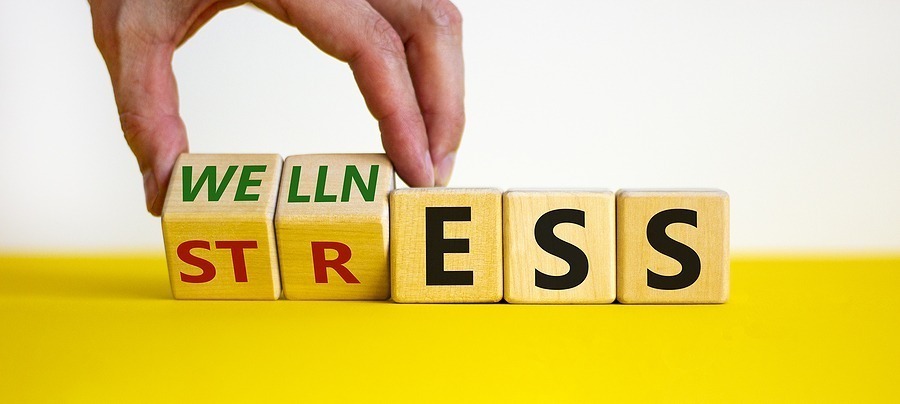
    Personal wellness is something that is often considered a luxury. However, the older I get, the more I realize it is a necessity. Earlier this year, I had a scare with my blood pressure that sent me to the emergency room. After multiple tests and a follow-up with a cardiologist, I was diagnosed with stress and anxiety. On a side note, my elevated blood pressure is something inherited that will most likely result in medication for the rest of my life. 

    Stress which often leads to anxiety can cause a host of issues if not addressed. When my episode happened, I had several heart attack symptoms (chest/neck/arm pain, elevated blood pressure, racing heart, etc.). It was scary, especially since I’ve always been in good health. It forced me to stop, slow down and make health and personal wellness a priority.

    There are so many ways we can combat stress and anxiety without medication. With that being said, I personally believe medication can help and is often needed in conjunction with personal wellness. Here are a few strategies to consider for personal wellness:

    1. Exercise – Don’t get me wrong, I will never be a marathon runner or someone who visits the gym daily. I do, however, love a brisk walk at the park and do my best to get there at least 4 times a week. I have also been trying yoga, PiYo, HIIT, and other workouts; I typically aim for 20-30 minutes of one of these two or three times per week. Check out this article from Mayo Clinic about the benefits of exercise to reduce stress: Exercise and stress: Get moving to manage stress.
    2. Meditation – This is different for everyone. I actually have meditation playlists that I listen to when I need to relax a bit; I even do it in my car sometimes. It has a calming effect for me. Personally, I also incorporate prayer and devotion often.
    3. Listening to Podcasts – I do this while walking. Most everything I listen to has some type of personal development component. Some of my current favorites are: The Next Right Thing, Cultivate with Kelly Minter, and Money Tip Monday. These are all available on Spotify.
    4. Massage – This one is another former “luxury” that I now consider a necessity. I do my best to schedule a massage once a month. It helps with so many things! Read about the benefits of massage here: How Massage Can Help Treat & Eliminate Anxiety.
    5. Talk to someone (Cognitive Behavior Therapy) – Seeing a counselor is a great way to reduce anxiety. I have not tried this yet, but my cardiologist and others have recommended this as a tool to reduce stress/anxiety. It allows you to talk to a neutral party, about anything. Check out 8 Benefits of Cognitive Behavior Therapy According to Science.


    As a write the blog, I am counting down the days to my sabbatical. It begins in about 3 weeks. I’m looking forward to some downtime to focus on personal wellness. Read more about our team’s plans for sabbaticals here: Taking a Walkabout.

  • Inflation and Competitive Wages – What do these mean to You?

    Inflation and Competitive Wages – What do these mean to You?

    Are your company’s wages in line with the market? Inflation is often the topic of conversation in the news and in everyday conversation. I recently read an article about Social Security increases, the largest in more than a decade, is on the horizon; you can check the article out here: Social Security Cost-of-Living Adjustment Could be the Highest in 13 Years.

    What does that mean for individuals? It means you should know your worth, or rather, know what the going rate is for your role. I’m currently working on a wage compensation study and researched the Consumer Price Index to ensure rates were on track. It is currently 5.4%; that’s considerable. Here are a few free sources you can use to dig into wage data:

    O*Net – (enter job title, scroll down to Wage & Employment Trends, enter zip code)

    Salary.com – (look for “Individuals” What am I worth? Enter job title & location)

    What does this information mean for companies? Just this week, I’ve received more than one request for a proposal from companies wanting a compensation study. I’ve also had more than one conversation about how hard it is for companies to find employees. One way to combat that issue is to ensure you are paying at least the going rate for the positions you are seeking to fill. If you’d like to learn more about how Horizon Point can help with this, let us know! In the meantime, check out this case study from our website: Regional Wage Survey Case Study.

  • Now’s the Time to Upskill

    Now’s the Time to Upskill

    I attended a great workforce summit in my community this week. The keynote was with the Department of Commerce for our state and provided updates on the direction and focus of their department ending with a promise to rise to the challenge and encouraged attendees to do so also.

    Throughout the afternoon, I listened to educators and industry panelists who had a common goal of growing a strong, engaged workforce. As I reflected on the presentations provided and conversations I had throughout the day, I thought about how important lifelong learning is and how NOW is the time to upskill as several people re-enter the workforce.

    There are numerous avenues to upskill. Here are a few of my favorites:

    Community Colleges – locally we have some amazing community colleges that offer a plethora of courses and work closely with industry to provide training. Check out what community colleges have to offer in your area!

    Online Video Courses – you need only an internet connection to benefit from thousands of courses online. Udemy is one of my favorite providers of online courses. I’ve personally taken a few of their courses; I was able to do this on my own time, at my own pace &  it was super cost-efficient!

    Credentialing – depending on your career field, credentials are often available. Credentials are a great way to verify your skillset. Look for credentialing opportunities through organizations like the Center for Credentialing and Education. They often offer materials to prepare for credentialing also.

    Whatever your next move, upskilling is a great way to get there!