We help individuals, organizations, and communities think innovatively about the next generation workforce and workplace. Read these forward-thinking stories and best practices from our work and lives.
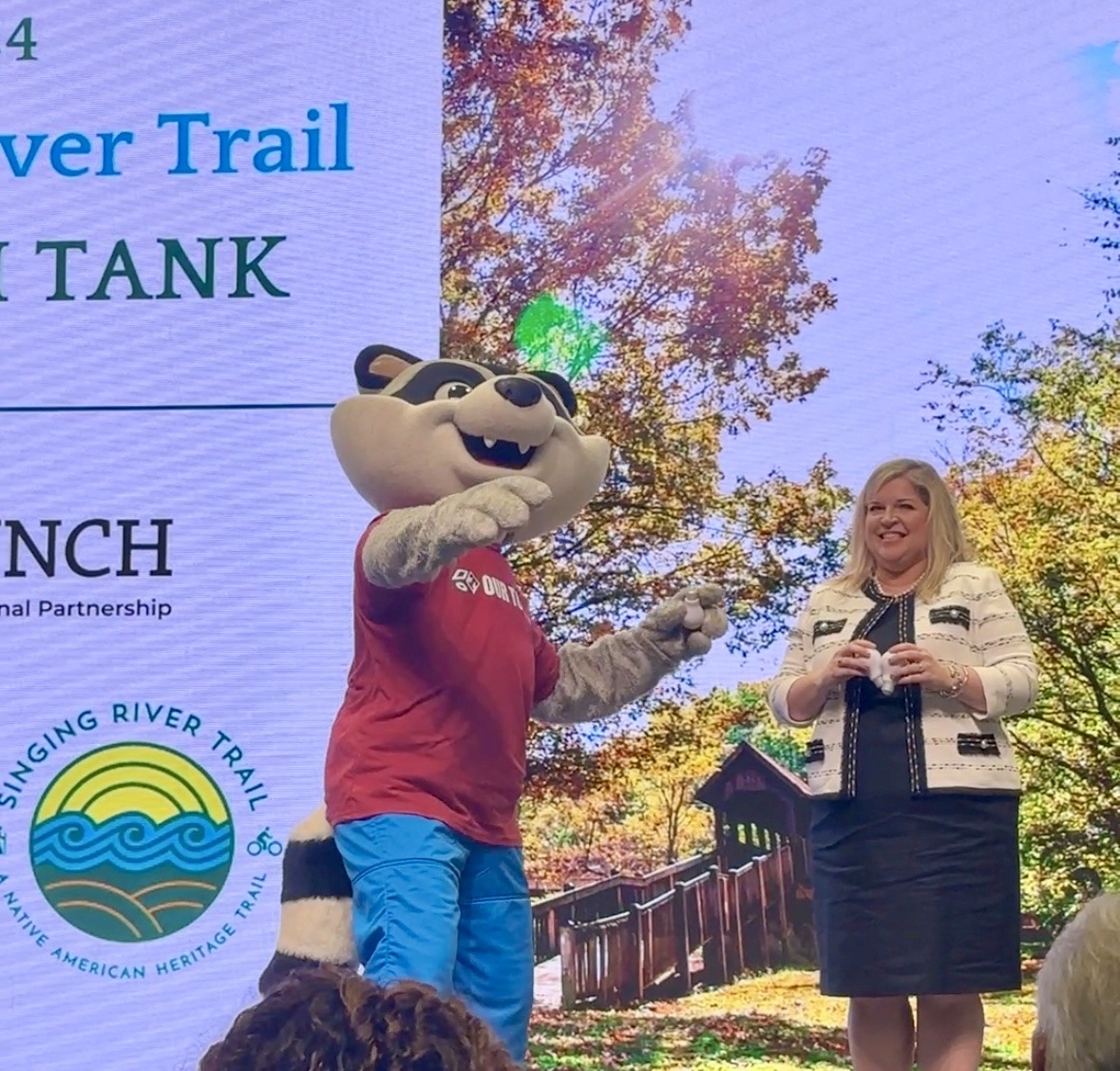
Today I saw a giant raccoon throw light bulbs to people at Space Camp. That’s a real sentence.
Sprocket, loveable mascot of the Rocket City Trash Pandas, threw Horizon Point stress balls – made to look like light bulbs – to attendees of the 2024 Launch Tank Competition. It was a wild and wonderful moment. But let’s back up.
John Kvach and his Singing River Trail team partner with LAUNCH and Innovate Alabama to host a business pitch competition for entrepreneurs in North Alabama, known as Launch Tank. “Our vision goes beyond the competition,” Kvach says. “We want to connect as many entrepreneurs to the Singing River Trail as possible, making North Alabama a better place to live, work, and play.”
This year, Horizon Point supported Launch Tank as a Seed Sponsor. If you know Horizon Point, then you may know that Give Back is one of our operating values, and each year we intentionally earmark a portion of the budget to financially support an initiative or two that we believe in. So, this week’s blog is all about celebrating the innovation happening in our own backyard.
Horizon Point is a Woman-Owned Small Business (WOSB), and we proudly support entrepreneurship and small business initiatives in our state. Mary Ila is an Advisor for EDPA’s Alabama Launchpad. I get to serve on the selection committee for Decatur Morgan CEO for high school students interested in entrepreneurship. We partner with The Catalyst, The E-Center, and the Alabama Network of Entrepreneurial Women. We believe in equal opportunity, and it’s a joy to support opportunity networks.
When Launch Tank Co-Chair Lisa Mays said she might throw our Horizon Point light bulbs to people, we didn’t know John Kvach and Sprocket would start throwing them on stage. We also didn’t realize how symbolic it would be to throw light bulbs at an event built on innovation until Lisa said, “They’re like ideas! We’re just tossing around ideas!” We could not have said it better ourselves.
We are so grateful for programs like these in our backyard, and it’s an easy decision to Give Back to Singing River Trail Launch Tank. After all, who doesn’t want to catch a light bulb from a raccoon?
Want more? Check out the featured clip below or this article from WHNT. See the full list of finalists from Quad Cities Daily.
We subscribe to the newsletter from Appreciation at WorkTM and got one of the first announcements of the new, post-COVID research on professional appreciation. Right away, I asked the team if we could do a blog about it. New research!? Yes! Here’s the blurb we got:
Appreciation at Work has done peer-reviewed research and polling through and post-COVID. The result of this research is a completely new chapter on how to effectively show appreciation to remote and hybrid employees including topics such as:
the variety of remote work relationships
trust in remote work relationships
creating and maintaining a workplace culture
the employer/supervisor perspective
the employee perspective
the key to keeping remote employees
what neuroscience is showing
This edition also includes updated research (50+ citations) of data shared about the importance of appreciation and its positive impact on the functioning of businesses & organizations (including increased productivity and higher profitability when your employees feel appreciated.
I read it, loved it, laughed, cringed, and mostly just appreciated for the millionth time that Gary Chapman & Paul White adapted the Love Languages for professional relationships. They present their research on appreciation at work in a relatable, real life way. Here are some of my favorite quotes, classic and new:
“During the Great Resignation of 2022, researchers at the Massachusetts Institute of Technology found that employees were three times more likely to resign due to a lack of appreciation in comparison to financial compensation issues.”
“When leaders actively pursue teaching their team members how to communicate authentic appreciation in the ways desired by the recipients, the whole work culture improves. Interestingly, even managers and supervisors report they enjoy their work more. All of us thrive in an atmosphere of appreciation.”
“74% of employees never or rarely express gratitude to their boss.” (Reminder that appreciation is important up, down, and sideways!)
“There is a distinct difference between the Quality Time employees desire from their supervisor and what they value from co-workers. In response to this issue, we expanded the Motivating by Appreciation Inventory to allow individuals to indicate what actions they desire and from whom they want them.”
Acts of Service are about the other person, not about you. “Ask before you help. Don’t assume you know what help they want or need. If you are going to help, do it their way.”
“Our research with over 375,000 employees found that Tangible Gifts is the least chosen language of appreciation.” So if you’re going to do it, it’s important to give gifts “primarily to those individuals who appreciate them” and “give a gift the person values”. (Lorrie wrote about HPC’s take on gifts in “A Few of Our Favorite Things”.)
“The surest way to find out the appropriateness of Physical Touch is simply to inquire.” Many people appreciate a good high five, fist bump, or handshake to celebrate a job well done. Just check with them first, and don’t hold it against them if they prefer not to touch.
Chapman & White also devote an entire chapter to the ROI of genuine appreciation. Take a look at these charts from the book:
Regarding remote and hybrid teams, Chapman & White basically say the needs are the same as fully in-person teams, but the intensity of certain needs are different. Here’s a snippet from the chapter on remote teams:
“In one study, prior to COVID-19, with almost 90,000 individuals who had taken our online assessment…we found that Words of Affirmation was the most desired appreciation language, followed by Quality Time and Acts of Service. But remote employees chose Quality Time as their primary language of appreciation more frequently (35% of employees) than workers on site (25%). The same pattern was found with employees both during the pandemic and afterwards.”
They go on to say, “…the single most important lesson we learned for effectively communicating appreciation to remote colleagues is that one must be more proactive than in face-to-face relationships. The most important factor is to understand, affirm, and relate to your colleagues as people.”
If you saw our new team video highlighting our operating values, or if you’re a longtime HPC friend, you know that People First is our number one value. We are all just people, with the same ups and downs, and the same desire to be loved, appreciated, and valued. If we were to sum up the 5 languages book(s) in the simplest terms, we’d say Be People First. Be people first toward yourselves, and be people first towards others.
If we remember to be People First, we just might get better at genuine appreciation all on our own.
For individuals or teams interested in learning more about The 5 Languages of Appreciation in the Workplace, we highly suggest starting with the MBA InventoryTM, then reading the book (or listening to the audiobook). If you purchase the book, it comes with an access code to take the inventory. If you’d like to jump straight to the inventory, you can buy a single access code or codes for your entire team here. (I feel like it’s important for me to say that we’re not being paid to promote any of this, we just really like it.)
It’s Sunday afternoon as I sit at my computer and plan for the week ahead. I’ve been working from home for almost a decade now. My boundaries and rules have certainly changed over the past several years. As with most things, experience is the only way to do something well. This week, I’m sharing my top tips for setting boundaries around successfully working from home.
When I came on board with HPC, it was way before Covid, and remote work was not super common, so I discovered what worked and didn’t work through trial and error. During those early days, my children were in grade school & it was ideal for me to work when the house was quiet, so I did that. But I also constantly checked email and it wasn’t uncommon for me to work well into the night, even on the weekend. This was a huge shift for me, coming from a typical 8 to 5 role. No one was asking or expecting me to be available 24-7. My natural helper, people pleasing personality dictated my schedule those days.
With several remote working years under my belt now, I feel so much more comfortable with the flexible schedule I can create every week. Here are three ways I set boundaries and rules to successfully work from home:
I create a list, several (actually). At the end of each week, I create a daily list for the next week. Prioritizing 3 things that I need to accomplish each day works best. The daily list includes work responsibilities, but I also include personal responsibilities. For example, some form of exercise (ideally taking a walk outdoors) is on there most days, weather permitting.
I plan deep work early in the day and early in my week. I do my best to protect my Fridays. I make sure the most important tasks and meetings happen early in the week and day if possible. I recommend checking out the book, When: The Scientific Secrets of Perfect Timing, which helped me discover the time of day that I’m most productive.
Time blocking is so very helpful. Within my list(s), I often estimate how long I plan to work on each project or task. I often add these “time blocks” to my calendar to remind myself as well as to share with my coworkers what I have planned or the day and week. You can read more about time blocking in this article from Lifehack.org – How to Start Time Blocking to Get More Done.
Are you and or your team working remotely? What are your tips?
Here are a few more articles from The Point Blog you might want to check out:
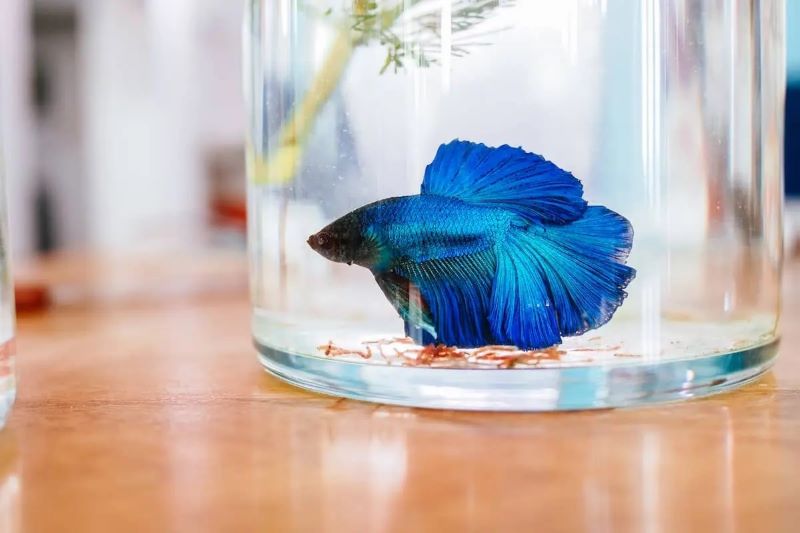
Her name was Ima, Ima Fish. She was a Betta that I got when my son was four months old and I decided being a stay-at-home mom wasn’t for me. So, when my old boss called me and asked me if I wanted to come back part-time, I jumped at the chance. I bought Ima to put on my desk at the office. I had that little fish on that desk for five years! And everyone in the office knew Ima. If I was out of the office, I knew someone else was taking care of it, I didn’t even have to ask. Coworkers would stop by my desk daily to see how Ima was, even before they’d check to see how I was. Ima became the office fish.
Employees spend a large portion of their time at work, away from their families. Coworkers often become a second family. So how can employers create a work space that helps to bring people together?
It starts at the top. Leadership can help create an environment that brings people together by making connections with those who work for them. Get to know your employees, what makes them tick outside of work. Do they have families? What are their hobbies? Where do they see themselves in the future? When you check in with employees, don’t jump straight into work, ask them how their weekend was, if they have plans for the holidays, just take a few minutes to chat and get to know more about them. By doing this, you not only build a better connection with your team members but you are encouraging them to do the same with each other.
A lot of work and a little play. Allow for some down time at work. You’d be surprised at how that may actually improve productivity and it will definitely boost morale. Early in my career I worked for a company that had an office breakfast EVERY Friday. And it was employee provided. There was a sign-up sheet each quarter for those who wanted to participate and a schedule was made of what Friday you had to provide breakfast. It was great, people loved to participate and every Friday the entire office of about 50 employees came through the breakroom to grab breakfast. You could bring whatever you wanted and there was always an abundance of food. Good food! We even had one employee who when it was his turn, would bring his griddle from home and make made-to-order breakfast sandwiches. And while you were waiting on your sandwich, you’d get to have the best conversations with him.
Create welcoming spaces for connection and collaboration. One of the worst feelings for me is walking into a sterile work space, devoid of color, personalization, and warmth. It’s not inviting. Create spaces where employees want to be, that inspires them. A little décor can go a long way. And it doesn’t have to be expensive. Add a few pictures, some fake or real plants, some color. Take that bright white break room and turn it into a space employees want to sit and enjoy lunch or a quick break. A little paint can go a long way to making a space more welcoming, so get rid of that bright white! And while you’re at it, take away the clutter too. It creates stress and don’t we all have enough of that these days?
What can you do to make your work space bring people together?
“If there’s something stirring in you now, and you know what it is, do that. There’s no need to overthink it. A mistake here and there isn’t going to kill you, so don’t waste time worrying about that. It’s infinitely better to fail with courage than to sit idle with fear, because only one of these gives you the slightest chance to live abundantly. And if you do fail, then the worst-case scenario is that you’ll learn something from it. You’re for sure not going to learn jack squat from sitting still and playing it safe.“
On his 40th birthday trip with friends, my husband sent me a picture of a paragraph from a book I gave him for Father’s Day the previous summer. He’s not a big reader, but sitting on a Dominican beach waiting for me to join him, he had finally started reading the Chip Gaines book I had given him several months earlier.
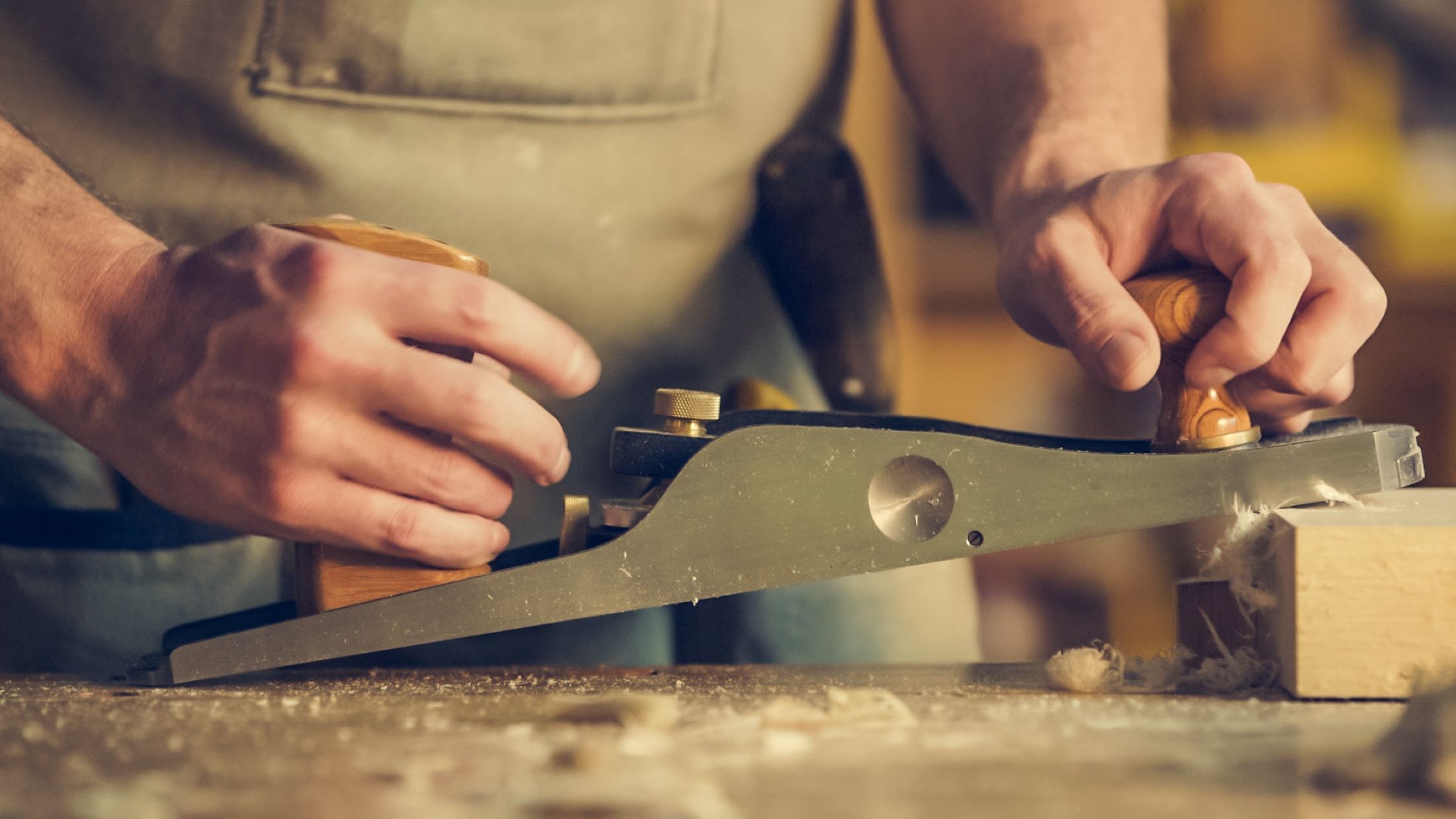
“This is so me,” he texted along with the paragraph where Chip described the joy and satisfaction he gets from working with his hands.
Today, as I pulled out the book to try to find the exact quote for this blog post, I found the note I wrote to him for Father’s Day stuck within its pages. Among other things, the note said, “I’m committed to whatever direction you feel God is leading you and us in, but I don’t ever want you to shy away from something because of lack of confidence or fear. Like he says in one of these books, ‘fear dressed up as wisdom provides very poor counsel.’ Let’s move forward with faith instead of fear, trusting God to lead us. I love you.”
You see, we’d been fighting a lot over the last year or so because he was working in a job and career that was making him miserable. I’m prone to catch on to misery quicker than he does, but he was finally starting to begin to admit it himself.
Although he loved- and still does- so many of the people he had the privilege of working with as well as aspects of the work, a variety of factors were leading to misery. One of which, I would realize later, was that although some of the people he led as a healthcare administrator got to work with their hands regularly, he didn’t. And he was at work so much, and devoted to spending time with our kids if he wasn’t, that he never got to heed the good advice of sabbathing with his hands because he worked with his mind. There wasn’t time to.
He’s one to grit his teeth and bare it, being brought up to believe that hard work- whether you like that work or not- is what makes you have worth and value. I had wanted him to quit for over a year, confident we could make it work financially if he did. But he was no “quitter.”
He was and is a smart, good looking guy (I know I’m biased, but he is). He is by all standards a privileged white male. He could do whatever he wanted.
No one ever told him growing up, “You know, you should find work that involves working with your hands because you seem to like to do that.” He didn’t take shop or any Career Tech classes for that matter in high school because he was taking all Advanced Placement ones. His GPA, ACT, and GMAT scores pointed him towards careers where he would sit behind a desk and or in meetings almost all day everyday and lead people. The whole world was telling him this was his path to success.
It was pretty easy for him to get there. He hardly studied for the GMAT and scored in the top 25%. Getting into graduate school to earn a Masters in Health Administration and an MBA wasn’t difficult for him. Did he enjoy doing it? Was he able to use his God given gifts and passions? Who knows? No one had ever said to him nor had he said to himself that that was the point or even a consideration.
But what had been so “easy” to get to had become unbearably hard because he hated it. A week after Father’s Day when I wrote that note, the decision was made. He would no longer have to grit his teeth and bare it. He’d been given the chance to figure out a route that hopefully would be more fulfilling and desirable, more prone to how he is designed.
By the 40th birthday trip, he’d taken some time to process and plan his next steps and self reflect, helping him realize what he needed. What he could offer. The path, whether the world told him he was crazy or not, involved working with his hands a whole lot more.
Of the two points I think I want to make in this post, one is this: in a world with multiple career paths, we often point others and ourselves down the wrong ones because we don’t allow them and ourselves to figure out what makes us tick. I think the general assumption has been we do this the most to those who are less privileged. To those that have to get a job to make ends meet, whatever job that may be. However miserable the job may be.
While this is certainly true, I think we do it just as much at the very opposite end of the spectrum. To the ones that seemingly have all the options in the world because of their privilege. Such is the misery of the smart, attractive white male. We decide for them and they decide based on what the world says successful careers are. All of which involve professional degrees and dress pants. And if we are honest, the privileged still live in a world where the stereotype is that successful men need to be in careers where their wife can stay home and raise kids and keep domestic life for a family running. Where she can work if she wants to, but heaven forbid would have to. It’s a different pressure than having to choose a job to be able to put food on the table, but it is actually of the same vein. Pressure to earn regardless of the cost.
But for my husband, the work all this led to was difficult in the form of it being a little bit like slow torture. It hadn’t always been like that, but the last time I had remembered talking to him at work and it sounded like he was enjoying it was when he called me back after being up the ceiling of an operating room trying to figure out why there was a leak. “You were up in the ceiling? In your dress pants?” I asked, “Isn’t there someone else that is supposed to do that?”
“I wanted to see it for myself,” he said. “I wanted to fix it.”
He wanted to fix it with his own two hands. Not just his mind. He’d been solving so many problems over the past 15 years with his mind and his hands were desperate to be put to use.
He still solves a lot of problems with his mind now, but he gets to use his hands to implement those solutions. And he is happier. And our family is happier. And by His hands, we are still fed. We have never been anywhere close to having to go without our daily bread.
Now, a year and half after this transition, he’s away this week fixing flooring at an investment property we have. (Not paying someone to fix the floors was another source of fighting for us until I realized doing it on his own was much like being in that operating room ceiling. He needed to do it with his own two hands. He needed to fix it himself.)
Earlier this year, he turned a house into a home for a family that had been living in a hotel for over two years. In a world where those who have made mistakes in the past can’t get financing or a chance to rent a decent home, he decided to change that. One property and one family at a time.
He built a swing set out back for their young kids to play on. “They need to be able to play outside,” he said. And then he went about building. Not buying a swing set kit to set up, but building a swing set with no plans, just his two hands working with his mind.
And for my second key point of this post and of what this whole post was originally designed to be about, he’s redone our home office. He designed it with his mind, and every single thing in the office he built himself from scratch with his own two hands. And it is beautiful. And functional.
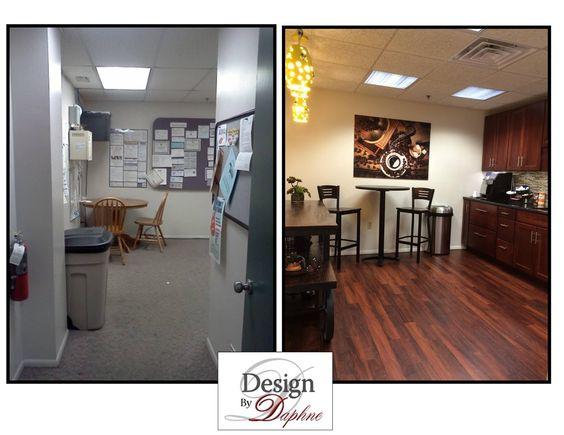
Here are a couple of sneak peek pictures of it, but it will be featured on a new website he is “building” to showcase, in part, the work of his hands. The site is a little bit real estate, a little bit travel, and a whole lot of our family’s journey to capture what makes spaces and places home. We will post the full feature of the website next week as it goes live with advice on how to design a home office, or any office for that matter, without taking the home out of it.
BEFOREBy “his” handsAFTER
As you move into your work week, I hope you’ll take some time to think about what makes you tick and if that is provided at all in the work you do day in and day out. Do you get to build your equivalent of swings sets and office spaces? Because if you aren’t, you most likely aren’t building beautiful things that end up helping others live and work well either. It is a courageous and loving act instead of the fearful one. We all need to figure out what makes us tick, not because it is self-serving, but precisely because it is the exact opposite.
By his hands, my husband is serving, and by His hands, a gracious God has moved our transition that was plagued with fear and expectations of what we are supposed to do to one where we are doing what we are meant to do.