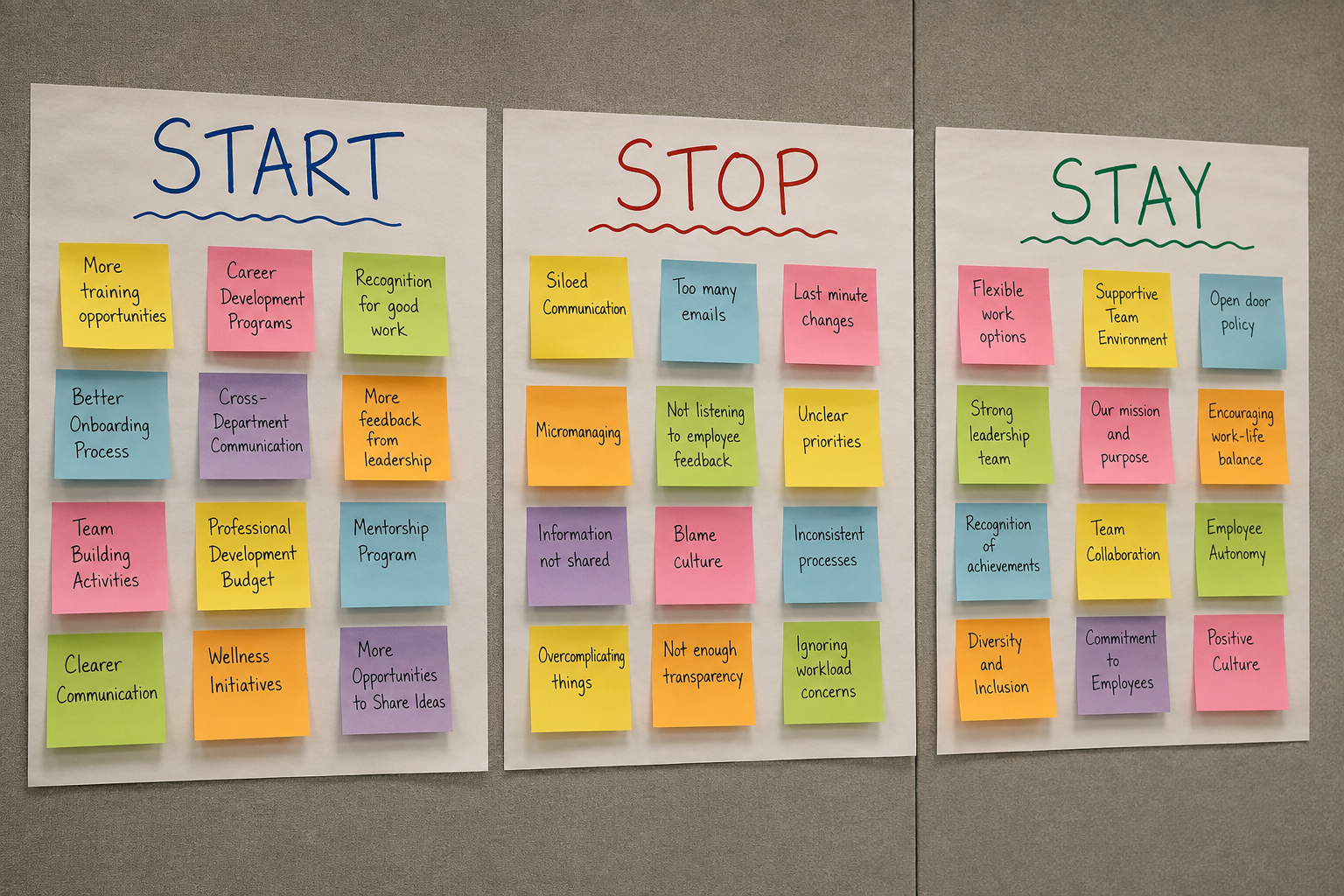
Recently, Jillian and I facilitated a series of employee focus groups for one of our clients. Leadership intentionally stepped out of the room to create space for open and honest conversation. Employees were invited to share their thoughts on the organization’s culture, leadership, training, communication, and anything else they felt was important.
Although the focus groups were facilitated by Horizon Point and leadership was not present, many employees were still hesitant to participate. Their concerns weren’t about the questions being asked—they were about what would happen after they answered them. Would their feedback somehow make its way back to their manager? Would speaking honestly affect how they were viewed? Would anything actually change as a result of what they shared?
Those concerns highlight an important reality: communication isn’t just about creating opportunities for employees to speak. It’s about creating an environment where they believe it’s safe to do so—and where they trust their voices will be heard.
When employees don’t believe it’s safe—or worthwhile—to speak honestly, valuable insights remain hidden, small issues become larger ones, and organizations lose opportunities to improve.
Communication Starts with Relationships
Providing feedback isn’t just about the conversation—it’s about the relationship. Trust determines whether feedback is received as an opportunity for growth or as personal criticism. In Radical Candor, Kim Scott describes effective leadership as caring personally while challenging directly. Without trust, even the best-intentioned feedback can be met with skepticism or defensiveness.
At Horizon Point, we often talk about Relationshipping—the intentional practice of building and nurturing relationships to better understand, support, and serve others. Relationshipping doesn’t begin when a difficult conversation is needed. It’s built over time through consistent actions: listening with curiosity, following through on commitments, treating people with respect, and demonstrating genuine care.
Employees don’t communicate openly because they’ve been told their opinions matter. They communicate openly because their experiences have shown them they do. Trust isn’t built during annual surveys or focus groups—it is built in the hundreds of everyday interactions between leaders and employees.
Psychological Safety Requires Humble Leaders
Psychological safety isn’t about making everyone comfortable. It’s about creating an environment where employees feel safe asking questions, sharing ideas, admitting mistakes, respectfully disagreeing, and providing honest feedback without fear of embarrassment or retaliation.
Google’s Project Aristotle identified psychological safety as the single most important characteristic of high-performing teams. The common thread wasn’t that these teams avoided difficult conversations—it was that people felt safe enough to have them.
Creating that kind of environment requires humility from leaders.
We often work with leaders who say they want honest feedback, and most genuinely do. The real test comes when that feedback challenges a decision, questions a process, or exposes a blind spot. Our natural instinct is often to explain our reasoning or defend our intentions instead of seeking to understand the employee’s experience.
One of the things I often tell leaders when conducting job analyses is that no one understands a job better than the person doing it every day. The same is true when identifying problems or opportunities for improvement. The employees closest to the work often know where processes break down, what creates frustration, and where changes could have the greatest impact.
Leadership isn’t about having all the answers. It’s about asking the right questions and creating an environment where employees feel comfortable sharing what they know.
One of the most important lessons leaders can learn is that intent and impact are not always the same. A leader may have every intention of improving communication, efficiency, or morale, while employees experience the decision very differently. Rather than defending intentions, effective leaders become curious about the impact. They ask questions, listen without interrupting, and remain open to adjusting course when necessary.
Listening Isn’t Enough
Creating opportunities for employees to provide feedback is only the first step. Organizations invest significant time and resources into employee surveys, focus groups, suggestion boxes, stay interviews, and exit interviews. Simply asking for feedback creates an expectation that employees’ voices will be acknowledged.
That doesn’t mean leaders need to implement every suggestion. Employees understand there are budget constraints, competing priorities, and operational realities. What they do expect is transparency.
Close the communication loop.
Tell employees what you heard. Share what actions will be taken, what won’t be implemented, and why. Provide realistic timelines when possible, and thank employees for their honesty and willingness to contribute.
When feedback disappears into a “black hole,” employees begin to wonder why they were asked in the first place. Eventually, they stop offering ideas, raising concerns, or participating in future feedback opportunities—not because they don’t care, but because they’ve concluded it won’t make a difference.
Employees don’t expect every idea to become reality, but they do expect their voices to matter.
Final Thoughts
As we wrapped up each focus group, one thing stood out. Employees cared deeply about their organization. They wanted to share ideas, solve problems, and help make their workplace better. Their hesitation wasn’t about having something to say—it was about wondering whether it was safe to say it and whether anyone would truly listen.
Healthy workplace communication isn’t built through annual surveys or occasional focus groups. It’s built every day through relationships, psychological safety, humility, and consistent follow-through. Leaders who listen with curiosity, invite honest dialogue, and communicate transparently create cultures where employees feel heard, respected, and empowered to contribute.
Because when employees stop talking, organizations stop learning.

