Beyond Talent is our line of resources for professionals in the workplace who are individual contributors without people supervision responsibilities. Read this category for blogs on professional and career development to excel in your current role or help you prepare for your next level career.
Last week I had the absolute pleasure of attending NASHRM’S 2024 Spring Workshop supporting my team member Lorrie Coffey. She gave an energizing presentation on Handling Toxicity in the Workplace, complete with getting knocked upside the head with a Horizon Point lightbulb stress ball. So, what does a toxic workplace look like? Let’s open the door and expose toxic workplace cultures.
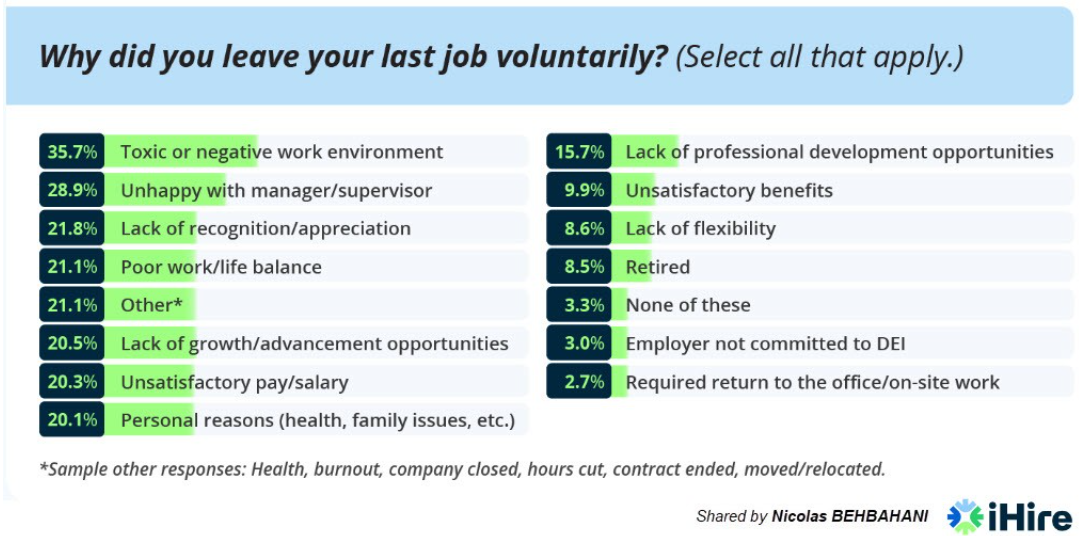
Lorrie started off by giving the definition of toxic and said that it’s an extremely harsh, malicious or harmful quality. She went on to give examples from social media of people talking about their current workplaces. One employee said, “I’ve literally been berated and to a point, what I could consider verbal abuse” another described their situation by saying that their anxiety was through the roof. So, what creates a toxic environment and causes people to leave?
According to Career Plug, the percentage of employees in 2022 that have experienced a toxic workplace by age group are: 88% (18-34 year olds), 90% (35-44 year olds), and 79% (45 + years old). Notice the fact that 45 and up didn’t have as much experience with a toxic culture or did they? Lorrie pointed out that it could be that most CEO’s are in that age range, and who wants to report that they are experiencing a toxic environment when they are the one in charge?
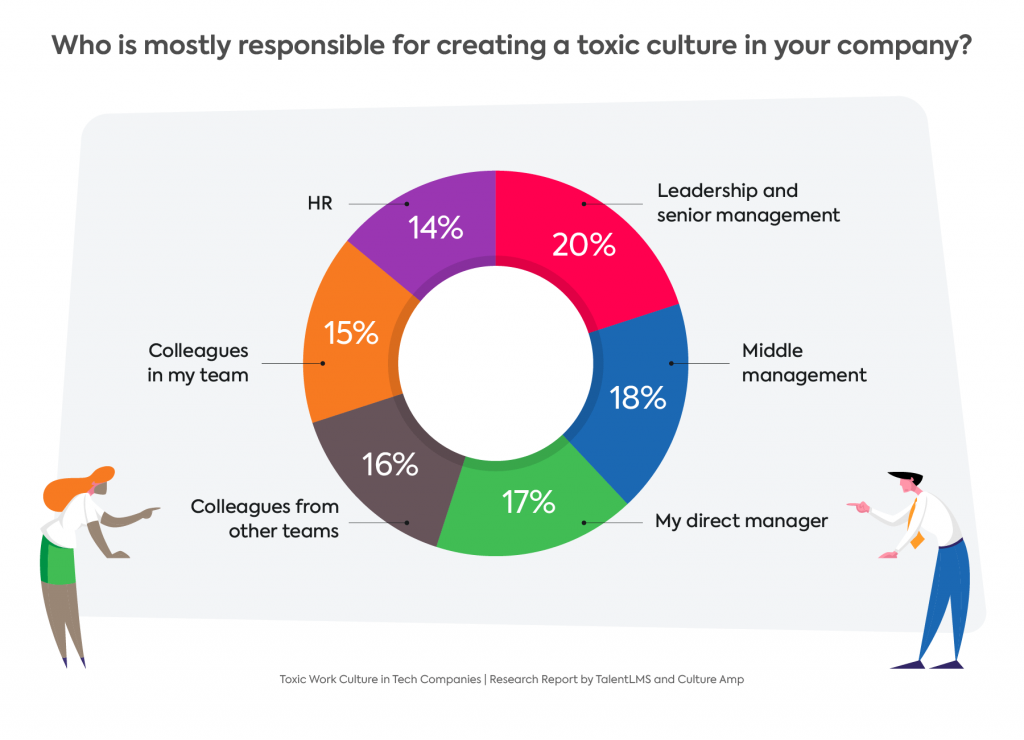
There are tell-tale signs of a toxic culture including increased negativity, turnover, dysfunction, stress, gossip, and competitiveness. On the other hand, there is a decrease in morale, productivity, attendance, trust, health, and feedback. Who then creates this toxicity?
Why should leadership care? Big picture, it impacts the bottom line. During the middle of the presentation one of the participants asked, but what if the toxic person is a leader? If it the toxic person in question is a leader, you have tools to use:
“Employees don’t quit their job, they quit their manager.” How many times have you heard that phrase? Have you ever identified so much with it, thinking its origin may in fact be you for how well it resonates with your experiences? Well, I have.
I worked with a large company for almost 3 years, holding 2 different jobs within that time, searching for a position that would maintain my attention and highlight my skills coupled with a manager who would invest in me as both an employee and a person. In those 3 years, I found neither of those things and they were the longest 3 years of my life. I was continuously in a state of #OpentoWork, applying for positions well under my skill and experience level simply to be taken out of the toxicity that was my daily 9 – 5. But let’s unpack the situation further.
I was continuously in a state of #OpentoWork, applying for positions well under my skill and experience level simply to be taken out of the toxicity that was my daily 9 – 5.
My first position with this company looked amazing on paper. The interviews highlighted efforts and initiatives that drew on my favorite aspects of my past positions and experiences and I was eager to get started. Once I did, I struggled with the management style I was receiving, communicating my needs only to consistently be met with unmet expectations. That, coupled with a difficult culture and internal resistance to what I was tasked to work towards, made it difficult to enjoy the work I was doing, but I persevered. I don’t believe in giving up when the going gets tough, but rather plowing through the difficulties and making the best of any situation. That is, until that situation bears no further potential.
The pinnacle of toxicity in a large organization comes to light with the vocalization of one word: re-org. Having never worked for such a large company before, I was naïve to what was to come. Long story short: my manager left their position, leaving me to be a team of 1. Their position was also eliminated as a result of the re-org, so I now had no growth opportunities. I saw the writing on the wall and knew I had to make a move and I had to make it fast.
So I transferred internally to a different team that, from the outside, seemed even more exciting than the first. Travel opportunities, engaging with high level internal and external leadership, autonomy over my work and…future growth opportunities! It was like the light I had been searching for at the end of the tunnel. Spoiler alert: it was not.
This new opportunity was worse than the previous, but for different reasons. The person I directly reported to was all but nonexistent. I communicated with them maybe once per month, and even then it seemed our short-lived conversations were meant only for them to check a box. No communication on how I was doing in the role, any help I may need or feedback I may have – nothing. The individual responsible for training and day to day oversight of me was the living embodiment of the phrase “hostile work environment”. I often left conversations thinking to myself “am I stupid?” because that’s how they made me feel.
The person I directly reported to was all but nonexistent. I communicated with them maybe once per month, and even then it seemed our short-lived conversations were meant only for them to check a box.
While my first position with the company hadn’t been what I was looking for, this second position was quickly soul crushing. It traded my self-esteem and value for anxiety and a state of constant fear of reprimanding. There was no appreciation. Toxic behaviors like working 12-15 hour days, working weekends, sacrificing sleep – these were praised. Suggestions on process improvement or seeking genuine autonomy were met with hostility to the point where I stopped making suggestions.
I found myself once again searching for the right position. I was determined not to settle, knowing I had settled in the past, but I couldn’t seem to find anything. My determination was no match for the vibrant and competitive workforce that exists in North Alabama. Opportunity after opportunity drifted by and I was beginning to think I was never going to find the right position. Worse even, I was beginning to think that perhaps the problems I was facing weren’t the managers, but rather it was me. Were my expectations too high? Did the “right position” I kept dreaming of even exist?
Worse even, I was beginning to think that perhaps the problems I was facing weren’t the managers, but rather it was me. Were my expectations too high?
And then one day, I got an Indeed message…about the position I was dreaming of getting into…with a small business, an environment I was desperately eager to return to. And the stars aligned and EUREKA, I got the job! There aren’t words to describe the trepidation I had walking into this new role. I had been sold a bill of goods not once, but twice before. I was not going to walk into another position with rose colored glasses on.
My first few weeks were great, I was learning so much and I was being exposed to multiple different facets of the company. I was introduced to the CEO and VPs within my first week, I was on a first name basis with the highest levels of leadership in the company and they truly seemed to listen to me when I talked to them.
At the end of my first month with the company, I went on business travel with the CEO, one of the VPs, and the Founder of the company – not only was it my first travel experience with this company but it was also with some of the most important people at the company. Unsurprisingly, I was nervous. Surprisingly, the trip was amazing.
I got to engage with leadership on a more personal level and they truly cared about what I had to say. The conversations I had on that trip are still referenced today and I am so thankful to have gone on this trip so early in my career with this company. I’ll never forget what was to me the most significant part of this trip. Following an employee engagement event we hosted for our local employees, we were heading back to the hotel and the CEO asked me “Do you know what your love language is?”. You could have knocked me over with a feather. Of course I knew, I’m a words of affirmation girl through and through. They noted this is something that my manager may struggle with as they’d not been great at it historically but they would keep that in mind. And they’ve kept that promise, to this day.
I got to engage with leadership on a more personal level and they truly cared about what I had to say.
My manager, supposedly not historically superior with expressing their appreciation verbally, has had no difficulty in coming to me with praise. Any time they have feedback, they ensure it is being received correctly, something people struggle with on an interpersonal level, let alone a professional one. To put it simply: they care about me as a person first and an employee second. This has been the biggest differentiator between my new company and the previous.
I love my job, but on paper, I was slated to love my 2 previous jobs as well. The difficulty I was consistently faced with was my management, or lack thereof, and the environments I was trying to succeed in. It was like planting a petunia in a desert – I was destined to wilt from the start.
It’s been 6 months now and things are great. I’m not naïve enough to believe I will never have trouble with work – that is a part of life. But I know that I am supported by management and a team of some of the best, most kind hearted co-workers, and that knowledge makes the hardest of days that much easier to navigate.
This blog was written by Guest Blogger Teddy Smith, a friend of Horizon Point.
If you like this blog, you might enjoy these others related to Workplace Appreciation:
I recently spent a weekend at Walt Disney World. It sucked, and I loved it. It rained a gazillion inches for 48 straight hours. My shoes and socks got soaked twice. I walked 5 miles with squishy, cold, wet feet. My iPhone got water in the charger port, so I couldn’t charge my phone. It sucked. And I loved it.
It’ll be crowded and hot with long lines and tired feet, but I’m already excited about the next trip. All because of 3 basic business lessons we can all learn from Disney.
1. Moments are powerful.
Standing in the rain at Epcot at 9:00pm, waiting for fireworks to start, Felix tripped and fell. (Felix is the sweet toddler of my fellow Disney College Program Alumni, Daniela and her husband Sean.)
He was rattled and upset, but a nearby Cast Member immediately walked over and offered him a sticker of the Eiffel Tower from the France pavilion. That one little magic moment brought Felix so much joy, and he totally forgot about his big tumble.
2. Kool-Aid is good.
Cast Members are empowered to create magic moments from their very first day. Onboarding is all about “drinking the Kool-Aid“, and while it’s easy to roll our eyes at cliches like that, believing in a little magic actually is a secret sauce. At Disney, drinking the Kool-Aid and sharing it with guests from all over the world is a direct driver of business success. I’ve been a Cast Member, and I’ve been a guest, and the Kool-Aid’s always good.
3. Bright spots outshine the bruises.
We spent two full days walking a total of 18 miles around three theme parks. It rained the entire time. On back to back days, we had to walk around for hours with wet, squishy feet. And yet, I’d do it again right now. Felix got an Eiffel Tower sticker. My brother was celebrating his 29th birthday and got 97 “happy birthdays!” from Cast Members everywhere we went. My husband got to visit 8 countries and eat dinner at a German biergarten. The bright spots are so bright the other stuff doesn’t even matter.
The moral of the story is that doing the right thing for your customer or your guest or your service provider or your new hire, etc. creates bright spots and leads to repeat business, word-of-mouth business, and all the good stuff that companies spend lots of marketing dollars on. EPIC moments are powerful.
How are you creating powerful experiences for others?
Last week Emily complimented me in her blog post when she spoke of the struggles I have faced in the last year and my ability to persevere through them. (Thanks, Emily!) And she’s not wrong. I have been that way for as long as I can remember; not letting anything stop me or get in my way. My dad taught me to have determination and I am so grateful that he did. But that determination and perseverance go hand in hand with the ability to be vulnerable. And this is where I used to fall short, very short. It wasn’t until I joined the Horizon Point team that I learned it was okay to be vulnerable, to ask for help, and to let others handle the load when you can’t. And during my health struggles in the past year, they have helped carry the load, without hesitation.
Vulnerability isn’t a sign of weakness, but a sign of strength. It’s the ability to acknowledge when you can’t do it alone, when you made a mistake, or when you fell short. As Brene Brown puts it “(T)he definition of vulnerability is uncertainty, risk, and emotional exposure. But vulnerability is not weakness; it’s our most accurate measure of courage.”
I had to learn to be vulnerable, and here’s what I have learned:
If you show vulnerability, others will follow. If leaders allow themselves to be vulnerable with their teams, it creates a culture of trust and in turn those employees will learn that vulnerability is acceptable, encouraged, and expected within the team.
How you respond to the vulnerability of others is make or break. As a leader, you need to encourage and accept the vulnerability of others. How you react to the vulnerability shown to you can build trust or destroy trust. Allow for mistakes and use them as learning opportunities. Encourage employees to seek help when they are overwhelmed, be someone that they can vent to if needed (without negative repercussions). Understand that they have emotions and while you may not understand or agree with those emotions, acknowledge them.
Vulnerability in leadership leads to better, more productive teams. By allowing and encouraging vulnerability and modeling vulnerability to your team, it creates a team that is psychologically safe, that is comfortable raising concerns, mistakes, and ideas, that has a growth mindset. And research shows that teams that are psychologically safe are the most productive teams you can have.
I have a wonderful team at Horizon Point that I can be vulnerable and courageous with, that I can go to for help when I need it, can share ideas and concerns with without fear of repercussion, and that I can vent to when I’m having one of those days. And I know that they have by back, and in return, they know that I have theirs.
How have you as a leader shown vulnerability and courage to your team? And how have you responded to the vulnerability shown to you?
The President of ATD Birmingham (and my friend) recently shared insights on The Leadership Pipeline with a room full of talent development professionals. I’m sure he said many, many great things, but the one thing I remember (and have talked about nonstop since then) was the idea that the first rung on the ladder of leadership is the hardest to climb.
The first time you shift from being an individual contributor to being a manager is like putting on a pair of glasses that no longer work. We know an upward move in our careers means upgraded responsibilities, but we don’t usually also upgrade our gear (glasses). So, even though we’re doing a new job, we still see our old job.
This got me thinking about other ways this metaphor applies to life. For example, if we are supposed to be brainstorming, or coming up with creative solutions, but we’re wearing the wrong glasses, we won’t even be able to see the new possibilities.
We talked earlier this year about armored leadership versus daring leadership, and I think the same concepts apply here. Being a knower and being right is a totally different mindset (pair of glasses) from being a learner and getting it right.
I think what I’m trying to say is it’s not so straightforward to shift from being a doer to being a learner, or getting stuff done to developing new ideas for how to do it. With our open the door theme this year, what I’m most excited about is opening the door to curiosity. Opening the door to new ways of working. Opening the door to different perspectives. Trying on new glasses.
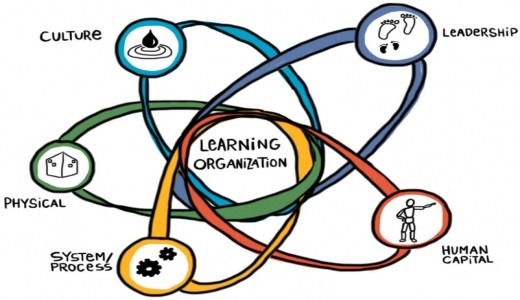
Just last week, I talked with a group of HR professionals who are studying for the SHRM-CP exam. Our topic was learning and development in the context of an HR functional area. We spent a good amount of time defining a learning organization. Here’s a good overview via LinkedIn Newsletters written by Roopak Jain:
According to Peter Senge, the five characteristics of a learning organization are:
Systems thinking: The ability to see the system as a whole
Personal mastery: A commitment to continuous learning
Mental models: The ability to challenge common assumptions held by individuals and organizations
Shared vision: A common vision that is committed to and shared by everyone in the organization
Team learning: The drive to continue the process of enabling the capabilities to deliver results as a team
Individuals, organizations, and communities can all benefit from getting new glasses. Or inviting someone to the table with a different lens. If we only see things the way we’ve always seen things, how will we know what’s possible?
This ties in with all DEI initiatives, because we do have a history of lack of representation at the highest levels of decision-making and influence. If we study who has been represented in Fortune 500 CEOs, U.S. presidents, down to state governors, mayors, school board superintendents, small business owners, etc., we see how communities without diverse representation are less likely to thrive. At the core of many civic and business issues is a lack of perspective. It’s a great, big, complicated, beautiful, terrible, amazing world, and we all experience it differently.
At Horizon Point, we try every day to keep the door open to perspectives or experiences that are different from our own. We challenge our clients to do the same. We ask questions. We remain curious about the world around us and the lives and needs of our neighbors. We volunteer and support community organizations that are trying to improve where we live, where we work, and where we play.
If your door is already open to curiosity and new perspectives, how are you bringing others with you?
If you are realizing that you need to take the step and open the door, there’s no better time like the present. If you’re not sure where to get started, take a look at What We Do, and maybe we can help.