Beyond Leadership is Horizon Point’s line of resources for managers of people. Managing ourselves is a distinct set of behaviors from managers the work of others, and we are here to help. Read stories in this category if you are ready to take the next step in your own leadership development (or if you’re looking for resources for someone else).
Resolutions, Goals, Plans, and Turning Over A New Leaf. This is the stuff that New Years are made of. For individuals and organizations, the new year is always a natural place to think big and aim high. And there is nothing wrong with this.
As 2023 came to a close, a theme we saw over and over again was the challenge many people were having in leading well. They were aiming high, but totally missing the mark. They had lost the people they were leading as well as themselves in the process, chasing some ideal they couldn’t even name.
So many of the conversations and client engagements we found ourselves in were due to this struggle. As we examined it closer, we realized that the key and consistent challenge was that people had lost touch with who they were, what their organizations stood for and how to get back to these things.
They had lost sight of their values, if they had ever even named any, and it had taken them to a place of shooting at a bullseye that was meaningless and also miserable.
So, as 2024 opens and you’re aiming high, I’d encourage you to name or rename your values. What I mean by the word “value” are not moral values in a universal right or wrong sense, but values in what leads to your competitive advantage as an organization or a human being. What makes you unique, and therefore something of worth?
As you think about this, two resources I’d encourage you to explore are:
Brene Brown’s work in Dare to Lead. Read or listen to Part 2: “Living Into Our Values” and use her pdf list of values found on her website to help think through your core values. I would highly encourage you to listen to her words in an audio book format before using the pdf to begin action.
Based on Dr. Henry Cloud’s work, found in Boundaries for Leaderson team trust and defining operating values, create and examine two past case studies of your organization or personal practices: one that went exceptionally well and one that went horribly wrong. What consistencies do you see in the good and the bad? You can use this tool we’ve created based on this work to help you develop your case studies.
What we typically see is that the bad reflects the opposite of what creates uniqueness. It is what you are most ashamed to be or do because it is so opposed to your values. The exceptional is what makes you feel most alive and yourself when you are living into them- the value creates value. For organizations, it is what makes people want to “purchase” from you instead of a competitor.
As we begin a new year aiming high, let us first reflect on if it is where we want to aim to begin with. Once we’ve done so, we can steer our behaviors towards the right bullseye.
What are your values and how will you aim for them in 2024?
From our Team to yours, we hope that you are enjoying the Holidays with your loved ones near and far. If you’ve had a little too much excitement, step back and do some light reading. We hope that you gain some space and perspective from The Point Blog’s most viewed posts of 2023.
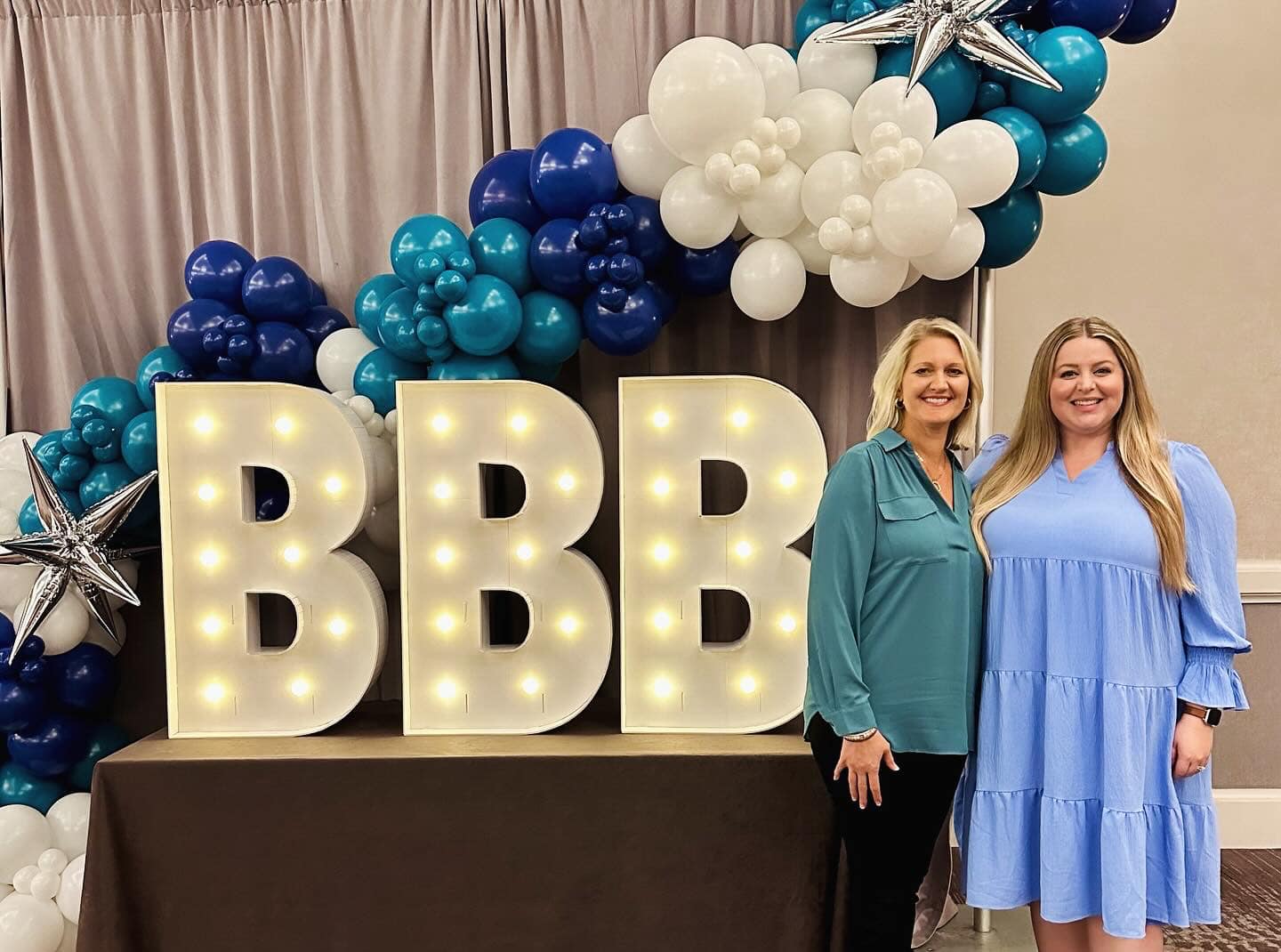
On November 15th of this year, Mary Ila was asked to speak on Character and fostering workplace ethics at the BBB Torch Awards. Her topic was inspired by our Horizon Point book of the year named Hidden Potential by Adam Grant. Mary Ila wasn’t able to attend, but Jillian showed up and presented in her place. We hope that you enjoy this special treat from this year’s event.
Thank you for the opportunity to be here today. The BBB team across North Alabama does a tremendous job in fostering workplace ethics and we are happy to be a part of the organization as members, as Taylor, one of team members serves on the board, and for the chance to spend a few minutes talking with you today.
Robin asked me to speak to the first criteria of the Torch Award application- Character.
The question in the application states: “As CEO, President, Owner or Executive Director your leadership character sets the tone for your entire organization. As a leader, explain how you behave intentionally and communicate with your leadership team, employees, customers and stakeholders in a way that is consistent with your beliefs.”
When we at Horizon Point have applied for the Torch Award before, I haven’t felt qualified to answer this question on my behalf, my team has answered it. And today is no different. In my quest to try to leave you here feeling energized about character, I asked them all what they thought.
And each one of them were spot on in living into one of our values- continuous learning and improvement- to breathe into our individual and collective learning about character. I’d like to use that learning to challenge your assumptions. And that is that character is not a static trait; it is a process that must be practiced.
In Adam Grant’s new book Hidden Potential, he describes what makes up culture. He says, “In organizational psychology, culture has three elements: practices, values, and underlying assumptions. Practices are the daily routines (I would call them behaviors) that reflect and reinforce our values. Values are shared principles around what’s important and desirable- what should be rewarded versus what should be punished. Underlying assumptions are deeply held, often taken-for-granted beliefs about how the world works. Our assumptions shape our values which in turn drive our practices.”
When we talk about the most desirable leadership traits we often cover practices and values, but we often neglect to understand or even see our assumptions and assumptions are the base of the pyramid. The base impacts our thinking, feelings, and behavior at all other levels.
And at the base of our pyramid on character, two assumptions largely define, at least in America, how we frame the character:
One: Character is innate. It is a fixed characteristic. You are born with it or you aren’t. Putting this another way, character is a will issue not a skill issue. We talk about skill and will alot in the work we do and often say, hire for will (because it is static, innate, not changing) and train for skill (because it can be learned and people can acquire and grow in skills), but what if character is a skill? What if it is malleable and we can learn and grow at it? This is a key premise of Grant’s book that he backs up with a lot of research.
Two: We assume and behave like character is binary. You are either right or wrong. If you are acting with character, you can put a label of “right” to it. If you are acting contrary to character you are “wrong” and it is easy to identify and label it. You know it when you see it. But what if character lives in the gray? What if at one time one behavior in one situation is acting with character, and in another set of circumstances that same behavior demonstrates the absence of character?
This isn’t fun thinking because our brains want us to simplify things. Right or wrong is much easier, it takes less energy to sort through. But exercising anything requires energy and practicing the assumption that character is a skill that must be actively practiced takes energy. Sometimes a whole lot of energy.
As Brene Brown says in her book Dare to Lead, “the mark of a wild heart is living out these paradoxes in our lives and not giving into the either or BS. It’s showing up in our vulnerability AND courage and above all else, being both fierce AND kind.”
Character lives in:
Showing grace AND holding people accountable
Leading AND following
Deciding AND seeking input.
In choosing to show up AND choosing not to.
It’s not about choosing one thing that on the surface seems on the opposite end of a spectrum, it’s about choosing to embrace and live out both all at once through the lens of our values.
Of the paradoxes I find hardest to navigate in this season of my life, it is showing up AND not. I live in the space of such privilege that I have an endless amount of choices on how to spend my time. You see, anytime you or I decide to show up for something or someone we are also making the choice to not show up for a million other things. I’m in the season now of leading a team and a business while also leading, along with my husband, three children ages almost thirteen to four. Embracing this AND is my biggest challenge and also my greatest opportunity to grow in character by actively practicing the skill.
For example, our middle child- the cream of our cookie as she likes to call herself- is the greatest guilt tripper on the planet and she likes to lay it on THICK. I think this guilt tripping comes from the guilt tripping she does to herself more than anyone else. This is the child that has won the student of the month for initiative and/or leadership since Pre-K and she thinks she needs to be and do all for everyone in order to lean into who she is. And she expects others around her to do the same. But she can take this too far. She is her mother. Bless her.
She wants me to be at EVERYTHING, participating in everything at school, like she sees many of her friend’s mom’s doing. Earlier in my life, when I made most of my parenting mistakes with my first born- bless his soul, I hope he forgives me one day- I would have felt like it was a character flaw within me to miss something he wanted me to attend. And if my oldest had laid a guilt trip on me at age nine because I was missing something because of work, I probably would have said something along the lines of, “Your daddy and I work to put food on the table and a roof over your head. Quit complaining! I can’t be at everything!” I would have taken my guilt and turned it into shame for him.
But as I’m learning and growing I’m trying to flex and grow the muscle of character and realizing that sometimes I need to show up for my kids AND sometimes I need to show up for someone else. And that by actually showing up for someone else sometimes, I’m really showing up for my kids too.
I missed the cream of the cookie’s annual soccer tournament between 4th grade classes because our work team was on a retreat to celebrate many things- a birthday, a work anniversary, a marriage, and a great year as a company. I intentionally decided to do that (even though she did lay the guilt on thick) and used it as an opportunity to talk with her about living in the AND in the best way I knew how. Instead of getting defensive, I communicated, explained and hopefully conveyed that she is important, but the world does not revolve around her (a lesson many of us still need to learn) and that my team at work was important too. I tried to teach her and remind myself of the value of People First, our first value at Horizon Point and in my life, by having a conversation with her. I tried to remind her (and me) that there is no way for her to be everything for everyone at all times and to also ask her questions about why she might be upset about why I can or can’t attend something.
I’ll be at her annual Turkey Bowl game and have said no to half a dozen other appointments in order to be there. She’s the co-captain of her class’ football team and I hope she leads them with a People First mindset.
In thinking about this, how many of you really didn’t want to show up to this today? It’s okay, you can raise your hands, I won’t be offended. Whether you were willing to admit it or not, the choice you made to show up today could be based on a variety of factors. But I hope your decision to show up here AND not show up somewhere else was done with intent. And based on your values. Your beliefs.
In a world where a lot of us grit and bare our way through life and we don’t stop to think about why and what to show up for, I think character can be found in sometimes showing up AND sometimes not. And in flexing the muscle to think it through. Only you can answer whether or not showing up to this luncheon today was the leaderful thing to do based on your commitment to character. Coming here may have been an escape or an excuse from what you really needed to do. And trust me, I am seeing that a ton right now in the leadership and executive coaching and training we do. Leaders not showing up to do the hard things. I think this largely stems from being uncomfortable with embracing AND. You know, as Brene Brown said, the “kind AND fierce” kind of AND.
Coming here may have been the very best possible thing that you could do on a Wednesday at lunch for fostering workplace ethics. Only you can decide, but I hope you do discern it through your values. And that you are constantly challenging your assumptions.
In the words of Maya Angelou, “Do the best you can until you know better. Then when you know better, do better.”
I don’t know what you have next on your agenda for today. Maybe it is having a difficult conversation you’ve been dreading, or avoiding it. Maybe it is picking up your kids from school or visiting an ailing parent. Maybe it’s going home and taking a nap or going to the gym. Any number of these things could be the next right thing you can and should do to build your character. Whatever you decide to do for the rest of the day, I hope you choose to behave in a way that grows you in your skill of character. And yall, sometimes that truly is taking a nap. It’s a lot harder to practice character when you are tired or burned out.
The beauty of growing in your character skills is that through your modeling and influence you will help others flex their muscles to grow in character skills as well, and that’s what leadership is all about.
Ding, dong, the witch is…hovering over your shoulder micromanaging your work!? This Halloween, instead of Trick or Treat, let’s Train. We’re highlighting two applications of training as an employee engagement solution, plus 6 links to related resources on The Point Blog.
Last week, Lorrie and I spoke about our Illuminate program at the University of Alabama’s HR Management Conference. Before the session, an attendee came up to chat with us about the HR horrors she’d been dealing with at her new company. Her scariest issue: employees’ fear of big, bad HR. She said she felt like the HR monster, scaring everybody on the manufacturing floor with her big, bad, scary HR presence…until she just started talking to people. Every day, she walks the floor and speaks to each individual person with a smile and a “good morning”. She talks to people without needing anything from them. Now, the employees respect her and see her as a valued resource, not a spooky monster. This is “relationshipping”, and it’s critical for workplace wellness and employee engagement. Just like Ivey trained herself to be a relationshipper (and indirectly trained others), you can train yourself by practicing these strategies:
Today, I talked with 50 program managers about “Creating a Culture of Radical Candor”, i.e. Kim Scott’s framework of caring personally about people and being willing to challenge them directly. The spooky version: instead of tricking people into believing you care about them (manipulative insincerity) or treating people like besties (ruinous empathy), let’s train ourselves and those around us to practice radical candor, or graceful accountability as we call it at HPC.
My family and I had the opportunity to travel to Costa Rica this summer to serve with Voz de Liberta (Voice of Liberty). They are “a non-profit NGO that is dedicated to sharing the message of hope to prisoners, former prisoners, their families and victims throughout the country by providing comprehensive assistance.” It was amazing to see the work they are doing, in particular in the APAC (faith-based) prison they run.
Through my time there, I found that the prisoners taught me a thing or two about how to do training well:
2 by 2: We sat in on a training class on the gospel of Mark. There were two instructors facilitating the class of about twelve people. When I asked the director about this, he told me that all their training classes are taught by two facilitators. When I asked why, he simply stated that it provides for diversity of thought and delivery that is beneficial for the participants and the facilitators. We may see this as inefficient in the United States, but it seemed to be a model that makes the training more effective.
At HPC, we frequently send two trainers, so that one person can learn from a more seasoned trainer or two styles or levels of expertise can be shared. Each person brings different experiences, learning styles, and personalities to the group, and with two trainers it is more likely for a diverse audience to be reached effectively with a team approach.
Everyone can and should lead. I hope you noticed in the first lesson that the classes are not taught by outside facilitators. They are taught by the inmates themselves. The team at Voz de Liberta (three full time people and more than eighty volunteers) are constantly equipping the inmates to lead. This makes their ministry not only scalable but also more effective.
The model of training in the prisons is also designed to multiply leaders/facilitators. Each training class facilitated by two people is designed to identify two more people to be trained to be trainers. The mindset here is that everyone is valuable and capable of leading with the right training and tools.
In addition, in the faith based prison, everyone takes a turn leading what they call “motivation” that occurs before lunch everyday. There are about 90 prisoners in the faith-based prison and they take turns leading the motivation that involves roll call, announcements, and prayer. We were fortunate to be there on a day when a prisoner was slowly but faithfully calling roll. The director leaned over to me and explained that he was learning to read and was currently taking first grade classes in the prison. I would guess he was about 45 years old. With a smile, he worked through all the names and then started on the announcements. It was a privilege to witness.
I think so often we separate the educated from the uneducated, the haves from the have nots, the young from the old, the prisoners from the non-prisoners, the experts from the non-experts. When we create these binary categories, we leave no room for learning and growth on either end of the spectrum. We can live on a continuum where we are constantly seeking to equip and learn from each other. I know I learned more from the man slowly calling roll in Spanish that he will ever learn from me. It’s amazing what can be done when we see people as capable first and then treat them as such.
Who, then what, then how. The training class followed a model of who (in this case Jesus and the inmate participants) in order to build self awareness. Next, it focused on now that I know who (me) I should focus on what I need to do. Then, once I understand what I need to do, I need to know how to do it and be able to practice that how over and over. This was a simple model to follow, but one that was grounded in the belief that self awareness comes first before any planning or action takes place. And that in order for the training to be effective, practice (how) has to take place in order for behaviors to change.
The experience in Costa Rica flipped the way I see many things. It did so for my husband and my children as well. I hope we will take these lessons to inform what we need to do next and then practice how over and over again.
What do you think makes training effective? How have you learned from those you least expected to teach you?