Author: Lorrie Coffey

  • 5 Tips for Inclusive Recruiting

    5 Tips for Inclusive Recruiting

    Don’t meet every single requirement? Studies have shown that women and people of color are less likely to apply to jobs unless they meet every single qualification. At (company), we are dedicated to building a diverse, inclusive and authentic workplace, so if you’re excited about this role but your past experience doesn’t align perfectly with every qualification in the job description, we encourage you to apply anyways. You might just be the right candidate for this or other roles.”

    This was recently included in an actual job posting. I found it posted in an HR group on Facebook and the feedback from HR professionals was pretty negative. The company may have had good intentions, but the message sent was, as one respondent put it, “offensive”.

    So how can companies ensure that they are being inclusive in their recruiting processes? How can they put their Diversity, Equity, and Inclusion policy to work and make it effective in recruiting talent? Yes, the statement in the job posting is correct, women and people of color ARE less likely to apply for positions if they don’t meet all of the requirements of the job posting. One study shows that men will apply for a job if they meet 60% of the requirements while women will not apply unless they meet 100% of the requirements, but what is the right way to combat that? It’s definitely not putting that statistic in a job posting.

    Here are 5 practical steps:

    1. Review your job descriptions. Be honest with yourself, are your qualifications must have or really wants? Break out your qualifications into required and preferred. Also ask yourself if the degree requirements are absolutely necessary. Can someone who is self-taught with five years of experience in the field perform the work just as well as someone who has a degree and no experience? If you’re job description has a weight lifting requirement, is it accurate for the job? Is that position really required to lift 50 pounds on a regular basis or are they lifting 15 pounds on a regular basis and once every month they might have to lift 50 pounds and can actually get someone else to lift that for them if necessary. If you’re not sure about your requirements, do a job analysis and ask someone currently in the role what they feel someone needs to have in order to be successful in that role.
    2. Use gender neutral language. Instead of using he or she, try speaking directly to the person reading the job description by using “you” instead. If that won’t work, use they/their.
    3. Consider where you are posting your jobs. While Indeed and Linkedin are great sources for candidates, are you utilizing resources that can help you target underrepresented populations? Are there veterans’organizations that you can send your job postings to? Are there job boards or associations that target specific populations (like Women Who  Code)?
    4. Incorporate diversity into every step of your recruiting process. Think carefully about who to include in the interview process. Imagine being a female interviewing for a leadership role and you’re scheduled for a panel interview with five members of the leadership team. You walk into the panel interview and the five individuals sitting across the table from you are all men. What impression do you think that would give? Would that be representative of the diversity of your organization?
    5. Train interviewers on biases. We all have biases, whether we realize it or not. And those biases play a part in how we interview and how we rate candidates. By understanding what the potential biases are, we can better identify them and minimize the impact they have in our decision making.

    How can you create a more inclusive recruiting program in your organization?

  • Top Payroll Errors

    Top Payroll Errors

    My theme for the summer seems to be money. It’s been a huge topic of conversation in my house and with clients, from trying to help my oldest navigate scholarships, FAFSA, and how to responsibly manage having a credit card, to teaching my 16-year-old to understand income taxes, to helping clients answer questions about wages and payroll. 

    Over the past few weeks, I’ve talked about misclassifying employees, both as Independent Contractors and as exempt employees. This week I want to shift a little and talk about some of the common payroll errors and how to avoid them. 

    Overtime Pay: 

    • Comp time for hourly employees: Unfortunately, unless you are a government agency, employers cannot opt to provide comp time in lieu of payment of overtime wages. Any employee who works over 40 hours in a workweek must be paid for that time. 
    • Averaging hours across the pay period: The federal law states that anything over 40 hours in a workweek must be paid as overtime. A common error that employers make is averaging that time over a two-week period. “Well, the employee worked 80 hours over two weeks, with 50 hours in one week and 30 in the next, so we don’t owe them overtime.” Unfortunately, this is not the case. If your workweek is Sunday through Saturday and an employee works over 40 hours in that workweek, they must be paid for overtime hours worked, even if you pay biweekly and they work less than 40 hours in the second week. And keep in mind it’s based on the workweek, not calendar week. So, if your workweek is from Wednesday to Tuesday, it’s 40 hours within those days. Keep in mind that a few states, such as California, have overtime laws that are more stringent than the federal law, so be sure to confirm state overtime laws as well. 
    • Overtime wasn’t approved in advance, so we don’t have to pay it: Regardless of whether or not the employee followed proper procedures, you are still required to pay them for all hours worked, even if it’s unapproved overtime. In such cases, you should pay the wages and then follow your disciplinary process to counsel the employee on not getting pre-approval to work the hours. 
    • Miscalculating overtime pay: Many employers believe that overtime pay is based on an employee’s hourly rate, but in fact, there are other wages that may need to be added to that calculation. The FLSA states that “employees must receive overtime pay for hours worked in excess of 40 in a workweek of at least one and one-half times their regular rates of pay.” Note that this does not say hourly rate, but “regular rate of pay.” This is important because an employee’s regular rate of pay could include shift differentials, premium pay, stipends, and nondiscretionary payments (for example quarterly bonuses based on production). 

    Improper Withholdings: 

    • Not withholding correct income taxes: This has become a bigger issue with the increase in remote workers post-Covid. Many employers are not sure how to navigate figuring out how to set up taxes for out-of-state employees. It’s important to know that some states have a reciprocity agreement, meaning that an employee can live in one state and work in another and only be taxed in the state where they live. For example, given the mobility across state lines in the Virginia, Maryland, and DC areas (DMV), employees who live in one of those locations but work in another DMV location do not have to pay taxes to the location in which they work. 
    • Not setting up state tax accounts: In addition to understanding reciprocity agreements, the employer must understand what business accounts they need to set up in each state. This will vary but usually includes a state tax account and a state unemployment insurance account. Failure to set up and pay into the proper state accounts can lead to hefty fines and penalties. 
    • Improper deductions from wages: Federal law allows employers to make certain deductions from an employee’s wages without their written consent. These include tax deductions, garnishments, and meals and lodging. Beyond that, employers must have written consent to deduct from an employee’s wages. For example, if you as the employer require an employee to pay for their own PPE, you must have them sign a payroll deduction consent form. 

    Direct Deposit:

    • Requiring direct deposit: One item that many employers are not aware of is that some states regulate whether or not an employer can require payment of payroll wages via direct deposit. While direct deposit is the easiest method of payment and the preferred method of most employers, it’s not legal to mandate direct deposit in some states. As with many employment laws, the regulations vary by state

    What are some of the payroll errors or questions you have faced in your organization? 

  • Are You Misclassifying Employees?

    Are You Misclassifying Employees?

    The Supreme Court recently agreed to hear a case that could have a big impact on the Fair Labor Standards Act (FLSA) and the classification of employees as exempt versus non-exempt. The case of Hewitt v. Helix Energy Sols. Grp., Inc. involves a highly compensated oil rig worker who was paid a weekly “salary” and upon his termination sued Helix for unpaid overtime on the basis that he was not paid an annual salary and therefore was not an exempt employee. The outcome of this case could impact employers who pay a daily or weekly “salary” as well as those who pay salaried employees on an hourly basis.

    In the past couple of years, we’ve seen a large number of FLSA cases arise, costing employers millions. Below are just a few recent headlines: 

    Amazon.com Services and its Contractor Fined $6.4 Million (March 2021)

    Court Approves $8.5 Million Settlement for Juicers in Misclassification Case Against Lime (July 2021)

    Holland Acquisition Inc Pays $42.3 Million in Misclassification Case (October 2021)

    DoorDash Agrees to a $100 Million Settlement (November 2021) 

    Last month I talked about misclassifying employees as Independent Contractors. This month I want to talk about misclassifying employees as exempt. 

    I’ve recently been working with a couple of clients on classification projects and in each of those projects I’ve come across employees who were misclassified. In some cases, it was an easy find for me. But in others, classifying employees is not an easy determination to make. So how can employers ensure that they are classifying employees correctly? 

    The FLSA has very detailed guidelines on what qualifies an employee to be classified as exempt for the purposes of overtime pay. The first, and easiest, determination is pay – if any employee makes less than $684 per week ($35,568 annually) they MUST be paid as a non-exempt employee eligible for overtime wages. 

    If they meet the salary requirement, the next step is to determine which FLSA exemption test, or tests, apply to that position. A position can potentially qualify under more than one exemption test. The exemption tests are:

    • Executive
    • Administrative
    • Professional/Creative
    • Computer Professional
    • Outside Sales

    Once you determine which test, or tests, apply to the position, you will need to do an in-depth analysis of that position using the exemption test to determine if a position meets the requirements to be exempt. 

    As I mentioned above, some positions are relatively easy to assess, but others are much harder. A great example of this is Healthcare Case Managers. By evaluating the position of Case Manager against the FLSA exemption tests that apply, many evaluate the position to be exempt. However, the Department of Labor issued an Opinion Letter in 2005 in which it determined that Case Managers did not meet the qualifications to be exempt employees under the FLSA. The DOL has a searchable database on all Administrative and Non-Administrative Opinion Letters regarding FLSA which is a great tool to use if you’re unsure whether a position qualifies as exempt. 

    A great way to ensure that your employees are classified correctly is to ensure that you have updated and accurate job descriptions for each position within your organization and to review the job descriptions at least every 2-3 years. 

  • 1099’s – The Cost of Misclassification

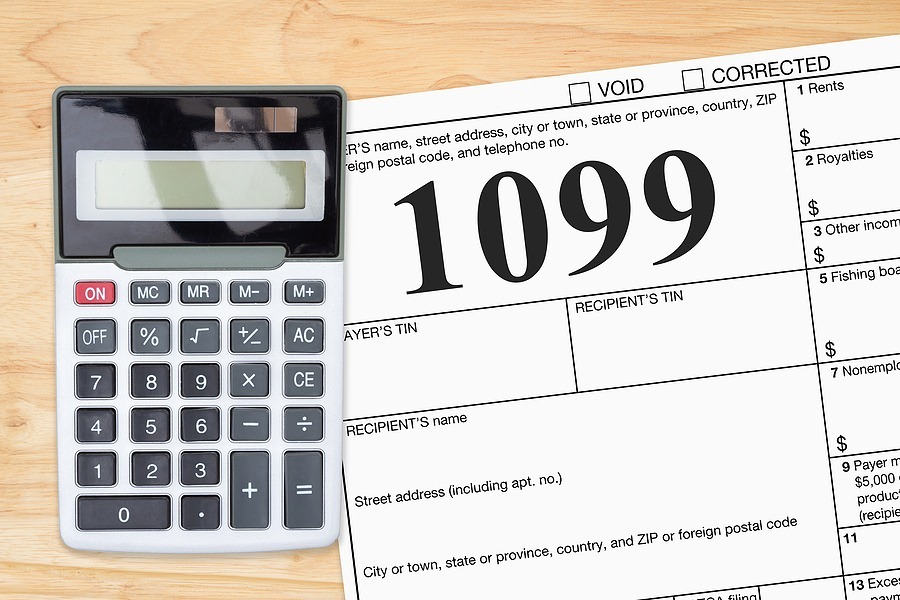
    1099’s – The Cost of Misclassification

    In the last few weeks, I have come across multiple cases of employers hiring individuals as independent contractors in violation of the IRS guidelines. Some have done so because they aren’t aware of or don’t understand the IRS guidelines and/or state regulations and some have done so knowingly. Either way, none are aware of the potential risk of misclassifying workers as independent contractors and just how costly such a mistake can be to their organization. 

    The IRS has a 20-Factor Test to help organizations determine if a worker meets the requirements to be an independent contractor. You can read more about what those requirements include in my blog post Taking the Guess Work Out of 1099s. In 2019 California adopted a more rigorous test, the ABC Test, and since then a handful of other states have adopted the ABC Test for some or all workers in their states. 

    The DOL recently announced that they would be hiring 100 additional investigators and focusing on warehouse and logistics companies in a “vigorous” campaign to enforce wage and hour laws. In 2021, 80% of DOL investigations resulted in organizations being found guilty of wage and hour violations. Many of these investigations began with a small payroll issue reported to the DOL by an employee. The top ten private employer wage and hour class actions in 2019 cost employers almost $450 million, close to double the total in 2018 ($253.5 million) (SHRM). As the DOL increases its resources and efforts to crack down on wage and hour violations, more companies may find themselves subject to review. And once a claim is filed by an employee, it opens the company up to have all payroll records investigated. So, while an employee may file a claim for an overtime violation, the DOL may find additional violations by the company, thus increasing the company’s penalties. 

    So what should you do if your organization misclassified employees as 1009s? First, contact an employment attorney to assist you with resolving the issue. There are options to minimize your penalties and an employment attorney can help you determine the best option for your organization. These options include submitting an Advance Determination of Worker Status Form to the IRS, the Classification Settlement Program, and the Voluntary Classification Settlement Program. You can find out more about each of these options at IRS.gov

  • Is Your Organization In the Learning Zone?

    Is Your Organization In the Learning Zone?

    Over the past few years, I’ve spoken with a lot of organizations about the importance of psychological safety. A 2012 study by Google showed that psychological safety is far and away the most important factor of a team’s success, yet many organizations lack the psychological safety required to be successful. 

    A few years ago, I worked with a client that was going through some major changes and employee morale was at rock bottom. As I began speaking with employees one theme stood out, employees didn’t feel safe speaking up. There were a number of reasons for this, including the fact that they felt their voices weren’t heard, their ideas were shot down or ignored, their requests for improvements fell on deaf ears, and yet they were expected to increase performance, meet tough deadlines, and help get the company out of the red. They were working in an organization that fell into the Anxiety Zone. There was low psychological safety but high accountability.

    Amy Edmondson, a Harvard professor, is the top authority on psychological safety. She has spent the past thirty years studying the effects of psychological safety on work teams and has found that there are four zones that organizations fall into.

    The zones are defined by the level of psychological safety and motivation (keep in mind motivation can be negative or positive) and accountability the team has. The zones are described as follows: 

    Learning zone: In a learning zone, team members experience high accountability and high psychological safety. This is the ideal learning environment for innovation and growth because even though members are responsible for their actions, their team offers continuous support.

    Comfort zone: Team members have high psychological safety and low accountability. While this zone is more relaxed, almost like a vacation, there is no push for creativity and growth.

    Apathy zone: With low psychological safety and low accountability, team members fall into the apathy zone. There are no repercussions for mistakes, teams lack adequate communication and support, and individuals struggle to care about their work.  

    Anxiety zone: Team members experience low psychological safety and high accountability. Communication breaks down and when mistakes are made, people are often too scared of punishment or humiliation to take responsibility. Opportunities for learning and innovation are scarce. 

    Which zone is your team in and if you’re not in the learning zone, how can you help your organization get there?