Author: Jillian Miles Massey

  • How To Toss Around Ideas

    How To Toss Around Ideas

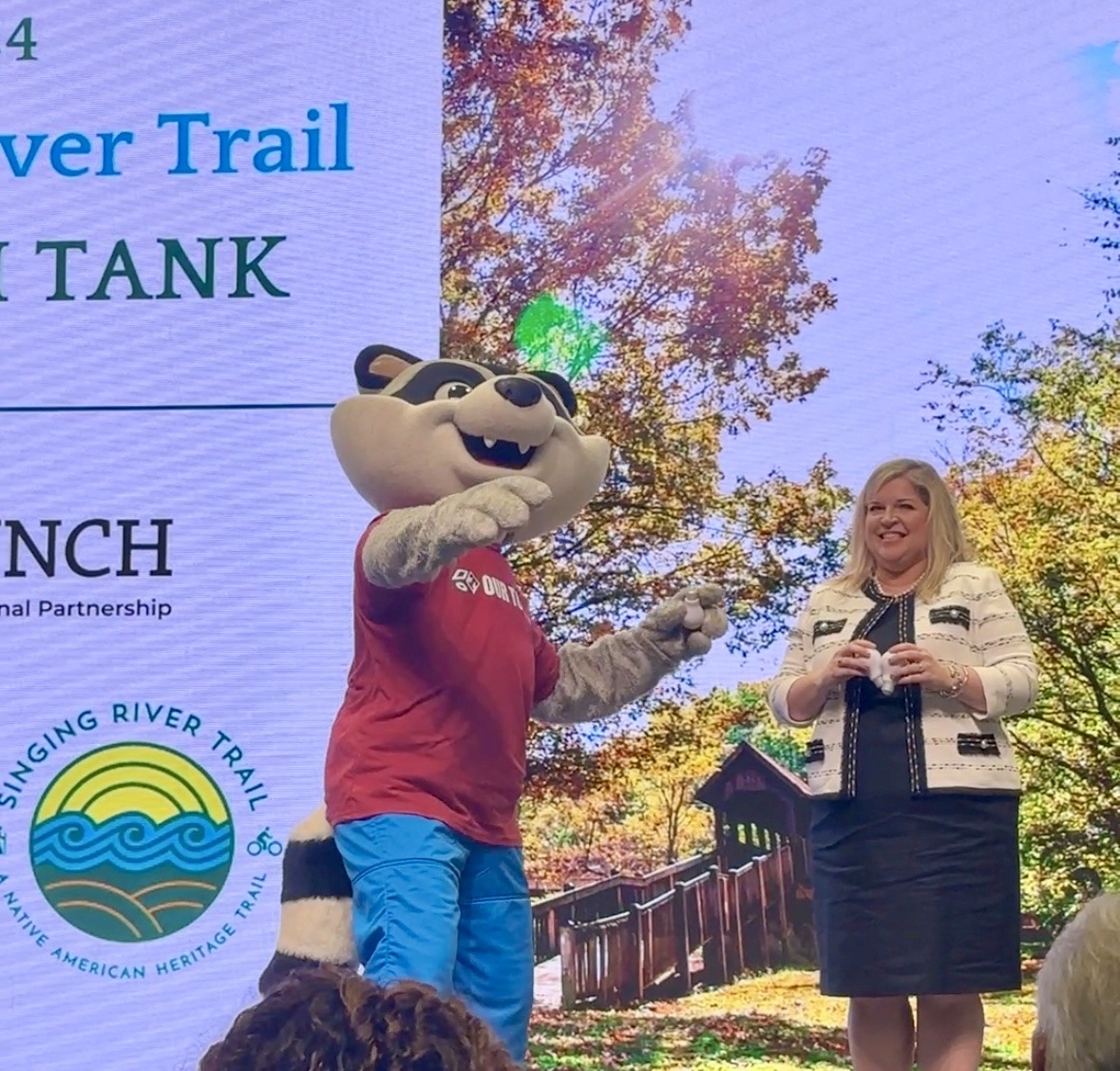
    Today I saw a giant raccoon throw light bulbs to people at Space Camp. That’s a real sentence. 

    Sprocket, loveable mascot of the Rocket City Trash Pandas, threw Horizon Point stress balls – made to look like light bulbs – to attendees of the 2024 Launch Tank Competition. It was a wild and wonderful moment. But let’s back up. 

    John Kvach and his Singing River Trail team partner with LAUNCH and Innovate Alabama to host a business pitch competition for entrepreneurs in North Alabama, known as Launch Tank. “Our vision goes beyond the competition,” Kvach says. “We want to connect as many entrepreneurs to the Singing River Trail as possible, making North Alabama a better place to live, work, and play.”

    This year, Horizon Point supported Launch Tank as a Seed Sponsor. If you know Horizon Point, then you may know that Give Back is one of our operating values, and each year we intentionally earmark a portion of the budget to financially support an initiative or two that we believe in. So, this week’s blog is all about celebrating the innovation happening in our own backyard.

    Horizon Point is a Woman-Owned Small Business (WOSB), and we proudly support entrepreneurship and small business initiatives in our state. Mary Ila is an Advisor for EDPA’s Alabama Launchpad. I get to serve on the selection committee for Decatur Morgan CEO for high school students interested in entrepreneurship. We partner with The Catalyst, The E-Center, and the Alabama Network of Entrepreneurial Women. We believe in equal opportunity, and it’s a joy to support opportunity networks. 

    When Launch Tank Co-Chair Lisa Mays said she might throw our Horizon Point light bulbs to people, we didn’t know John Kvach and Sprocket would start throwing them on stage. We also didn’t realize how symbolic it would be to throw light bulbs at an event built on innovation until Lisa said, “They’re like ideas! We’re just tossing around ideas!” We could not have said it better ourselves. 

    We are so grateful for programs like these in our backyard, and it’s an easy decision to Give Back to Singing River Trail Launch Tank. After all, who doesn’t want to catch a light bulb from a raccoon? 

    Want more? Check out the featured clip below or this article from WHNT. See the full list of finalists from Quad Cities Daily. 

  • 3 Business Lessons from a Weekend at Disney World

    3 Business Lessons from a Weekend at Disney World

    I recently spent a weekend at Walt Disney World. It sucked, and I loved it. It rained a gazillion inches for 48 straight hours. My shoes and socks got soaked twice. I walked 5 miles with squishy, cold, wet feet. My iPhone got water in the charger port, so I couldn’t charge my phone. It sucked. And I loved it. 

    It’ll be crowded and hot with long lines and tired feet, but I’m already excited about the next trip. All because of 3 basic business lessons we can all learn from Disney.

    1. Moments are powerful.

    Standing in the rain at Epcot at 9:00pm, waiting for fireworks to start, Felix tripped and fell. (Felix is the sweet toddler of my fellow Disney College Program Alumni, Daniela and her husband Sean.)

    He was rattled and upset, but a nearby Cast Member immediately walked over and offered him a sticker of the Eiffel Tower from the France pavilion. That one little magic moment brought Felix so much joy, and he totally forgot about his big tumble.

    2. Kool-Aid is good.

    Cast Members are empowered to create magic moments from their very first day. Onboarding is all about “drinking the Kool-Aid“, and while it’s easy to roll our eyes at cliches like that, believing in a little magic actually is a secret sauce. At Disney, drinking the Kool-Aid and sharing it with guests from all over the world is a direct driver of business success. I’ve been a Cast Member, and I’ve been a guest, and the Kool-Aid’s always good. 

    3. Bright spots outshine the bruises.

    We spent two full days walking a total of 18 miles around three theme parks. It rained the entire time. On back to back days, we had to walk around for hours with wet, squishy feet. And yet, I’d do it again right now. Felix got an Eiffel Tower sticker. My brother was celebrating his 29th birthday and got 97 “happy birthdays!” from Cast Members everywhere we went. My husband got to visit 8 countries and eat dinner at a German biergarten. The bright spots are so bright the other stuff doesn’t even matter. 

    The moral of the story is that doing the right thing for your customer or your guest or your service provider or your new hire, etc. creates bright spots and leads to repeat business, word-of-mouth business, and all the good stuff that companies spend lots of marketing dollars on. EPIC moments are powerful. 

    How are you creating powerful experiences for others? 

  •  Open the Door to New Perspectives

     Open the Door to New Perspectives

    The President of ATD Birmingham (and my friend) recently shared insights on The Leadership Pipeline with a room full of talent development professionals. I’m sure he said many, many great things, but the one thing I remember (and have talked about nonstop since then) was the idea that the first rung on the ladder of leadership is the hardest to climb. 

    The first time you shift from being an individual contributor to being a manager is like putting on a pair of glasses that no longer work. We know an upward move in our careers means upgraded responsibilities, but we don’t usually also upgrade our gear (glasses). So, even though we’re doing a new job, we still see our old job. 

    This got me thinking about other ways this metaphor applies to life. For example, if we are supposed to be brainstorming, or coming up with creative solutions, but we’re wearing the wrong glasses, we won’t even be able to see the new possibilities.

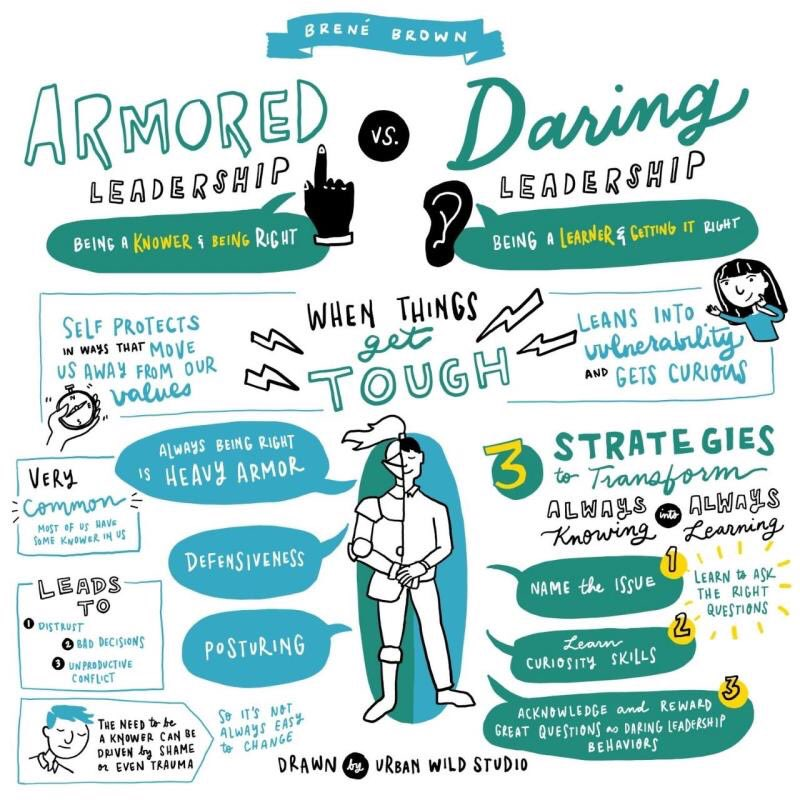
    We talked earlier this year about armored leadership versus daring leadership, and I think the same concepts apply here. Being a knower and being right is a totally different mindset (pair of glasses) from being a learner and getting it right.

    I think what I’m trying to say is it’s not so straightforward to shift from being a doer to being a learner, or getting stuff done to developing new ideas for how to do it. With our open the door theme this year, what I’m most excited about is opening the door to curiosity. Opening the door to new ways of working. Opening the door to different perspectives. Trying on new glasses. 

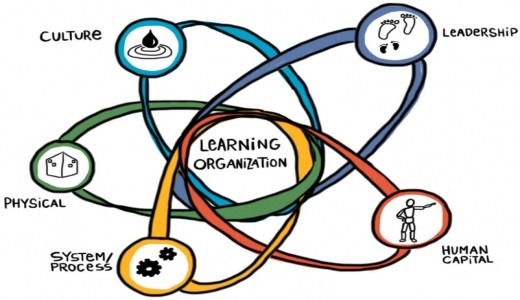
    Just last week, I talked with a group of HR professionals who are studying for the SHRM-CP exam. Our topic was learning and development in the context of an HR functional area. We spent a good amount of time defining a learning organization. Here’s a good overview via LinkedIn Newsletters written by Roopak Jain:

    According to Peter Senge, the five characteristics of a learning organization are:

    • Systems thinking: The ability to see the system as a whole
    • Personal mastery: A commitment to continuous learning
    • Mental models: The ability to challenge common assumptions held by individuals and organizations
    • Shared vision: A common vision that is committed to and shared by everyone in the organization
    • Team learning: The drive to continue the process of enabling the capabilities to deliver results as a team

    Source: The Learning Organization – An Agile Perspective

    Individuals, organizations, and communities can all benefit from getting new glasses. Or inviting someone to the table with a different lens. If we only see things the way we’ve always seen things, how will we know what’s possible? 

    This ties in with all DEI initiatives, because we do have a history of lack of representation at the highest levels of decision-making and influence. If we study who has been represented in Fortune 500 CEOs, U.S. presidents, down to state governors,  mayors, school board superintendents, small business owners, etc., we see how communities without diverse representation are less likely to thrive. At the core of many civic and business issues is a lack of perspective. It’s a great, big, complicated, beautiful, terrible, amazing world, and we all experience it differently.

    At Horizon Point, we try every day to keep the door open to perspectives or experiences that are different from our own. We challenge our clients to do the same. We ask questions. We remain curious about the world around us and the lives and needs of our neighbors. We volunteer and support community organizations that are trying to improve where we live, where we work, and where we play.

    If your door is already open to curiosity and new perspectives, how are you bringing others with you?

    If you are realizing that you need to take the step and open the door, there’s no better time like the present. If you’re not sure where to get started, take a look at What We Do, and maybe we can help.

  • Why Appreciation in the Workplace Matters

    Why Appreciation in the Workplace Matters

    Remember Mary Ila’s take on “How to Be Authentic with Your Appreciation at Work”? We reference Chapman & White all the time in training and coaching with our clients. To celebrate Valentine’s Day with full hearts in the workplace, we’re bringing you an early look at the new updated version of The 5 Languages of Appreciation in the Workplace

    We subscribe to the newsletter from Appreciation at WorkTM and got one of the first announcements of the new, post-COVID research on professional appreciation. Right away, I asked the team if we could do a blog about it. New research!? Yes! Here’s the blurb we got: 

    Appreciation at Work has done peer-reviewed research and polling through and post-COVID. The result of this research is a completely new chapter on how to effectively show appreciation to remote and hybrid employees including topics such as: 

    • the variety of remote work relationships 
    • trust in remote work relationships 
    • creating and maintaining a workplace culture 
    • the employer/supervisor perspective 
    • the employee perspective 
    • the key to keeping remote employees 
    • what neuroscience is showing 

    This edition also includes updated research (50+ citations) of data shared about the importance of appreciation and its positive impact on the functioning of businesses & organizations (including increased productivity and higher profitability when your employees feel appreciated.

    Source: Appreciation at Work

    I read it, loved it, laughed, cringed, and mostly just appreciated for the millionth time that Gary Chapman & Paul White adapted the Love Languages for professional relationships. They present their research on appreciation at work in a relatable, real life way. Here are some of my favorite quotes, classic and new:

    • “During the Great Resignation of 2022, researchers at the Massachusetts Institute of Technology found that employees were three times more likely to resign due to a lack of appreciation in comparison to financial compensation issues.”
    • “When leaders actively pursue teaching their team members how to communicate authentic appreciation in the ways desired by the recipients, the whole work culture improves. Interestingly, even managers and supervisors report they enjoy their work more. All of us thrive in an atmosphere of appreciation.”
    • “74% of employees never or rarely express gratitude to their boss.” (Reminder that appreciation is important up, down, and sideways!)
    • “There is a distinct difference between the Quality Time employees desire from their supervisor and what they value from co-workers. In response to this issue, we expanded the Motivating by Appreciation Inventory to allow individuals to indicate what actions they desire and from whom they want them.”
    • Acts of Service are about the other person, not about you. “Ask before you help. Don’t assume you know what help they want or need. If you are going to help, do it their way.”
    • “Our research with over 375,000 employees found that Tangible Gifts is the least chosen language of appreciation.” So if you’re going to do it, it’s important to give gifts “primarily to those individuals who appreciate them” and “give a gift the person values”. (Lorrie wrote about HPC’s take on gifts in “A Few of Our Favorite Things”.)
    • “The surest way to find out the appropriateness of Physical Touch is simply to inquire.” Many people appreciate a good high five, fist bump, or handshake to celebrate a job well done. Just check with them first, and don’t hold it against them if they prefer not to touch.

    Chapman & White also devote an entire chapter to the ROI of genuine appreciation. Take a look at these charts from the book: 

    Flow chart indicating that personally relevant authentic appreciation leads to employee engagement; which leads to reduced turnover, reduced absenteeism, and improved productivity; which leads to a better bottom line. 
    Table chart indicating the overall impact of employee engagement in organizations. One column lists results of employee engagement, and one column describes the associated research findings.

    Regarding remote and hybrid teams, Chapman & White basically say the needs are the same as fully in-person teams, but the intensity of certain needs are different. Here’s a snippet from the chapter on remote teams: 

    “In one study, prior to COVID-19, with almost 90,000 individuals who had taken our online assessment…we found that Words of Affirmation was the most desired appreciation language, followed by Quality Time and Acts of Service. But remote employees chose Quality Time as their primary language of appreciation more frequently (35% of employees) than workers on site (25%). The same pattern was found with employees both during the pandemic and afterwards.” 

    They go on to say, “…the single most important lesson we learned for effectively communicating appreciation to remote colleagues is that one must be more proactive than in face-to-face relationships. The most important factor is to understand, affirm, and relate to your colleagues as people.”

    If you saw our new team video highlighting our operating values, or if you’re a longtime HPC friend, you know that People First is our number one value. We are all just people, with the same ups and downs, and the same desire to be loved, appreciated, and valued. If we were to sum up the 5 languages book(s) in the simplest terms, we’d say Be People First. Be people first toward yourselves, and be people first towards others. 

    If we remember to be People First, we just might get better at genuine appreciation all on our own. 

    For individuals or teams interested in learning more about The 5 Languages of Appreciation in the Workplace, we highly suggest starting with the MBA InventoryTM, then reading the book (or listening to the audiobook). If you purchase the book, it comes with an access code to take the inventory. If you’d like to jump straight to the inventory, you can buy a single access code or codes for your entire team here. (I feel like it’s important for me to say that we’re not being paid to promote any of this, we just really like it.)

  • How to Be Perfect (Or Not) 

    How to Be Perfect (Or Not) 

    Last week, Lorrie talked about braving trust, and a willingness to be vulnerable. She mentioned the theme from Brené Brown of taking off our armor and daring to lead. 

    Recently, Horizon Point has seen more and more client leaders struggling to take off their armor. We think it’s tied to the desire to be perfect, or at least to be seen as not a failure. Mary Ila’s research in grad school was actually on leader emergence versus leader effectiveness, and she found that emerging as a leader within a group is distinct and separate from being effective once you’re there. Let’s consider a female leader who makes it to the C-suite because of her natural traits (leader emergence) and is now finding herself ineffective. Or consider the student who was elected as SGA president, but once they got the job, they floundered. When people find themselves in leadership roles where they feel ineffective, it’s almost like…because they aren’t perfect, they just freeze up. But what does it even mean to be perfect?

    If you’ve seen the show The Good Place, Brooklyn Nine-Nine, or The Office, you may be familiar with Michael Schur. Schur created The Good Place, a show about how to be good (in order to get to heaven) and when he was doing research he dove deep into ethics and morality. The result was a book called How to Be Perfect. It is poignant and hysterical. The short summary: Perfect is made up. Everyone decides for themselves what is good versus bad or ideal versus not ideal – think back to Mary Ila’s blog two weeks ago about values. We all adopt and refine our personal values overtime which shape what we believe about being good or being perfect, and when we feel like we’re not achieving that, we start to become an unhealthy version of ourselves. 

    It’s as if in order to fit in, to climb the ladder, to “have a seat at the table“, we learn these behaviors of protecting ourselves, always on the defensive, expecting to be attacked around every corner. A few months ago, I had the pleasure of speaking to the Women in Business students at Mississippi State University, and I focused on this topic. We had a great discussion about the balance of vulnerability and self protection. Specifically, we walked through Brené Brown’s model of Armored versus Daring leadership.

    Armored leadership looks like…being a knower and being right. 

    Daring leadership looks like…being a learner and getting it right. 

    Source: Urban Wild Studios 

    We are helping clients recognize when they are demonstrating Armored leadership, and we are helping them develop the skill (because it is truly a skill that takes practice) of taking off their armor, and stepping into Daring leadership.

    I’ve also been the emergent leader who then found herself ineffective, but I’ve had incredible mentors who have helped me practice taking off the armor and living in my values. As Mike Schur says, “If we really work at finding the means of our virtues – learning their ins and outs, their vicissitudes and pitfalls, their pros and cons – we become flexible, inquisitive, adaptable, and better people.” In layman’s terms, know your values and practice them. 

    What armor are you wearing that you could take off? What if you start with one piece? It doesn’t have to be all or nothing. If you need help getting started, we have a couple of worksheets that are modified from Brené Brown’s Dare to Lead. In the end, we just need to make a choice to live in our values, rumble with vulnerability, and step into Daring Leadership.