Category: Personal Development

We all need a little personal development mixed in with our professional and career development. Read blogs in this category for stories and best practices for personal wellness and wellbeing, skills improvement, and  more.

  • What is Diversity and Why Does it Matter?

    What is Diversity and Why Does it Matter?

    I distinctly remember the first time I knew I lived in a bubble.   I was 17- a junior in high school.  I had two elective slots open.  For one, I decided to be a science lab assistant that didn’t require much work.  This allowed me to walk across the street one day a week to spend time with an at-risk elementary student as her mentor.

    Up until that point in my life, I thought most people lived like me.  Some had more and some had less but I didn’t think there were drastic differences.  As I got to know this little girl and hear her story, I realized I was wrong.  Dead wrong.

    She and her brother had been shuffled from home to home, with no one really providing for them.   She didn’t know where her next meal would come from and who would (or wouldn’t) be picking her up from school and where she would sleep most nights.

    That same year, I also had a period of my schedule where I was an aide in the developmental wing of our high school.  I spent time with students around my age with varying degrees of cognitive and physical disabilities.

    This was the beginning of the realization that not everyone’s world, even if we were occupying the same physical space, was the same as the world I was in.

    With a large focus on diversity and inclusion in the workplace, my realization that I lived in a bubble helps to illustrate that diversity and inclusion aren’t just about your Title VII criteria and other subsequent legislative catagories- sex, race, color, national origin, religion,  age and sexual orientation.

    Diversity and inclusion aren’t about discrimination. It’s about creating an environment in work and in life that proves it is valuable to be around people who are different from us. This value is added through perspective and leads to business results.

    So when you think about your workplace (and life), do you have diversity and are you open to the perspectives around multiple criteria of diversity?

    Does it include diversity in:

    1. Demographics- Title IX criteria such as sex (and sexual orientation), race, color, national origin (I would also add geographic diversity- I’ve learned a lot from people who grew up in a different part of the United States than I have), and religion.
    2. Age
    3. Cognitive Diversity including things that many would label as “disabilities” like Autism, Asperger’s, etc.
    4. Physical Diversity including things that many would also label as “disabilities” tied to physical limitations- blind, deaf, paraplegic individuals, etc.
    5. Personality Diversity
    6. Socio-Economic Diversity
    7. Political Diversity
    8. Diversity of Experiences

    A lot of these areas of diversity can’t be seen.  They come with being heard.

    As a business leader, I’d encourage you to use the Privilege Walk  to begin the conversation of allowing a variety of areas of diversity to be seen (by the positions people end up in on the walk) and then be heard by facilitating a discussion around it.

    Because “companies with inclusive talent practices in hiring, promotion, development, leadership and team management generate up to 30% higher revenue per employee and greater profitability than their competitors.” Source here.

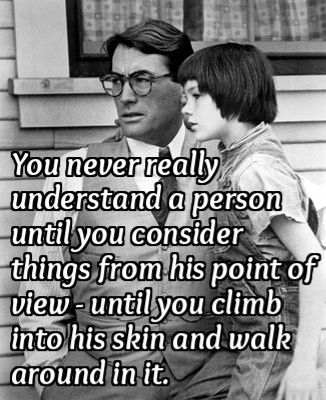
    I read To Kill A Mockingbird in High School too.  I was 15.  But it wasn’t until I was 17, walking into that little girl’s current front yard to take her to dinner that I realized I just learned what Atticus Finch meant, “You never really understand a person until you consider things from his point of view- until you climb into his skin and walk around in it.”

    Climb into someone else’s shoes today.  You’ll add more value if you do.


    Interested in learning more about diversity and inclusion? Join Mary Ila at SHRM’s Diversity and Inclusion conference as she tackles the topic of hiring for fit AND diversity.

    See session information here.

  • Do You Have a Plan of Action to Reach Your Goals?

    Do You Have a Plan of Action to Reach Your Goals?

    Action Planning and Goal Setting are key tools for career success. Stephen Covey’s “Circle of Concern vs Circle of Influence” principle is a great way to start the process. In short, we need to focus on our circle of influence (the things in life and career we can control).

    Source: INSITEMIND


    One way we can do this is by setting goals and creating an action plan. Goals should be specific, measurable, attainable, relevant and time bound.

    Source: Minute Movement

    Check out the Point Blog for more Goal Setting ideas:

    Goal Setting Articles from the Point Blog

    Develop an Action Plan for yourself with Smartsheet – free download here.

  • 5 LinkedIn Tips for Job Seekers

    5 LinkedIn Tips for Job Seekers

    Now more than ever, companies are utilizing LinkedIn to seek out job candidates. They aren’t looking at the ones who have “job seeker” in their profile. Organizations are seeking passive candidates that have desired skills, endorsements and connections to reputable individuals and organizations.

    Here are 5 tips for getting the best out of your LinkedIn profile:

    • Tell your story. Your summary should include a brief history of your career emphasizing your key skills and accomplishments. I often recommend using the “summary of qualifications” from your current resume.
    • Include all key skills that a potential employer might be looking for. Do your research here. For example, if your dream job is to be a CFO for a large company, search for job announcements and make sure you include the “required skills” (those that you have) in your list of skills.
    • Endorsements are important. Remember, you often “get what you give”. If you endorse others, they will often return the favor.
    • Get a new profile pic, already! A professional photo is must for your LinkedIn profile. If you are unable to use a professional photographer, no worries. A good camera will work as long as you have a solid background and are dressed in what you would wear to an interview.
    • Recommendations are a bonus. This is one area where I think it’s okay to ask previous employers or coworkers to provide a recommendation. And, you can offer to do the same for them.

    You can let recruiters know that you are in the market for a new career while keeping it confidential. Check out How to Find a Job Using LinkedIn for more details on this along with other tips.

  • 3 Ways to Make your Workplace Harassment Training Successful

    3 Ways to Make your Workplace Harassment Training Successful

    I recently attended an HR luncheon where a good question was raised. How can HR ensure that leadership understands the importance of and supports anti-harassment policies?

    Many organizations focus their anti-harassment efforts on minimizing legal liability and not on minimizing inappropriate behavior within their organization. Their training consists of annual anti-harassment training, usually in the form of a bland training video that most employees sit through, but don’t pay attention to. In order for an anti-harassment training program to be effective, it must focus on minimizing the behavior and should include a few key components:

    • The training must be relevant- Just because it’s a serious topic doesn’t mean it must be a boring topic. Make the training interactive and interesting. I briefly worked as a sexual harassment trainer for a company that designed their training in the form of a game (think Jeopardy). It kept the participants engaged, made them think, and they enjoyed the training. Think of ways to keep your audience actively engaged. The more engaged you can keep them, the more information they will take away from the training.
    • Don’t just check the box- many organizations conduct annual training just to mark it off their To Do List. Harassment training should be a year-round endeavor. In addition to your annual mandatory training, schedule quarterly events, whether those are trainings, brown bag lunches with speakers, articles in the company newsletter, or some other form of communication. Provide training to your leadership on their roles and responsibilities. Make sure they understand the importance of taking claims seriously and involving HR in those investigations. Make sure they understand the policy and how to enforce it. Consider having an employment attorney come and speak with leadership. Do they know that not only can the organization be named in a lawsuit, but individuals can be named as well in some cases?
    • Back up what you say- review your anti-harassment policy. Make sure it is well written and details confidentiality (to the extent possible), your investigation process, and disciplinary process. Also review your policy on anti-retaliation. You want your employees to know that if they come to you with a claim, they can do so without fear of retaliation, but also that if they make false claims, there will be consequences for that. But remember, your policy means nothing if you don’t back it up with actions. If you have an employee file a claim, follow through with an investigation and appropriate action. If you don’t, your organization will quickly get a reputation for not taking such claims seriously. And make sure your leadership and your employees know these policies. Be sure you’re reviewing them during new hire orientations and touch on them again during your annual training.

    Managing harassment claims is never easy. Often times managers minimize the seriousness of claims or ignore claims altogether because they don’t know how to handle claims, they are uncomfortable handling claims, or they themselves don’t see the actions as a serious problem. Developing a strong partnership with your leadership team is key to successfully handling harassment claims and ensuring that your organization is able to minimize inappropriate workplace behaviors. And as always, be sure that all claims and investigations of harassment are well documented.

    How successful is your organization’s anti-harassment program?

  • Be Leary of the First Impression

    Be Leary of the First Impression

    I spent some time (finally) reading for pleasure over the 4th of July holiday week.  A new author, Amor Towles, has struck a cord with me, and I finished up reading A Gentleman in Moscow over the break.

    The writing is eloquent and thought-provoking, and this quote resonated with me as a keen lesson:

    After all, what can a first impression tell us about someone we’ve just met for a minute in the lobby of a hotel? For that matter, what can a first impression tell us about anyone? Why, no more than a chord can tell us about Beethoven, or a brushstroke about Botticelli.  By their very nature, human beings are so capricious, so complex, so delightfully contradictory, that they deserve not only our consideration, but our reconsideration– and our unwavering determination to withhold our opinion until we have engaged with them in every possible setting at every possible hour.

    In the world of talent management, we often label people based merely on first impressions.  Someone gets the tag “Hi-Po” for whatever fleeting reason, and they remain so even when their performance doesn’t dictate it.  And even a greater tragedy, the reverse happens and we write someone off as a low performer when we haven’t taken the time to initially consider or reconsider (as the author emphasize is more important) the context of the person and their overall performance.

    In other words, don’t judge a book by its cover, or its title.  If I had done so, I wouldn’t have ever discovered this gem or a quote or this gem of an author.  And you and I both may be passing up on gems in and for our organization because we haven’t taken the time to get to know them “in every possible setting at every possible hour.”

    Who do you need to reconsider?