Category: Next Generation Workforce and Workplace

We help individuals, organizations, and communities think innovatively about the next generation workforce and workplace. Read these forward-thinking stories and best practices from our work and lives.

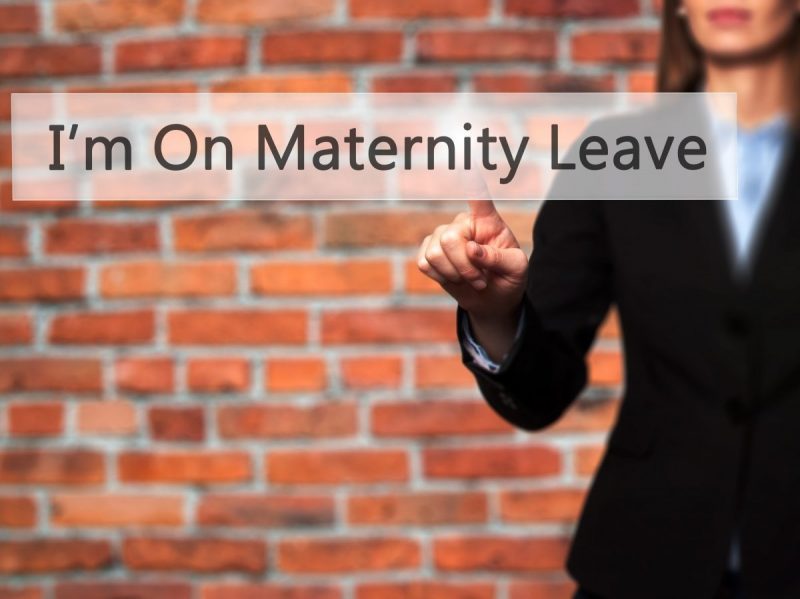
  • Paid Parental Leave

    Paid Parental Leave

    Did you see where Trump announced a plan for paid family leave? Smart move Mr. Trump.  Love him or hate him you’ve got to give him credit, this was a smart political move to draw the female vote, especially given that his opponent might have a leg up on the female voter pool.

    The day after this announcement, I got this information from a friend (who is in fact pregnant):

    The gist is this:

    “The United States is at a crossroads in its policies towards the family and gender equality. Currently America provides basic support for children, fathers, and mothers in the form of unpaid parental leave, child-related tax breaks, and limited public childcare. Alternatively, the United States’ OECD peers empower families through paid parental leave and comprehensive investments in infants and children. The potential gains from strengthening these policies are enormous. Paid parental leave and subsidized childcare help get and keep more women in the workforce, contribute to economic growth, offer cognitive and health benefits to children, and extend choice for parents in finding their preferred work-life strategy. Indeed, the United States has been falling behind the rest of the OECD in many social and economic indicators by not adequately investing in children, fathers and mothers.”

    I want to nod my head, but then the libertarian in me kicks in, fighting my inner mom and focus on forward thinking practices in the workplace.   Do I think it is a good idea to provide paid parental leave?  I most certainly do.  But is it the government’s job to mandate that employers provide it?  That’s where I start to get squeamish about it.

    Many of the most forward thinking companies in the nation already offer paid parental leave, or some version of it. And here’s why as you see from this article back from 2015 on why Amazon was just another that announced they would expand their leave policies:

    Earlier this week, Amazon announced that it would expand its leave policy for new moms and extend the policy to dads for the first time. It’s just the latest tech company to do so, as Silicon Valley realizes the best way to attract top talent is to offer flexible work schedules and ever-flashier perks. According to the Society for Human Resource Management, 75% of the workforce will be made up of millennials in just a decade, and employers are kowtowing to their work-life preferences; a recent survey by Ernst & Young found that “millennials around the world are more likely than other generations to cite paid parental leave as an important benefit.”

    Employers do it because it is in their best interest to do so. If they want to attract the best talent and retain them, and then seek to create an environment where they can be as productive as they possibly can, they realize the need to provide flexibility during a time in life when it is needed.  Short of people deciding they aren’t going to have babies anymore (and that ain’t going to happen), if you want to recruit and retain the best, it’s in your own self-interest to offer flexibility.  The industries and jobs that don’t require a leg-up in talent are becoming fewer and farther between in the U.S. and across the globe.

    So what if the government could find a way not to mandate something, but be a catalyst for showing employers that it is in their best self-interest to offer this and other quality of life benefits? Love to hear from you on how this might be done.


  • Millennials Don’t Feel Entitled to Your Job,They Want You to Help Them Chart Their Career

    Millennials Don’t Feel Entitled to Your Job,They Want You to Help Them Chart Their Career

    The generation of participation trophies, therefore, the generation of entitlement.  Therefore, the group that thinks their degree, or maybe just the mere fact that they breathe, entitles them to the CEO seat 18 months in.  You’ve heard it all.   And if they don’t get that CEO seat, by the way, well they are also a generation of job hoppers.

    But when you talk to most millennials (myself included), you’ll find that they don’t want or expect to have the top job 18 months in, but they may want it at some point in their life.  And isn’t that a good thing?  Goes against another stereotype of the generation- lazy.

    They do, however, want you to help them know what it takes to get there.  And before that, they want you to actually take an interest in what they want out of their career. They want you to be a career agent, a mentor, a people manager, which means giving them the assignments and experiences that will help them reach their dreams.

    And guess what, this just isn’t true of millennials; it’s true of all generations.  It just seems more pronounced with millennials because they have a longer career runway to plan for and manage.

    Rajeev Behera, CEO of Reflektive, summarized this need for leaders to be career agents as a guest on HR Happy Hour 255- Modernizing Performance Management.  One of the hosts, Trish McFarlane, asked Rajeev, “What does a good people manager look like?” Click through to about 11 minutes into the podcast if you want to hear what he had to say, but the gist of it is this:

    “What I think is the difference between a team leader and a real people manager is the people manager actually knows what an employee wants to do in their career and coaches them to become, to get to that point in their career. So career development and helping out on skills and giving projects to them so they can improve on those skills to get them to where they want to be is what a great people manager does…The ones that you remember and that made a real imprint on you are the ones that spent the time with you.”

    Rajeev points to what makes a good manager.  Really he is pointing to what distinguishes a manager from a leader.  This obviously matters because it makes a “real imprint” on people.

    But does is matter in terms of business results?

    Take what Google found through their googlegeist survey given to employees (check out Work Rules for the details on this).   The best managers did  5 to 18 percent better on a dozen of their employee survey “googlegeist” dimensions when compared to those that were the worst.  The top things that made those managers significantly better dealt with career:  “Career decisions were made fairly” and “Their personal career objectives could be met”, and their manager was a “helpful advocate and counselor.”

    So if you feel threatened that a millennial or anyone else for that matter is gunning for your job without deserving it, be a good boss and coach them on how to get there.  But first, ask them what it is they actually want out of their career.  Besides the fact that this is just the right thing to do, it makes you more valuable too.  Go make more leaders.


    Like this post? You may also like:

    Millennials at Work: Five Stereotypes- and Why They are (Mostly) Wrong

    Myths About Millennials: Tips for Managers about Retaining Millennials


    And if you’re in North Alabama on September 13 or 14, or in Memphis, Tennessee, September 15, come learn how to be a career agent:

    September 13- NASHRM Workshop

    September 14- TVC-SHRM Luncheon

    September 15- Tennessee SHRM Conference

  • The name of the game is FREEDOM: How innovative companies motivate, get, and retain the best…

    The name of the game is FREEDOM: How innovative companies motivate, get, and retain the best…

    “The competition to hire the best will increase in the years ahead. Companies that give extra flexibility (freedom) to their employees will have the edge in this area.” Bill Gates

    I can’t neglect (since I missed the window over the 4th) to make sure to make a point about freedom during our nation’s birthday month. And as by coincidence or actually, by what really makes a whole lot of sense, you can’t talk about what drives innovation without talking about freedom. America is a country that was built around the concept of freedom.

    Despite a presidential campaign grounded on “Making America Great Again,” it is the most innovative country in the world as measured by producing goods and services that people value (as measured by GDP). It is also still a country where many desire to immigrate, and though I’m not citing fact now, I will venture to say that many of them desire to come here precisely because they will have freedom, including the freedom to innovate.

    And, since I can’t resist the urge to make a slight political commentary here, a country grounded in freedom is what gives Mr. Trump the freedom to say that America needs to be great again and gives citizens the right to show their support of this by their vote. This is precisely what makes America great. Not the idea of building a wall.

    And freedom is what grounds innovative organizations.

    Why? Because giving people freedom leads to this cycle:

    1. Trust. Freedom is the way you behaviorally demonstrate to people that you trust them.  When people are trusted, they feel free to:
    2. Experiment. A/B or split testing is something the most innovative companies do all the time.  Because everything can’t be known, trying it more than one way and seeing what works better- what the customer prefers- leads to better results.
    3. Fail (more often than not). If I saw anything across the literature that was vital to innovation it was room to fail because it leads people to:
    4. Learn. As the Innovator’s Dilemma emphasizes over and over again –  “The strategies and plans that managers formulate for confronting disruptive technological change, therefore, should be plans for learning and discovery rather than plans for execution.” Learning can also come from getting it right instead of failing, but often the biggest breakthroughs come through some kind of failure in the beginning.
    5. Grow. Growth occurs at the individual level and then collectively at the organizational level in terms of profits.


    Freedom1

    Much of the literature uses the word “autonomy” or “flexibility” for “freedom” and this autonomy, as you see in Drive couples with finding mastery and purpose in the workplace to create motivation.

    So how do we create this freedom in the workplace that allows for this cycle to take place, leading to innovation?

    Here are some ideas to create freedom from some of the best innovation hubs:


    How do you allow for freedom in the workplace?  What results have you seen?

    What scares you about giving people freedom in the workplace?  Why?


  • Innovate or Die? And the Best Places to Work

    Innovate or Die? And the Best Places to Work

    Innovation is a buzzword in business now.  In a fast-paced world where change and adapting is necessary in order to survive in business, innovation seems to be what all people want to point to that keeps companies alive.  “Innovate or die” we hear.   But is it worth all the hype?

    Despite the fact that I often hate cliché words or phrases (don’t ask me about what I think about the word “synergy”, for example), I’m on the innovation bandwagon. I believe in today’s business world it truly is what separates the winners from the losers.   And you can see why in the way that the Business Dictionary defines innovation as “The process of translating an idea or invention into a good or service that creates value or for which customers will pay”.  This view of innovation connects it to why it separates the winners from the losers-  it’s the process by which value is created.

    But we often speak of innovation in terms of products or services. While very important, my focus, however, is on how people or human resources/capital innovation takes shape in the workplace and how it contributes that value that translates into dollars and cents.   Interestingly enough, many of the most innovative companies are also labeled as best places to work.   This is no coincidence.

    We are now at Horizon Point self-proclaiming ourselves as “Workplace Innovators” (you can see more on this at our newly designed website),  helping companies and communities hire, grow and lead in an “outside of the box” (there I go again with another cliché) way.  Which happens to help us lead them to be award-winning companies recognized for their people practices.

    After spending a few months delving into the research on innovation specifically from a human resources lens, and talking to company leaders who drive the best workplaces, I will be spending the next few weeks covering what creates innovative workplaces.  These areas will include:

    1. You can hire for fit AND diversity- How the most innovative companies hire
    2. The name of the game is FREEDOM- How innovative companies motivate and retain the best
    3. Rules to preserve freedom and culture- How innovative companies go about rule-making.
    4. Does size matter? How innovation and entrepreneurship grow in all sizes.
    5. What does a HR leader at an innovative company look like?
    6. You can’t innovate without your house in order- Capital Resources, you gotta have them
    7. A Final Word on How to Create an Innovative Organization: Do you believe are people fundamentally good?

    In each post, I’ll make a case of why each thing is vital to an innovative workplace and then give suggestions or a checklist on how to examine your organization against this standard and make revisions or changes to adapt your organization towards these standards for innovation.

    If you’re interested in diving into the details I looked at to draw these conclusions, there will be a number of articles and books linked in the posts. Overall though, check out these must reads that are grounded in research and/or first-hand experience from innovation thought-leaders:

    1. The Innovator’s Dilemma (and many of its footnote references)
    2. The Lean Start-Up
    3. Steve Jobs
    4. Work Rules! (and many of its footnote references)
    5. Drive
    6. Entreleadership
    7. Great By Choice
    8. And one cool tool I discovered in the midst of all this research is http://buzzsumo.com/. It is a content analyzer that shows you, by entering keywords, the top posts by social shares and the top influencers.  Make sure you check these for quality and validity though if you are going to use them; just because it’s shared the most doesn’t mean it’s the best.

    We hope you find our couple of months of hiatus from blog posting valuable as you read more about what we’ve discovered as we intensely researched the topic of innovation in the workplace.

    What do you think makes a workplace innovative or a best place to work?

  • How Neuroscience Is and Will Revolutionize HR

    How Neuroscience Is and Will Revolutionize HR


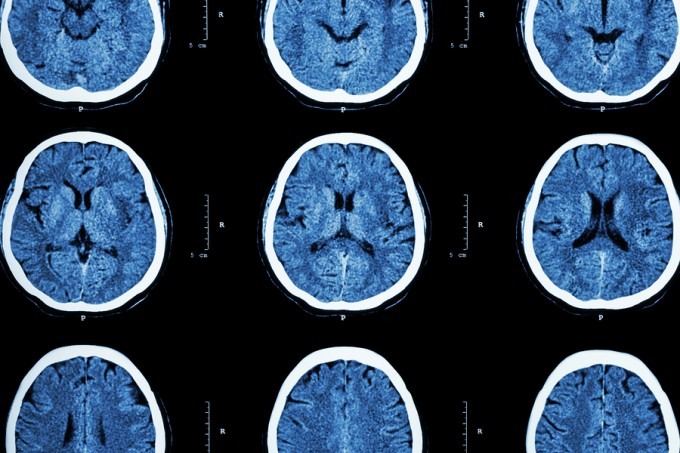
    In December of 2014, my then four-year-old son started having seizures. After three of them occurred in a short period of time, we went to see a pediatric neurologist who first did an electroencephalogram (EEG) to begin to identify the cause of the seizures so we could determine a course of treatment.

    Utilizing this technology as well as other techniques, she put our son on a medicine that has controlled his seizures. He hasn’t had one in over a year, and we are thankful for the doctors, the scientific discoveries and the technology that made this a reality.

    Neuroscience has long been connected to understanding neurological disorders like seizures. It is also frequently used for explaining behavior, specifically behaviors tied to clinical diagnosis. However, neuroscience is beginning to infiltrate the workplace giving us the ability to use brain science for talent assessment. The EEG used to understand my son’s seizures is now being utilized to understand a variety of talent management questions, as Dario Nardi points on in his article “Your Brain at Work” in HR Magazine.

    As we move forward into the future of behavioral assessment in the workplace, I believe neurological assessment will begin to gain ground to complement, and maybe even take the place of what is most commonly used now- the self-report assessment.

    Why? Well, because it’s more honest. Self-reports are just that- self-reported. Monitoring brain activity points to a more objective approach to understand who we are and why we behave the way we do. Because of this, brain based assessments can help:

    • Create self- awareness in employees to aid in the understanding of who we are (personality) and why we behave the way we do.
    • Improve team building & talent placement by helping individuals and companies understand how to better work together.  This will help companies answer the question, is there enough cognitive diversity on our team?
    • Build better training programs through customized learning. Neuroscience can help us understand how individuals learn best and cater training and development to personalized needs.

    Whereas brain science and the technology related to it is exciting to see in the talent assessment industry for the same reasons it is valuable in medicine- it aids in diagnosis which aids in better decision making- my family’s example also points to the need for caution in utilizing the technology.

    When we went back last month with our son for his yearly EEG, the results still showed a “discharge”, as the doctor referred to it, in the left hemisphere of his brain. She explained to us that it was happening very infrequently, but because it was still present, there is a likelihood that if he were taken off the medicine, the seizures would begin to reoccur. Knowing that this area of the brain is tied to language, I asked her if we should be concerned about any issues in his language development. She said no. Given the amount of frequency seen, she said, it would have to be occurring 20-30% more than it is in order for there to be concerns about his language development.

    This example points to why I’d be hesitant to utilize the technology (and you see I did not list it above) in selection because of the potential discrimination issues.  It could lead to discrimination in hiring against individuals (like my son, who does have a diagnosis of epilepsy) based on factors that are not tied to an individual’s ability to perform the essential functions of the job. I would hate for someone who isn’t as knowledgeable in the science to see “discharge” on someone like my son’s EEG and assume has language issues, when he in fact does not.   However, given a multiple-hurdles approach to assessment, EEGs could one day be a valuable selection tool as well, just as they are used as one technique among many to determine the best course of medical action.

    So for all you talent development professionals out there or those aspiring to be, take more science classes. No field, even HR, is immune to the need for a strong STEM (Science, Technology, Engineering and Math) education.

    How do you see neuroscience shaping human resources? Does it excite you or scare you?

    Like this post? You may also like:

    The Psychology Behind Why People Support Certain Presidential Candidates

    and

    Use Your Brain- Both Sides