Author: Lorrie Coffey

  • Finding Your Own Path

    Finding Your Own Path

    A recent conversation with my eight-year old son made me realize just how early in life we begin to compare ourselves to others and try to adjust who we are to fit in with those around us.

    As we continue to explore authenticity, and specifically being true to yourself and not comparing yourself to others, I am reminded of this quote.

    Our journeys are each unique, the paths we take are ours alone.

    For a great article about one man’s journey to being authentically happy and his three principles for accepting yourself, read Paul Dalton’s story.

  • Living Life Gratefully is Living Life Authentically

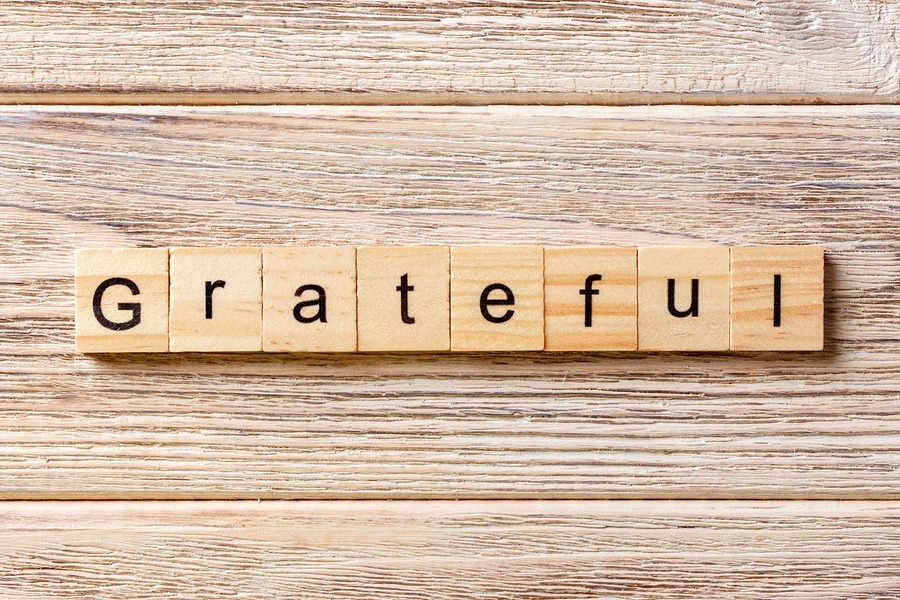
    Living Life Gratefully is Living Life Authentically

    My great-grandmother taught me the art of gratitude. She lived a very hard life, but through it all she was grateful. She always found the positive in everything and helped others see the positive in their lives as well. As we explore how to be authentic, I find myself thinking of her and what she taught me a lot. This quote from best-selling author Sarah Ban Breathnach is the perfect illustration of what effect gratitude can have on you.

    “You simply will not be the same person two months from now after consciously giving thanks each day for the abundance that exists in your life. And you will have set in motion an ancient spiritual law: The more you have and are grateful for, the more will be given to you.”

    As Josie Robinson, author of The Gratitude Jar: A Simple Guide to Creating Miracles, said, “Focusing on what you have to be grateful for forces you to not only become a more positive person – but to attract more positive situations into your life because they become self-fulfilling prophecies of the thoughts you’re putting out into the world.”

    For suggestions on how to live a grateful life, visit www.josierobinson.com.

    Like this post? You may also enjoy:

    2018 Is the Year of Authenticity 

    The Essence of Authenticity 

  • Hearing vs. Understanding: The Art of Active Listening

    Hearing vs. Understanding: The Art of Active Listening

    One of my favorite active listening quotes comes from Stephen Covey, the author of The 7 Habits of Highly Effective People, is: “Most people do not listen with the intent to understand; they listen with the intent to reply.” The art of active listening isn’t easy, but it’s important.

    Last night my husband came home from work and walked through the door with that look on his face. The one that leaves no question about what kind of day he had and makes me wonder if I should even brave asking.

    I took a deep breath and dove in.

    He proceeded to tell me about an issue he’s having at work and how the meeting he and his boss had to address the issues went completely sideways. The person they met with kept interrupting them and disputing everything they said. In the end, the meeting accomplished nothing but to further increase the stress on all parties.

    I’m a listener. I much prefer to sit back and watch everyone around me and listen to what they say. But the art of active listening is in the details. To really listen, or be an active listener, requires so much more than just hearing the words. There are five stages to active listening:

    • Receiving or hearing the message being delivered
    • Understanding or learning from what was said
    • Remembering or retaining the information provided to you
    • Evaluating or judging the content of the message received
    • Responding or providing feedback to the deliverer of that message

    My husband knows when he brings up work issues that I go into HR mode. So after a long talk and lots of questions from me, he began to realize that the meeting failed not just because the other person refused to listen, but so did he. While he heard the concerns they presented, he failed to understand what they were saying. He simply responded back with his own concerns, not evaluating and taking into account the information they had attempted to provide him.

    Some of my recommendations to him included:

    • Know when to engage in conversation: The meeting was held when tempers were still flaring. None of them walked into the meeting with the intent of listening, only with the intent of speaking.
    • Don’t interrupt the speaker: You can’t receive, understand, and evaluate the message if you don’t let them deliver the entire message.
    • Focus on the message, not the sender: By going into the meeting frustrated, my husband engaged in bias by not giving the message the attention it deserved because he was unhappy with the person delivering that message.
    • Know when you need help: One of my suggestions to my husband was that it could have been beneficial to all involved if they had asked a neutral third party to attend the meeting and help mediate it.

    I often fail at my own advice, especially where my boys are concerned. So this year I have committed to being a more active listener with them, to give my time to them and not just hear what they say, but understand it. The art of active listening is like any art; we have to practice it to hone it.

    How can you commit to being an active listener this year?

    The Practice of Listening is one of the 5 things we believe can lead to living an authentic life. Want to read more about living authentically?

    2018 Is the Year of Authenticity 

    The Essence of Authenticity

    4 Ways to Listen to Yourself 

  • The Unattainable Work-Life Balance

    The Unattainable Work-Life Balance

    Is our elusive hunt for a work-life balance causing us undue stress in our lives and the lives of those around us?

    Generation X introduced the philosophy of the work-life balance in the 1970’s, and organizations and employees alike have spent the last few decades searching for that balance. But can anyone say they’ve found it?

    The major flaw with the work-life balance philosophy is that it’s based on the premise that your work self and your life self are two separate entities and to achieve balance, you must maintain that separation and seek a level of equality between the two.

    A study published in 2015 by the Harvard Business School and Stanford University showed that workplace stress can be just as harmful as second-hand smoke. If we’re bringing that stress home, imagine the impact it must have on our families.

    It took my thirteen-year-old son’s insight to show me that the struggle to achieve a work-life balance doesn’t just affect those trying to achieve it, it also affects everyone around them. About a year after moving to Huntsville from Northern Virginia I asked him if he was glad we moved. He told me that he was glad we moved and that his friends here were very different than his friends in Virginia. He explained how his friends here are more laid back, he could be more open with them without fear of them judging him, and how his friends from Northern Virginia were much more rigid and easily offended. His response both shocked me and made me realize just how much of an impact living in the rat race of the D.C. area had on my children.

    As the Indian Yogi and Poet Sadhguru said “There is no such thing as work-life balance- it is all life. The balance has to be within you.”

    The reality is that our work self and life self are two parts of the same whole and can never be fully separated. The Millennials have figured this out and taken the work-life balance philosophy and given it an overhaul. They have introduced us to the work-life integration philosophy. The work-life integration philosophy is a more synergistic approach, in which we must learn to blend our work self and life self into one cohesive unit.

    Many organizations are starting to buy into this concept and provide benefits to help employees integrate their work-life selves.

    • Evernote, a software company, provides their 250+ full-time employees with bi-weekly housecleaning services free of charge, $1000 annual vacation stipends, and a baby bonding program that provides an additional six weeks of paid leave.
    • SC Johnson & Son provides employees with concierge services, on-site childcare, flexible work hours & compressed work weeks.
    • Google provides on-site physicians, free lunches, massages, car washes, up to 12 weeks of paid leave, as well as $500 in “Baby Bonding Bucks” for new parents.

    While these examples are from larger companies, there are benefits that smaller employers can offer as well. I currently work with a client that offers their employees PTO hours in addition to vacation time. These hours are to be used for things such as doctor’s appointments, hair appointments, and parent-teacher conferences. They also provide a car wash service that comes onsite and employees can pay to have their car washed while they work.

    What benefits can your organization offer employees to help them achieve a work-life integration and reduce stress?

  • Creating Community in Your Organization

    Creating Community in Your Organization

    Shortly after the Charlottesville riots, I read an article about how the University of Virginia was responding to ensure that they continue to strive to be a diverse community that welcomes all in a safe environment. And it made me think, how can employers do the same?

    Many employers have diversity and inclusion programs, but are those programs truly successful? The recently publicized anti-diversity manifesto by, a now terminated Google employee, is a severe example of a diversity and inclusion program that may need revamping. I’d be curious to know if that manifesto has prompted Google to review their program.

    Bersin by Deloitte conducted a two-year research study published by Forbes.com in 2015 that showed “Companies that embrace diversity and inclusion in all aspects of their business statistically outperform their peers.” Their research shows that a truly successful diversity and inclusion program has an impact far beyond the HR aspect, it impacts the business as a whole.

    According to the study, those companies that emphasized leadership and inclusion in their talent strategy, were rated as exceptional organizations. Those companies, compared to the others in the study showed:

    • 3 times higher cash flow per employee over a three-year period
    • 8 times more likely to be able to coach people for improved performance, 3.6 times more able to deal with personnel performance problems, and 2.9 times more likely to identify and build leaders

    The study further showed that the two areas that had the greatest impact on business performance were the areas that focused on diversity and inclusion. Organizations that had successful programs saw the highest impact on their business performance.

    I once hired a speaker who specialized in diversity and inclusion training to speak at an organization where diversity and inclusion was a problem, and one simple thing he said has stuck with me. Diversity and inclusion is so much more than planning company potlucks and sticking everyone in the same room.

    Now is a great time to review your diversity and inclusion program. Does your organization strive to be a diverse community that welcomes all in a safe environment?

    To read the full Bersin by Deloitte study, click here.

    https://www.forbes.com/sites/joshbersin/2015/12/06/why-diversity-and-inclusion-will-be-a-top-priority-for-2016/#1fc15c572ed5

    Like this post? If you might also enjoy:

    Diversity and Inclusion in My Eyes and in the Eyes of My Children

    You can hire for fit AND diversity: How the most innovative companies hire