Blog

  • What’s Ethical Isn’t Always What’s Easy

    What’s Ethical Isn’t Always What’s Easy

    Years ago I worked for a small company that was in financial trouble. The CEO asked me to alter payroll records because the company couldn’t afford to pay employees, employer taxes, or 401k contributions. I knew the request wasn’t just unethical—it was illegal. I also knew that refusing could cost me my job–-and it did. Situations like this—where personal and professional consequences collide—are the kind of ethical gray zones HR professionals face every day.

    Ten years ago, ethics in the workplace often meant compliance training and checking boxes. Today, it’s about how values show up in hiring decisions, leadership behavior, and even how we exit employees.

    That’s why I’m excited to be leading a session this week at the Alabama SHRM Conference, diving deep into Ethics in HR. We’ll explore core ethical principles, the most common challenges HR professionals face, and how to build a practical framework for navigating tough decisions—even in complex, uncomfortable situations where there may be no clear right answer. (We’re also launching a brand new eCourse all about Ethics in HR!)

    At the same time, with increasing attention on workplace transparency, DEI, and employee well-being, HR leaders are under more pressure than ever to make ethical decisions that align with both legal standards and evolving cultural expectations.

    Have you ever been asked to bend the rules “just this once”? What did you do? Ethics in the workplace isn’t always about obvious misconduct—it’s often about subtle pressures and competing interests.

    Ethics isn’t just a one-time conversation—it’s a critical skill set that needs to be practiced, refined, and supported by policy and culture. Whether you’re new to HR or a seasoned leader, revisiting these principles can sharpen your judgment and strengthen your voice in moments that matter. Ethical leadership starts with asking the hard questions and being willing to speak up, even when it’s uncomfortable. As HR professionals, we have the opportunity—and responsibility—to model what integrity looks like in action.

    Think about a time when you were faced with an ethical dilemma or an unclear ethics in the workplace situation. What did you do? Looking back, is there anything you would have done differently? Ethical decisions in HR rarely come with applause—but it’s essential to building organizations people can trust.

    NEW! Ethics in HR eCourse

  • Lead Better: The Power of Values in Performance Management

    Lead Better: The Power of Values in Performance Management

    Last year, I had the privilege of facilitating leadership training at the managers retreat for one of our clients—a dynamic group of leaders committed to growing their impact and investing in their teams. We explored Horizon Point’s People First Method, diving into what it means to create a motivating environment where people can grow, and how to lead with empathy, appreciation, and accountability.

    This year, I had the opportunity to return and work with the same group for the same retreat. This time, we didn’t have to start from scratch—we built on the foundation we had laid and went deeper into effective performance management.


    Building on Shared Values

    We kicked things off by revisiting the key theme from last year, that leaders create the conditions for performance—not just by setting goals, but by empowering people, modeling values, and cultivating trust.

    Performance management can’t just be about metrics and compliance. At Horizon Point, we believe you can’t talk about effective teams without talking about ethics. That’s why this year’s retreat included a focus on values-based leadership and ethical behavior—how what we say we believe matches what we actually do.

    Inspired by Michael Schur’s book How to Be Perfect, we discussed the idea that ethical leadership isn’t about perfection—it’s about effort. Schur writes:

    “If we really work at finding the means of our virtues…we become flexible, inquisitive, adaptable, and better people.”

    This mindset shaped how we approached each element of effective performance management. How do you give feedback that’s honest and respectful? How do you coach someone toward growth without imposing your own agenda? How do you document performance issues in a way that is fair and factual?

    These are not just management questions—they’re ethical ones.


    Four Pillars of Effective Performance Management

    Throughout the session, we worked through four key pillars of effective performance management, using industry-specific examples and interactive activities:

    1. Clarifying Expectations and Delivering Feedback
    Using the SBI (Situation–Behavior–Impact) model, leaders practiced giving clear, actionable feedback rooted in real scenarios. For many, this exercise revealed how much clarity and tone matter—and how easily feedback can be misinterpreted when those are missing.

    We like the Center for Creative Leadership’s resources for using SBI:

    2. Coaching Conversations That Drive Development
    We explored the GROW model and discussed the differences between coaching, mentoring, and correcting. Through small group role-plays, leaders sharpened their ability to listen, ask powerful questions, and support employee growth without jumping to solutions.

    We like this resource from NYU: The GROW Framework

    3. Creating a Culture That Reflects Values
    Leaders identified what a positive culture “looks like, sounds like, and feels like,” aligning those cultural cues with their everyday behaviors. The result? A shared language for reinforcing a high-trust, high-performance environment.

    We talk a lot about values at Horizon Point, including how values can shape your performance management system.

    4. Documenting Behavior Effectively and Objectively
    We wrapped the content with a practical look at documentation. Using mini case studies, managers practiced writing clear, objective notes that could support both development and accountability—crucial in regulated environments like that of this client’s industry.


    Leading with Purpose—Together

    Honestly, my favorite part of this trip was seeing these leaders again. Because we had already built trust and rapport in our first session together, we could push further this time—having real conversations about challenges, risks, and gray areas. And as we wove values and ethics into the technical skills of effective performance management, it was clear that this wasn’t a “one and done” training. When organizations commit to long-term leadership development, the impact is exponential. You create a shared foundation, build momentum, and keep growing together.

    Whether it’s a one-time retreat or a multi-year journey like this one, our team at Horizon Point is ready to partner with you. We bring structure, strategy, and storytelling to the leadership space—making it practical, personal, and rooted in purpose.

    Let’s build something together!

  • How to Know if I Should Leave My Job

    How to Know if I Should Leave My Job

    Finding a job can be hard — and so can leaving one. If you’re asking yourself how to know if you should leave your job, you’re not alone. It’s a big decision, and knowing when it’s the right time to make a move can be challenging.

    “The only way to do great work is to love what you do. If you haven’t found it yet, keep looking. Don’t settle.” — Steve Jobs

    Working in the HR and career development field has allowed me to dive deep into this topic for over a decade. Helping someone find the right career path is always rewarding — and, believe it or not, helping someone decide whether to leave a job and take their next right step can be even more exciting.

    Making a career move can be intimidating. Concerns about salary, stepping away from a comfortable routine, and diving into the unknown are real. But being stuck in a job that no longer fits the season of life you’re in can be just as challenging — if not more so.

    If you’re wondering how to know if you should leave your job, these three key questions can help you find clarity:

    1. Why do I want to leave my job?

    • Am I burned out?
    • Do I feel unchallenged or undervalued?
    • Is the culture toxic?
    • Am I running from something — or running toward something better?

    Being honest about your motivations is the first step to making a healthy decision.

    2. What is my financial situation?

    • Can I afford a potential gap in my income?
    • Would I be willing to make less money if it meant greater fulfillment?
    • Can I support myself (and my family) if I take a pay cut?

    Financial realities are important to consider when thinking about leaving your job.

    3. What are my career goals?

    • Have I fully explored growth opportunities where I am?
    • Is it time to have a conversation with my leader about my future?
    • Will making a move help me grow, learn, or get closer to my dream role?

    Leaving your job should move you toward a future that excites you, not just away from something you dislike.

    Additional Resources

    A colleague recently shared an article with our HPC team that offers some helpful perspective: “Your Vocation is Not Cancelled” by Emily P. Freeman. It’s a great reminder that career transitions don’t have to define (or derail) your bigger purpose.

    Another resource I highly recommend is the book Designing Your Life: How to Build a Well-Lived, Joyful Life — it’s an excellent guide for anyone wondering if it’s time to leave their job and what they should do next.

    Still wondering, “Should I leave my job?” You’re not alone. For more career advice and inspiration, search for words and phrases you’re interested in on The Point Blog — we’re here to help you navigate your next steps with confidence.

  • Navigating Mediation for Workplace Conflict

    Navigating Mediation for Workplace Conflict

    In law school I had to take two semesters of mediation and negotiation. Having been through a couple mediations myself, I found the courses very interesting and learned a lot about what I did right and what I did wrong in my own mediations. Mediation for workplace conflict gives two parties the opportunity to compromise and come to a win-win solution and oftentimes the outcome is much more favorable to both parties than a court ruling would be. But mediation also has its drawbacks. Let’s take a look at the pros and cons of mediating employment disputes.

    The Benefits of Mediation for Workplace Conflict

    • Cost-Effective: According to recent data, the average cost to defend an employment dispute in court can be up to $200,000. The average cost to mediate a claim is up to $10,000. In addition, mediation usually results in substantially less in potential settlement payout, seeking to substitute financial payout with alternative options.
    • Faster Resolution: Taking a case through the courts can be a very lengthy process, with many courts booking hearings months out. Often it involves requesting discovery information from the opposing party, deposing witnesses, and preparing for a trial. All of which can take a great deal of time and result in substantial attorney fees. Mediation can often be scheduled within a couple months of the initial dispute notification and many issues can be resolved in one or two days, with a final decision being finalized within a few days of the mediation.
    • Confidentiality: Unlike court cases, mediation is private, ensuring that sensitive information or disputes don’t become public knowledge, which can help maintain professional reputations. The relationship with a mediator is very similar to that of an attorney, meaning that you can speak to them confidentially and determine what information they can share with the opposing party. In addition, if an agreement can’t be reached and the case ends up in court, the mediator cannot tell the judge what was discussed or agreed upon during the mediation session.
    • Preserved Relationships: Court cases can get very contentious, and often times both parties are left with hard feelings. Mediation fosters communication and understanding between parties, helping preserve or even improve working relationships. This is especially valuable when ongoing collaboration is necessary.
    • Empowerment and Control: Mediation is about compromise. Both parties have a say in the outcome and can negotiate what that outcome looks like. If a case goes to arbitration or court, you are at the mercy of the arbitrator or judge to make a decision and that decision is binding. 
    • Higher Compliance: Because both parties have participated in creating the agreement, they are more likely to comply with the resolution, resulting in a more durable and lasting settlement.
    • Flexibility: Mediation allows for creative, non-monetary solutions that might not be available in a formal legal process, such as changes to workplace policies, training, or adjustments to job roles.
    • Encourages Open Communication: Mediation promotes dialogue, helping both parties express their needs, concerns, and expectations, leading to better understanding and more effective solutions.
    • Preserves Company Culture: Mediation can prevent disputes from escalating to a level that could damage the workplace environment, helping maintain a positive culture within the organization.

    By addressing conflicts early and collaboratively, mediation provides an effective, mutually beneficial approach to resolving employment disputes.

    The Downside of Mediation

    • Lack of Binding Authority: Mediation agreements are generally not legally binding unless both parties agree to make them so. This means one party could potentially disregard the agreement, leaving the other party with no formal recourse unless they go through additional legal steps. If a court requires mediation, the agreement will be sent to the judge to approve, making it legally binding.
    • Power Imbalances: Mediation between an employer and employee can create a power imbalance. The employer often times has more resources available to them to prepare and execute mediation than an employee does. The employer also has more power over the situation and can attempt to get the employee to agree to less favorable outcomes.
    • Voluntary Participation: Mediation requires both parties to be willing to participate in good faith. If one party is not genuinely committed to resolving the issue or is just going through the motions, the process may fail, and the dispute could escalate further.
    • No Guaranteed Resolution: While mediation can facilitate communication, there’s no guarantee that the dispute will be resolved. If the parties cannot come to an agreement, they may still need to resort to litigation or arbitration.
    • Pressure to Settle: Mediators may encourage a settlement to avoid prolonged conflict, which could pressure one party into agreeing to terms they don’t feel comfortable with, leading to dissatisfaction with the resolution.
    • Limited Expertise: While mediators are trained to handle disputes, they may not always have the same level of expertise in legal or technical issues as a lawyer or arbitrator would. In some cases, this could lead to an inadequate resolution or overlook important legal nuances.

    While mediation for workplace conflict can be effective and efficient, it is not without its limitations and risks. It’s important to carefully consider the nature of the dispute and the dynamics between the parties before opting for mediation.

    If you’re facing an employment dispute, consider whether mediation might be the right path for you. It’s a cost-effective, faster, and often less adversarial way to resolve conflicts while preserving important professional relationships. However, it’s essential to look at each situation independently and determine the benefits and limitations mediation would have in each case.

  • SPECIAL FEATURE: Singing River Trail Launch Tank 2025

    SPECIAL FEATURE: Singing River Trail Launch Tank 2025

    Experience Innovation in Action at the Singing River Trail Launch Tank

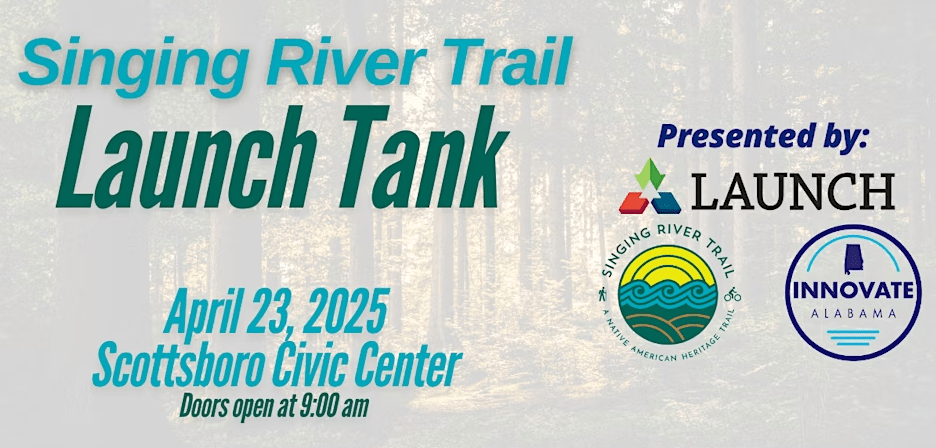
    We love to nourish entrepreneurship, and we’re especially thrilled when it’s in our own backyard. Today’s special feature comes from John Joseph and Toni Eberhart, Co-Chairs of the Singing River Trail Launch Tank 2025 and the Launch TN Valley Entrepreneurship Pillar. We hope you will join us in Scottsboro on April 23 for Launch Tank 2025!

    Looking for a front-row seat to North Alabama’s next big ideas? Mark your calendar for Wednesday, April 23, 2025, and make your way to the Scottsboro Civic Center for the Singing River Trail Launch Tank Pitch Competition—a high-energy event where innovation takes center stage and community-driven entrepreneurship shines. 

    What Is SRT Launch Tank 2025?

    Inspired by the fast-paced excitement of “Shark Tank,” the SRT Launch Tank is a live pitch competition that showcases some of North Alabama’s most promising entrepreneurs. Selected from a wide pool of applicants across the region, finalists will present their business ideas in front of a panel of expert judges—and a live audience—for the chance to win $20,000+ in funding and support.

    But SRT Launch Tank is more than just a pitch competition. It’s a celebration of regional innovation and a rallying point for anyone interested in building stronger, more connected, more entrepreneurial communities.

    Why You Should Attend

    Whether you’re a local leader, business owner, aspiring entrepreneur, educator, or just someone who loves seeing new ideas come to life—this event is for you. Here’s what you can expect:

    Connect with Visionaries

    SRT Launch Tank brings together entrepreneurs, investors, mentors, educators, and community members from across North Alabama. It’s a rare opportunity to expand your network, meet stakeholders, and discover how entrepreneurship is evolving in our region.

    Spark Ideas for Your Own Community

    In addition to the pitches, attendees will hear insights on what it takes to build a supportive, thriving entrepreneurial ecosystem. You’ll walk away equipped with ideas you can bring back to your own community or organization.

    See the Future, Live

    Watch finalists pitch their ideas live, in real time at SRT Launch Tank 2025. You’ll get an up-close look at the challenges they’re tackling and the innovative solutions they’re developing. It’s one thing to read about startups online—it’s another to see them pitch their hearts out in front of a crowd.

    Event Details

    • Date: Wednesday, April 23, 2025
    • Time: Doors open at 9:00 AM | Pitches begin at 10:00 AM
    • Location: Scottsboro Civic Center, 876 Ed Hembree Drive, Scottsboro, AL
    • Cost: Free and open to the public, but registration is required
    • Register here: Eventbrite

    A Proven Launchpad for Regional Innovation

    Now in its fourth year, SRT Launch Tank has already made waves across the Tennessee Valley. Past winners have gone on to launch businesses that are making real impacts—from electric bike rentals enhancing mobility to tech platforms that support disease detection.

    The competition is powered by Singing River Trail, a regional initiative focused on connecting North Alabama through greenways, culture, and innovation. SRT Launch Tank 2025 is a key part of that mission, supporting entrepreneurs as the backbone of strong, vibrant communities.

    Come Be Part of the Energy

    You don’t need to be pitching to be inspired. Come for the ideas, stay for the connections, and leave with a renewed sense of what’s possible right here in North Alabama. If you’re passionate about innovation, community development, or just want to support the next generation of local leaders—this is where you need to be.

    We’ll see you in Scottsboro!

    Toni Eberhart and John Joseph

    Co-Chairs, Launch Entrepreneurship Pillar

Subscribe to HPC Newsletters!

Our consultants write about new research, our work, our lives, and everything in between. We also feature HR & Talent Development special topics in our monthly newsletters.