
Category: Leadership Development

Beyond Leadership is Horizon Point’s line of resources for managers of people. Managing ourselves is a distinct set of behaviors from managers the work of others, and we are here to help. Read stories in this category if you are ready to take the next step in your own leadership development (or if you’re looking for resources for someone else).

  • The Ins and Outs of Leadership Coaching Series- How to Select the Right Coach

    The Ins and Outs of Leadership Coaching Series- How to Select the Right Coach

    Today, you can find a “coach” for everything. Where we used to associate coaching specifically with sports, now there are life coaches, leadership coaches, executive coaches, parent coaches, career coaches… you get the picture.

    Since our firm provides leadership and career coaching, we obviously see the value in coaching.Performance Management: Putting Research into Action states, “There is strong research and case-study evidence that coaching is an effective leadership development tool.” In fact, one of our coaching clients from last year received a substantial raise as a result of gains in his performance. He deserves the credit for this through his hard work, but we were able to help him maximize his performance through behavioral-based leadership coaching. I have an executive coach I work with and she has helped me tremendously in focusing company efforts towards growth.

    So if you are seeking someone to help you improve your performance, what should you be looking for?

    1. A coach who has a governing set of ethics/professional standards. Ask them to provide you with their standards inInformation on confidentiality, conflict of interest, professional conduct and scope of practice, at a minimum, should be included.
    2. Industry knowledge and people knowledge. For example, if you are in manufacturing, does the coach understand this arena? Within the scope of practice your coach should be able to provide to you an explanation of their training and background. Make sure this is in line with your needs.
    3. Track Record. Your coach should be able to provide you with a list of references.
    4. An approach. The coach should have an approach to coaching grounded in research and practice that comes with a proven process you can align with and devote the time implementing.

    We’ll be focusing over the next few weeks specifically on leadership coaching including things to consider before hiring a coach, our approach to leadership coaching, and common areas of focus in leadership coaching along with tips to aid in these common areas. We’ll wrap this series up with ways to measure the impact of coaching at an individual and organizational level.

    Do you have a coach or have you thought about hiring one? What sold you on their ability to help you gain the results you were seeking to accomplish?

  • A New Take On Time Management

    A New Take On Time Management

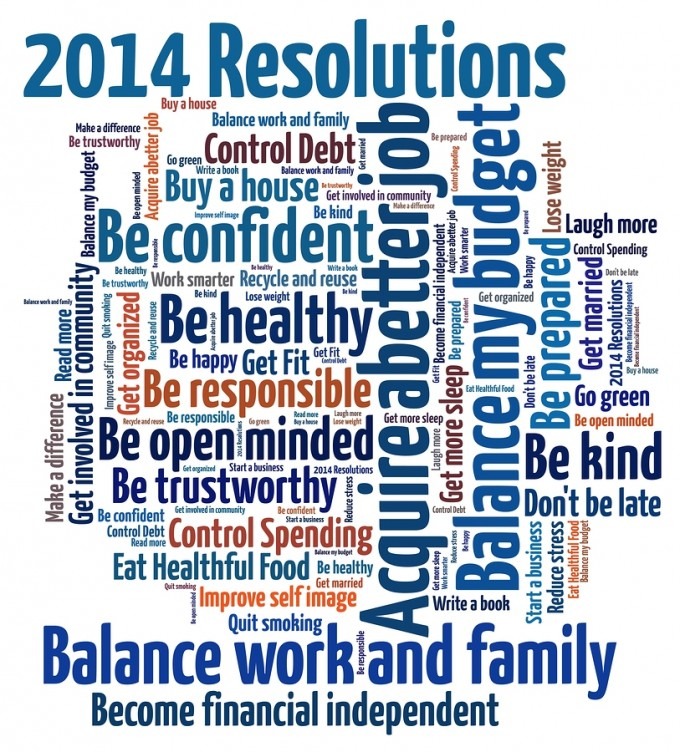
    I’ve been asked by a friend to write a post on time management. It seems fitting at the beginning of each year to look at how we manage our time and “resolve” to manage it more appropriately as we begin anew. 

    But other than this one tidbit of time management advice, I’m not going to write today about time management: How you spend your time should be based on your purpose, and your purpose should be captured in a mission statement to govern how you spend your time. 

    Instead, in considering time management, I think it is worth reflecting on this quote from Raising Self- Reliant Children in a Self-Indulgent World by H. Stephen Glenn and Jane Nelsen: 

    “Studies of successful, healthy people show that they are consistently good finders who see lemonade in lemons and glasses that are half full rather than half empty.  Incidentally, such people, who are quick to celebrate any little movement in the right direction, have very few problems with burnout and stress.  People who look at what they failed to accomplish during the day, not what they did accomplish, and who go to bed and burn themselves out in stress tend to invalidate themselves and others.  We need to be encouraging to ourselves as well as our children, and celebrate our own incremental successes as we go through life.” 

    So if you want to manage your time wisely, my advice this year: Celebrate your successes, your “little movements in the right direction” and try to do more of it one day at a time. Don’t beat yourself up when you haven’t checked everything off today’s to-do list. Move what hasn’t been accomplished to tomorrow, and go to bed knowing that you did get something accomplished today. My hope is that you celebrate the accomplishments of each day and purposely connect them to something that connects to your personal purpose. 

    What is the best advice you have received on how to manage your time?

    Want some more traditional reading on time management? Here are some recommendations: 

    Books:  Ready Covey: Seven Habits of Highly Effective People,  First Things First

    Blogs:  Joseph Lalonde’s How to Improve Your Time Management Skills  (the comments on this post are also good reads)

  • 2013 Year In Review

    2013 Year In Review

    This year, I made my professional and personal goals public in order to demonstrate one effective characteristic of goal setting- going public with them.

    So, did going public help? Here’s how this year shook out:

    Goal 1. Maximize productivity in the morning.

    Result: Accomplished, but room for improvement. I didn’t get up as early as I had planned, and I really owe more credit to this happening to my running accountability partner and my early-bird three year old than I do myself. But, mornings have gone a lot smoother this year.

    Goal 2. Grow company revenue by 30% or more in 2013.

    Result: Accomplished. Revenue growth was 58% (gross profit), Net Income growth was 38%. We have been so humbled this year by the trust our clients have put in us, and the exciting and fun work we are getting to do!

    Goal 3: Cook dinner and sit down as a family to eat at least four times a week. 

    Result: A complete flop. One, I didn’t track it, so I couldn’t tell you how many times we did or didn’t do it specifically, and two, I know we didn’t come close to doing this. We sat in front of the TV with crap food more than I would like to admit.

    Goal 4: Be committed (as I have been the last two years) to one day a week at home with my little boy.

    Result: Almost, but not perfect. Stuck to this for the month of September where so many things hit at once work wise. He went to school three of the four Thursdays in September.

    Goal 5: Express gratitude to those closest to me.  

    Result: Accomplished in the sense that I tracked it this year and was more conscious of how I express appreciation to others, particularly those that interact with daily. On average, I sent one handwritten note to a person each week.

    Goal 6: No debt except our house by the end of the year.

    Result: Accomplished! Accomplishing goal #2 made this happen.

    Goal 7: Read 30 books.

    Result: Accomplished (just barely). Read 30. See Year End Book Review.

    Other year-end review notes:

    Our top blog post of 2013: With almost 25,000 hits: 2 Questions for Striving Servant Leaders

  • Leadership How-To: Combine Communication with Teamwork

    To continue our periodic posts on Leadership How-Tos as a suggestion from participants in my last Leadership I class, I’d like to suggest an activity that combines two of the class topics:

    1. Teamwork
    2.  Communication

    In the class, everyone takes a Communication Style Assessment.  You can take an online assessment like the one taken in the class for $31.00 each and/or click here to see all the other products that go along with the assessment.

    To better understand communication in the workplace and build camaraderie amongst your team (and have a little fun while you are at it!)  get this style assessment or another you find that you like and have your team members take it.  Then plan a 30 minute team building session to discuss everyone’s results.

    Facilitate a discussion that includes:
    1.  What each person’s style means to them.  Get people to describe a scenario at work that shows their style.
    2.  Have a good discussion about the strengths and weaknesses of each style.
    3.  Ask members of the team to pair up with someone who has a different style than they do and discuss ways to improve communication between those two types of styles.  Have them share with the group.
    4.  Focus on the fact that no one style is right or wrong, but knowing ourselves and knowing others on our team helps us communicate more effectively.

    What's My Communication Style - HRDQTo reiterate the points of effective communication between different styles, if your workplace culture supports it, order some of these style stickers (no, I am not getting a kickback for promoting any of these products) and facilitate some fun team building around giving them away when people either demonstrate their style or recognize the style of others in a behavior based example.

    Want other example of a teambuilding activity?  Check out upStartHR’s post here.