Category: General

Horizon Point writes about dozens of leadership, career, workplace, and workforce topics. Sometimes we write whatever we want. Read this category for general blogs from the HPC team.

  • Work and Lifestyle Values: A Real Life Example

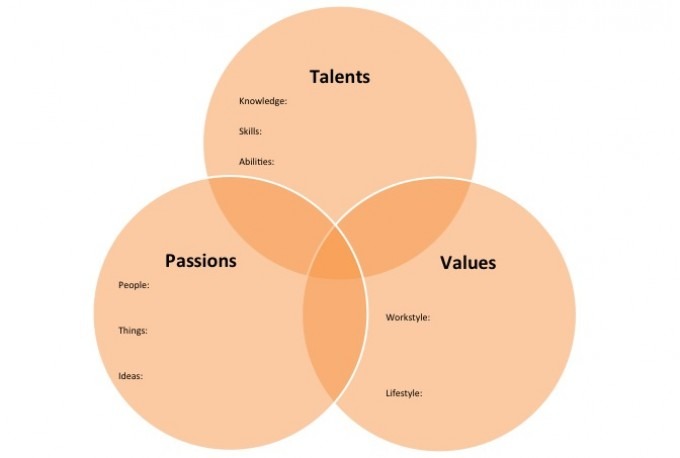
    Continuing with the example of Graham, thework and life values he identified for himself are (those in blue you can click on to see job matches):

    $1·      Responsibility for Outcomes and Results

    $1·      Freedom to Make Decisions

    $1·      Recognition

    $1·      Flexibility of work schedule

    $1·      High Earning Potential (related to cost of living in the area)

    $1·      Culturally and socially rich city or environment

    Graham likes to be in charge and be responsible for his work and the outcomes that are achieved.  And he wants to be compensated accordingly for the outcomes he achieves. He thrives in a fast-paced, entrepreneurial environment where his results can be measured.

    Lifestyle wise, he seeks opportunities where he can be in charge of his work schedule and have flexibility in how and when work is performed.   He likes opportunities for cultural and social outlets in the city/town in which he lives, but does not seek a big city lifestyle.

    Next week, we’ll put the pieces together of talents, passions and values through the example of Graham.

    Can you guess what he does for a living yet? It isn’t something run of the mill…

  • Personal Leadership on Purpose

    5 QUESTIONS TO ASK YOURSELF BEFORE YOU THROW YOURSELF OUT OF WHACK

    I’m a big advocate for living a balanced life.  Like I mentioned last week, I especially advocate for living a balanced life based on your mission and the examination of a balanced lifestyle based on the roles in which you serve.  But roles change as life changes, and having the flexibility and discernment to know when to throwing yourself out of balance is a wise decision for personal leadership is important.

    Some times when this may be appropriate is when your starting a new job, a new company, gaining a new work assignment, having a baby or focusing on a child that has needs you need to meet, caring for an ailing loved one, and serving your country on an overseas assignment.

    The 5 Questions:

    1. Am I doing this for the sake of my mission?
    2. Am I doing this intentionally and through an analysis of the pros and cons of doing so? Is it on purpose or did you just find yourself out of whack with your head spinning?
    3.  Is it the right time to step away from balance?
    4. Are the important people in my life on board with the singular focus at this time?
    5. Is there a definitive beginning and end to this shift in focus?

    In First Things First, co-authors with Stephen Covey, Roger and Rebecca Merrill discuss a time when they intentionally shifted themselves out of a balance.    Roger needed to devote himself to extensive travel for work in his mission to further the cause of his work with Franklin Covey.  Although Roger never says it outright in the book, it is obvious his work is a part of his mission (#1 above met).  With children at home, Rebecca and Roger discussed it and decided it was a positive thing for them to do at the time (#2,3,4 above met).  I’m sure that Rebecca had to assume more responsibility in their family with his extensive travel, and I would imagine she felt that this focus was aligned with her mission and roles as well.  Finally, they knew when this assignment would end and begin and could plan accordingly (#5 met).

    You can have it all, but not all at once.   Determining if you can answer these five questions above with satisfaction determines whether or not you should shift the balance in your life.

    When have you thrown yourself out of whack for the fulfillment of purpose?

  • On Broadway?

    On Broadway?

    KNOW WHAT YOU VALUE TO DETERMINE CAREER DIRECTION

    After examining your talents and passions (and also here), considering your values is an important piece in determining career direction.  Values, in this sense, are not values that we should all strive for like integrity and honesty, but your personal work and lifestyle values that are unique to you.  Oftentimes, I see that values are the first thing that gets neglected when considering career decisions, but they really help people eliminate certain career options or certain work environments more effectively than talents and passions do.

    How do I determine what I value?

    You can use page 15-16 of the Finding Your Point Worksheet to select work and lifestyle values that matter to you. (Remember, the title of most of them is linked to job matches.  Just click on them to see careers that align with your values.)

    You can also visit these links for help determining your values:

    Working Conditions:

    Stanford Website

    Lifestyle Conditions:

     Find your Utopia

    Find your Spot

    How Values Drive Career Decisions: An Example

    There is an example of how values drive career decision making that I always love to share.  In working with youth, I always ask them:

    “Where do you see yourself in 10 years?  What will you be doing, what will your life be like?”

    The answers I receive are broad and many youth have to be probed when thinking about this because they’ve never thought about it before.

    Before asking a girl I had been working this question, I was ready to send her to Broadway.  We had examined her talents and passions, and she was a gifted vocalist and actress.  She has been accepted into the musical theatre program at her college of choice, which is rare for an incoming freshman to obtain.  She loved the arts, particularly the performing arts, and most of her extracurricular activities and enjoyment came from performing.  I thought, easy.  She’s got the talent, she’s got the drive in this area, done deal, send her to Broadway! She would just have work hard to achieve success in this arena.

    Then I asked:  “Where do you see yourself in 10 years?  What will you be doing, what will your life be like?”

    Her response was immediately and with certainty: “In my hometown, married with several kids.”    Her hometown is not New York.  In fact, it has less than 100,000 people in it and is nowhere near Broadway.

    With such certainty in how she saw her life in 10 years, you can see how considering what she valued in terms of her lifestyle with this simple question was not a match for the direction her talents and passions identified for her.

    Consider what you value.  It may be more powerful in determining direction than you think.

    What do you value?  How has this determined your career direction and options?


    image source: http://www.nyctourist.com/images/times-square-photos/broadway-sign.jpg

  • Lesson in Personal Leadership 1: Define and Focus on What’s Important

    In beginning to discuss lessons in personal leadership, I want to first define what I mean by “personal” leadership.  Quite simply, this is the ability to lead yourself.   It’s difficult if not impossible to have the capacity to lead others if you don’t have the ability to guide yourself in achieving outcomes that are important to you.

    To do this though, you have to first know what is important to you! Unfortunately many people, don’t sit down an actively consider what their priorities are based on what their purpose is, so therefore they end up letting things that aren’t aligned with what’s important dictate their schedule.

    In discussing the focus on women last week  I posed the question, do we really want to have it all?  Is striving for having it all hurting women in their ability to have person leadership for themselves? Is it hurting everyone’s ability for this?

    Here’s a step-by-step process for establishing what is important to you:

    I’ve said it MANY times on this blog before, and I’ll say it again, create a personal mission statement.  Not for the company you work for, but for you. Here’s a link to some more info on that which includes a worksheet you can download from Dave Ramsey.  It also contains sample mission statements.

    I want to be clear that in focusing on personal leadership and developing a mission statement is in order to move from “maintenance” mode to “mission” mode.  In the Participant Workbook of the Global Mission Society  I was captured by their contrast of “maintenance” verses “mission”.  Maintenance is inward focused, mission is outward focused. Maintenance focuses on ourselves, mission focuses on others.  Your mission is a way to define how you are best suited to impact the world, not a way to live selfishly.

    Write this statement down, post it where you see it regularly (especially in places where you find yourself not living your mission) and share it with those people that are important to you.

    Examine your schedule and to-do list by your mission statement at least weekly.

    Is what is on your calendar and to-do list reflective of your purpose?   I really like the methods outlined in Stephen Covey’s First Things FirstAlong with co-authors Roger and Rebecca Merrill, Covey advocates for a generation (4th generation he calls it) of time management that allows you to focus on what is important, not urgent by creating a mission statement for yourself (the book has a great mission statement workshop in an appendix) that focuses on scheduling and prioritizing your week based on roles (it is others focused).   In addition, it emphasizes leaving time in your schedule for flexibility so you can respond with important things arise.

    For example, at any given time you could be playing the role of mother, wife, friend, business developer, work producer, school volunteer, etc.  These roles should be in line with your mission statement. There is always a section for “Sharpening Your Saw” for the week, which focuses on personal development. This way of examining your week helps you consider if you are in fact putting first things first through considering your relationship with others.

    Eliminate things that don’t align with your purpose 

    This is easier said than done, but saying no to something is saying yes to something else. There are many worthy and good things to spend time doing.  Most of the people I work with that I find are stressed and out of balance aren’t the people that are doing irresponsible or “bad” things with their time.  They are just stuck in a rut of not knowing how to say no (myself included), and I believe this is because they haven’t defined what is important.

    Example 1:  A dad finds that he has 2-3 meetings each week after work related to civic volunteering, church activities, etc.  These are all worthy things, but he looks up and realizes he is at home fewer nights a week with his children than he is at another engagement.  In defining his purpose and roles, spending quality time with his children is a key priority.   He gets off two committees at church but stays on the one that is tied to his mission, commits to only one night a week being available for a work engagement, and signs up to help coach t-ball so he can spend more time with one of his sons.

    Example 2:  A successful businesswoman has had tremendous success growing her business, but she is now finding herself pulled in too many directions.  Because of this, she is leaving the office later and later, waiting until the last minute to get things done and having a horrible time prioritizing.  In addition, she is constantly dealing with a “high maintenance” client that does not pay their bills on time.  In addition, the margin on the account isn’t even that large.   She examines her purpose through drafting a mission statement and develops a plan to delegate certain activities to her employees based on her desire and purpose to live proactively and align with her purpose to develop others.   She has a frank conversation with the “high maintenance” client and lets them know that until they are current on their payments, she will not able to follow-through on work they want done (again tied to her purpose to live proactively).   Quiet simply, she turns the ringer on her phone off and closes her email inbox to eliminate distractions when she is working on things that help her live proactively.

    Two Birds and One Stone I’ve found it helping to consider where in examining your week and roles you might be able to combine functions to gain more benefit.  For example, my role and purpose as a mother has led me to stay at home one day a week with my child.  This is important, and I shift work priorities around accordingly.  Often, I try to find ways to incorporate spending time with him into other roles.  On Thursday, we made brownies together (he’s only two but loves to stir and stir and stir) for a meal we were preparing for two friends that just had babies (fulfilling the role of friend and mission to be gracious to others).  I run with my dad and a friend.  It helps me “sharpen the saw” and helps me find quality time in communicating with two people who are important to me. Beware of killing two birds with one stone…. Now that I’ve said killing two birds with one stone helps you achieve your mission, sometimes it doesn’t. It is just a distraction. For example, if my commitment is to stay at home and spend quality time with my little one 1 day a week, pulling out the computer to check work emails 3-4 times a day (like I also did this Thursday) is not a way to help you meet your mission.  It is a distraction.  Eliminate these things that don’t allow you to focus intently on your purpose at the moment, just as you would eliminate large tasks or commitments that don’t align with your purpose.

    What has helped you focus on what’s most important in establishing priorities and personal leadership for yourself?

  • A Final Word on Talents and Passions

    A Final Word on Talents and Passions

    A WAY TO AVOID BEING MISERABLE

    Coupled with understanding your talents, discovering what your passionate about is a critical piece in determining career direction.  I find, though, that many people forego incorporating their passion and even their talents into career choices because they don’t think they can make money doing it or they are afraid they will fail.   While I’m an advocate for understanding the marketplace and the demand for certain skills before making career choices, I also believe that people putting aside their gifts and passions end up leaving themselves in very undesirable states.

    Consider this quote in A Clearing Season by Sarah Parsons that expresses just this issue:

    “In The Artist’s Way, Julia Cameron describes the phenomenon of the ‘blocked’ artist, a person with natural creative gifts who, for various reasons, does not use them.  The blocked person may fear using his or her gifts, thinking that being an artist would mean financial ruin, a tumultuous lifestyle, or painful failure and rejection.  Unfortunately, choosing not to use one’s gifts is like choosing not to experience one’s emotions- the inner reality remains the same and continues to beg for expression.  The obstacles preventing self-expression create distortions in the blocked person’s life, leading to anger, jealously or unhappiness.  The blocked artists may pretend that he has no desire to be an artist himself, but subconsciously he envies others’ choices to do things that he himself would like to do.

    What we do to make a living affects every facet our lives.  Pursing something that expresses who you are is a critical piece in life, not just work, satisfaction.   My encouragement is to find something that you can make a living at that allows you to express who you are.  If that isn’t possible in the short term, it’s important to make sure you find opportunities for self-expression in some aspect of your life.

Subscribe to The Point Blog!

Our consultants write about new research, our work, our lives, and everything in between. Subscribe to The Point Blog for our weekly stories.